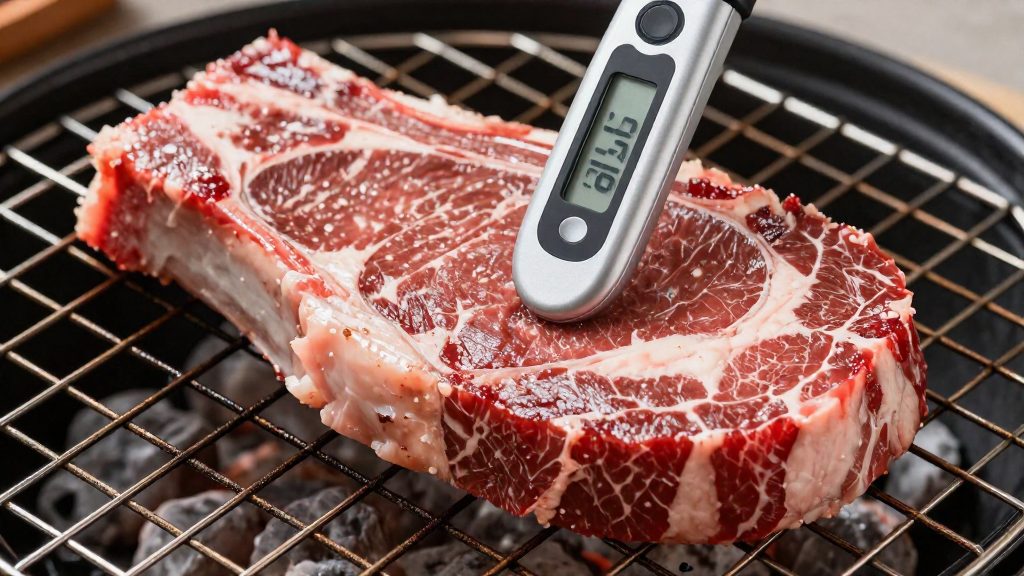
What is the reverse sear technique?
The reverse sear is a two-stage method for thick steaks. The meat cooks gently over indirect heat first, and a short, high-heat sear is applied last. Reversing the usual order brings the interior up to temperature slowly, so doneness is more even from edge to edge, and the surface is browned only at the end.
The classic approach puts the steak over direct high heat so the crust forms first, while the interior catches up more slowly. The reverse sear changes the sequence, and the difference shows up in how heat travels through the meat:
| Aspect | Direct high-heat sear | Reverse sear |
|---|---|---|
| First stage | Browning over direct, high heat | Gentle cooking on the indirect side of the grill |
| Heat path | Outer layers heat quickly; the centre lags behind | Heat reaches the centre while the outer layers are still moderate |
| Doneness pattern | Thin band of overcooked meat under the crust | Narrower gradient, so doneness is more uniform from edge to edge |
| Role of final sear | Builds crust while the interior finishes cooking | Adds crust only, because the interior is already cooked |
Why slow indirect heat evens out doneness
Indirect heat surrounds the steak with air at a moderate temperature rather than concentrating energy on one face. The outer layers still heat faster than the centre, but at a moderate air temperature the lag is much smaller, so the temperature difference between the edge and the middle stays small. When the steak is moved to direct heat at the end, only a thin outer layer is exposed to intense heat, so the gradient created by searing does not reach far into the meat.
What the sources describe
Meat Church (2024) places the steak on the indirect side first, then rests it while the grill is brought to a much higher temperature, and sears it in a very hot cast iron skillet. Hardcore Carnivore (2024) follows the same sequence. Because the interior is already cooked when the sear begins, the sear is brief; its purpose is the crust, not the internal cooking.
Related reading:
- Steak selection for reverse sear
- Two-zone grill setup
- Pull temperature and carryover cooking
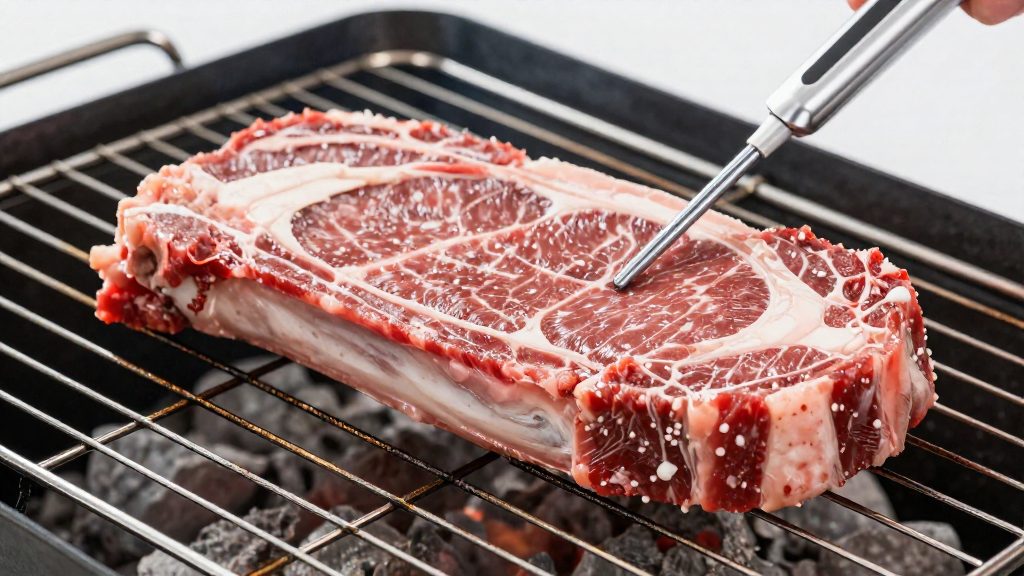
Which steaks suit reverse searing?
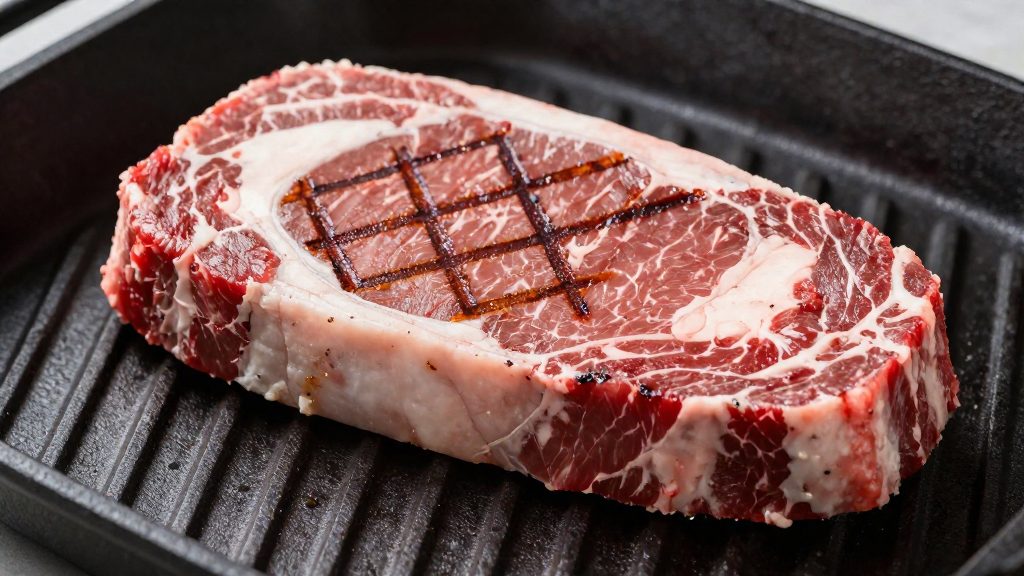
The reverse sear is built for thick cuts. Hardcore Carnivore (2024) sets the minimum at at least 1 inch (2.5 cm) thick, which gives the steak enough mass to spend a long stretch on indirect heat before any high-heat contact. Below that thickness, the gentle first phase has little room to work.
Meat Church (2024) uses a steak of about 2 inches (5 cm) as its benchmark. At that thickness the indirect phase can bring the centre up gradually, so the exterior is not overcooked by the time the sear arrives. Two-inch cuts are the easiest starting point for a first attempt, and the method’s gains are most visible at this size.
| Thickness | Source | Role in the reverse sear |
|---|---|---|
| 1 inch (2.5 cm), minimum | Hardcore Carnivore (2024) | Lowest thickness the method is recommended for |
| About 2 inches (5 cm) | Meat Church (2024) | Recipe benchmark |
Thin steaks reverse poorly for a simple reason: they reach the target internal temperature quickly on indirect heat, and the surface can overcook or dry out before a crust forms. Compared with a thick cut, a thin steak gives you little difference between the two phases, so a single direct sear over high heat usually gives a more controlled result. Thick cuts, by contrast, let the indirect phase do most of the work, and the final sear only adds colour and crust.
When choosing a cut, measure the thickest point with a ruler rather than relying on the packaging label, because butchers’ cuts vary.
How do you set up a grill for reverse searing?
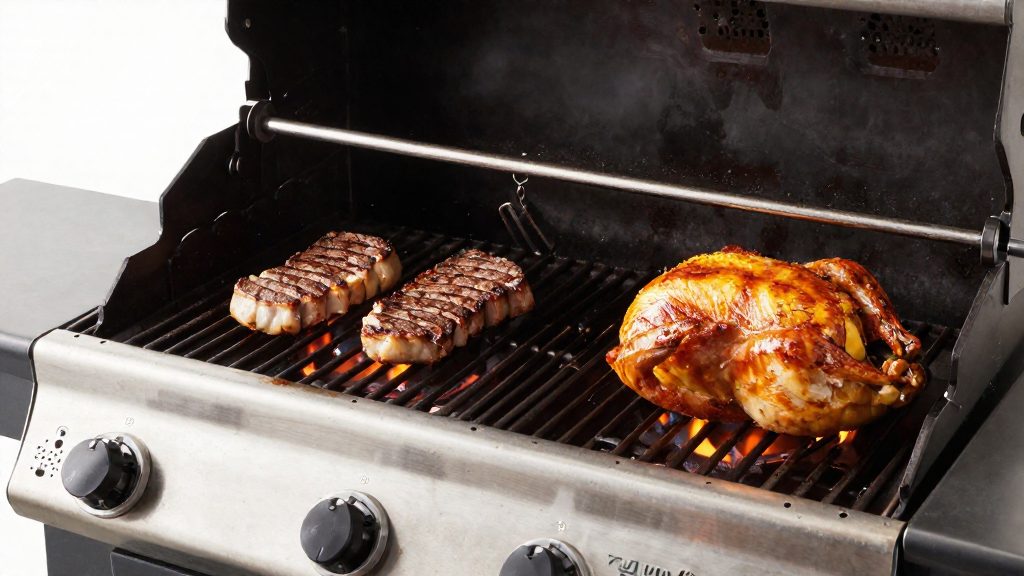
The reverse sear depends on a two-zone setup: one side of the grill carries the heat source, and the other side stays free of direct flame. The steak cooks on the indirect side with the lid closed. Meat Church (2024) sets the indirect target at 275°F (135°C), while Hardcore Carnivore (2024) gives a wider range of roughly 300 to 350°F (149 to 177°C). Hardcore Carnivore (2024) requires a steak at least 1 inch (2.5 cm) thick. Meat Church (2024) prefers a steak about 2 inches (5 cm) thick.
Setup varies by fuel type, but the principle is the same: heat sits on one side, and the meat sits away from it.
| Grill type | Indirect setup |
|---|---|
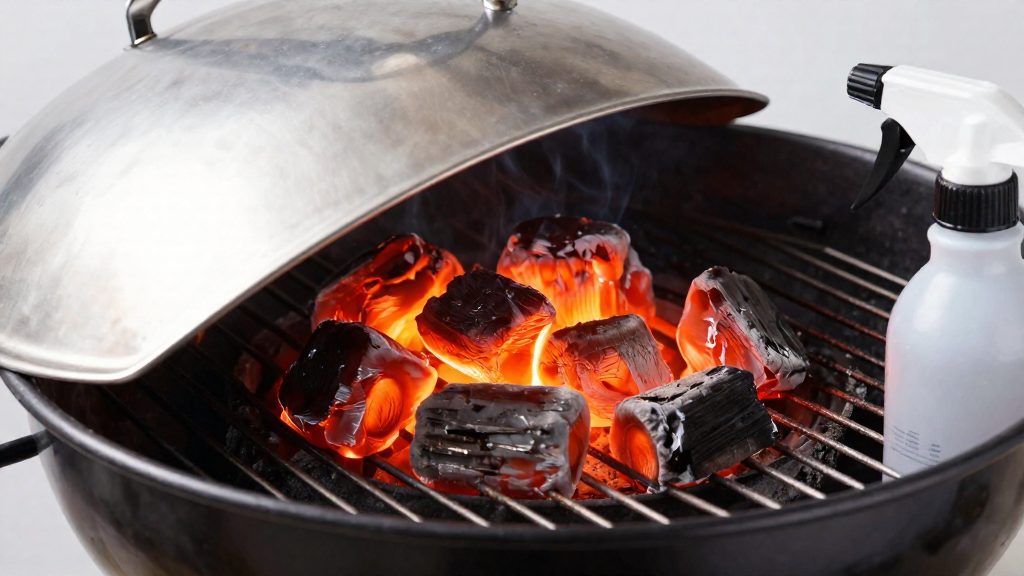
| Charcoal | Bank the lit coals against one side of the charcoal grate. Place the steak on the empty side and close the lid. |
| Gas | Ignite only the burners on one side and leave the others off. Place the steak over the unlit section. |
| Pellet | Set the controller to the target temperature. The firepot sits below the grate, so the steak never sits over a direct flame. |
| Kamado | Place a plate setter or heat deflector between the fire and the cooking grate. Put the steak on the grate above the deflector, away from the fire. |
Place a thermometer probe at grate level on the steak side, not over the coals or burners. A reading taken over the heat source will overstate the temperature the steak experiences.
Oven alternative: Hardcore Carnivore (2024) also accepts a 275°F (135°C) oven for indoor cooking. Set a wire rack over a sheet pan, place the steak on the rack so that air circulates on all sides, and cook it in the oven instead of on the grill.
Pull temperatures and carryover
The pull temperature is the internal reading at which the steak leaves the indirect side of the grill. Meat Church (2024) pulls at 120°F (49°C), while Hardcore Carnivore (2024) gives a range of 125 to 135°F (52 to 57°C), depending on the doneness you want. All of these are below Health Canada’s 63°C (145°F) minimum for medium-rare steaks, so treat them as doneness targets and read the food-safety section before relying on them. Pulling at the lower end of each range leaves the most room for the temperature to rise afterward.
| Publisher (year) | Pull temperature | Expected finish after carryover |
|---|---|---|
| Meat Church (2024) | 120°F (49°C) | about 125°F (52°C) |
| Hardcore Carnivore (2024) | 125–135°F (52–57°C) | about 130–140°F (54–60°C) |
The final column adds the roughly 5°F of carryover that Meat Church (2024) reports. Carryover is the continued rise in internal temperature after the steak leaves the heat, as heat stored in the outer layers moves toward the centre. Because the rise is about 5°F, a steak pulled at 120°F will read near 125°F once it has rested, and Hardcore Carnivore (2024) gives no carryover figure, so the 130–140°F column simply applies the Meat Church estimate and is only indicative. Each figure is an approximation, so the final reading depends on the steak and the conditions.
The rest before searing is where carryover happens. Keeping the steak uncovered during this rest helps the surface stay dry for the sear.
Total cook time on the indirect side varies with thickness. Meat Church (2024) gives about 45 minutes for a steak about 2 inches thick cooked at 275°F. Hardcore Carnivore (2024) gives 45 to 60 minutes for steaks at least 1 inch thick, using a two-zone grill at roughly 300–350°F, or a 275°F oven. Thicker cuts sit toward the longer end of these ranges.
How do you get a great crust?
The crust forms during a short, very hot sear applied after the steak is cooked through the middle. Meat Church (2024) calls for a grill at at least 500°F (260°C), or a cast iron skillet heated until very hot, before the steak touches the surface. Preheat fully so the metal is at temperature when the meat goes down.
The sequence is:
- Heat the surface first. Bring the grill to at least 500°F, or heat the cast iron skillet until it is very hot.
- Pat the steak dry. A dry surface browns more readily than a wet one.
- Sear about 1 minute per side. Meat Church (2024) specifies this timing for the cast iron skillet, and Hardcore Carnivore (2024) gives the same figure for its searing step.
- Watch the interior temperature. Meat Church (2024) says the steak should finish no higher than 130°F (54°C) internal. That is below the Health Canada minimum of 63°C (145°F) for medium-rare steaks, so see the food-safety section before using this target.
The 130°F ceiling conflicts with Health Canada (2024-06-04), which lists 63°C (145°F) as the safe internal temperature for medium-rare beef steaks. The two figures serve different purposes. The 130°F limit is a doneness target for this method, while 145°F is a food-safety threshold. Health Canada’s guidance is the food-safety reference in Canada, so bring whole steaks to 63°C (145°F) and confirm it with a probe thermometer before serving. The lower pull and finish temperatures in the recipes cited here are doneness targets, not safe minimums.
Keep the sear short. Extended time over high heat builds a thicker crust but pushes heat further into the steak, which works against the target interior temperature.
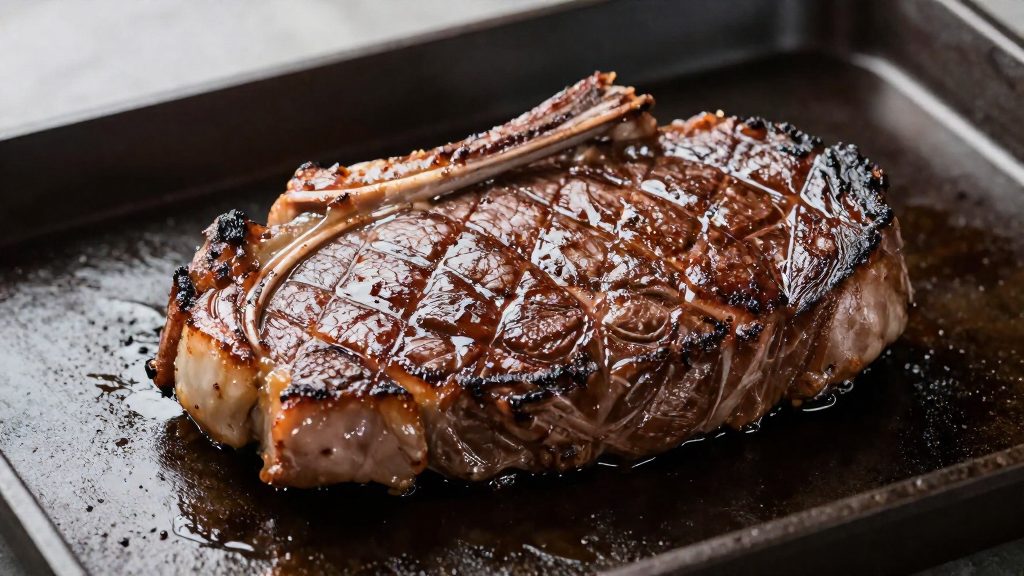
Do you need to rest the steak?
Yes. In a reverse sear, the steak rests between the indirect cook and the sear, and both reference recipes in this guide place that rest before the meat touches direct heat. Meat Church (2024) and Hardcore Carnivore (2024) use the interval for a practical purpose: the grill is brought up to searing temperature while the steak waits, so the rest does not delay the sear.
The two recipes differ in how long they rest the steak:
- Meat Church: rest the steak for 10 minutes while the grill heats.
- Hardcore Carnivore: rest the steak for 10 to 15 minutes before searing.
Meat Church gives a single fixed duration, timed to the grill reaching at least 500°F. Hardcore Carnivore gives a range, which lets you extend the rest if the grill or skillet is slower to heat. In both cases, the rest ends when the sear surface is ready, not when a timer alone runs out.
How to use the rest window
- Move the steak from the indirect side to a board or rack as soon as it is pulled.
- Start heating the sear surface immediately. Use a very hot cast iron skillet or direct-heat zone.
- Keep the steak resting while you check the grill temperature.
- Sear only when the surface has reached temperature, so the steak is not left resting on a cold grate.
Canadian food safety temperatures
Health Canada (2024) lists the internal temperatures it considers safe for beef steaks and whole cuts. These minimums are the reference point for judging reverse-sear pull targets.
| Doneness | Internal temperature (°C) | Internal temperature (°F) |
|---|---|---|
| Medium-rare | 63 | 145 |
| Medium | 71 | 160 |
| Well done | 77 | 170 |
Mechanically tenderized beef follows a separate rule. It should reach 63°C (145°F), and the steak should be turned over at least twice during cooking. The turning requirement is part of the guidance, not an optional step.
Conflict with reverse-sear pull targets
Reverse-sear recipes remove the steak from indirect heat before the final sear, at internal temperatures below the Health Canada minimum. The two recipes compared here set these pull points:
| Recipe (publisher, year) | Pull temperature | Equivalent (°C) | Below 63°C minimum? |
|---|---|---|---|
| Meat Church (2024) | 120°F | 48.9 | Yes |
| Hardcore Carnivore (2024) | 125–135°F | 51.7–57.2 | Yes |
The surface sear does not replace the internal target. Because the two sources conflict with Health Canada’s guidance, the recommended approach is to use 63°C (145°F) as the floor for whole steaks. If a reverse-sear steak comes off the indirect side below that figure, keep it on the cool zone until the interior reaches 63°C before searing.
Common mistakes to avoid
Three errors commonly undermine a reverse sear: relying on the clock instead of a thermometer, reversing the order of the cook, and placing the probe away from the thickest part of the steak. Each one produces a steak whose doneness is unpredictable, even when the grill and the cut are correct.
Pulling by clock time instead of thermometer
Published timings are planning estimates, not finish points. Meat Church (2024) gives about 45 minutes for its indirect phase on a steak about 2 inches thick, while Hardcore Carnivore (2024) states the phase “usually” takes 45–60 minutes. The spread between these two sources shows that the same cut can need noticeably different times depending on its starting temperature, grill output and thickness.
Use the timing to plan the evening, then let a thermometer decide when the steak leaves the grill. Check the internal temperature early, before the expected finish, and again at intervals. Clock-based pulls are the most common reason a steak arrives in the pan well above or below the intended doneness.
| Source (year) | Indirect setup | Indirect phase duration |
|---|---|---|
| Meat Church (2024) | Indirect heat at 275°F | About 45 minutes (roughly 2-inch steak) |
| Hardcore Carnivore (2024) | Two-zone grill at roughly 300–350°F, or a 275°F oven | Usually 45–60 minutes |
Skipping the indirect phase and searing first
The reverse sear depends on the order of operations. Searing first and then moving the steak to indirect heat produces a cooked outer layer with a raw-to-medium centre that finishes unevenly. Both recipes place the steak on the indirect side first and reserve the high heat for the final step. On a two-zone grill, the steak must sit on the cooler side, away from the direct flame, until the indirect phase is complete.
Placing the probe away from the thickest point
A probe in a thin edge or near the bone reads a temperature that does not represent the centre of the steak. Insert the probe into the middle of the thickest section, parallel to the grill grate where possible, and keep the tip clear of bone, large pockets of fat and the cooler outer edges. Re-check the position if the reading seems to rise or fall faster than expected.