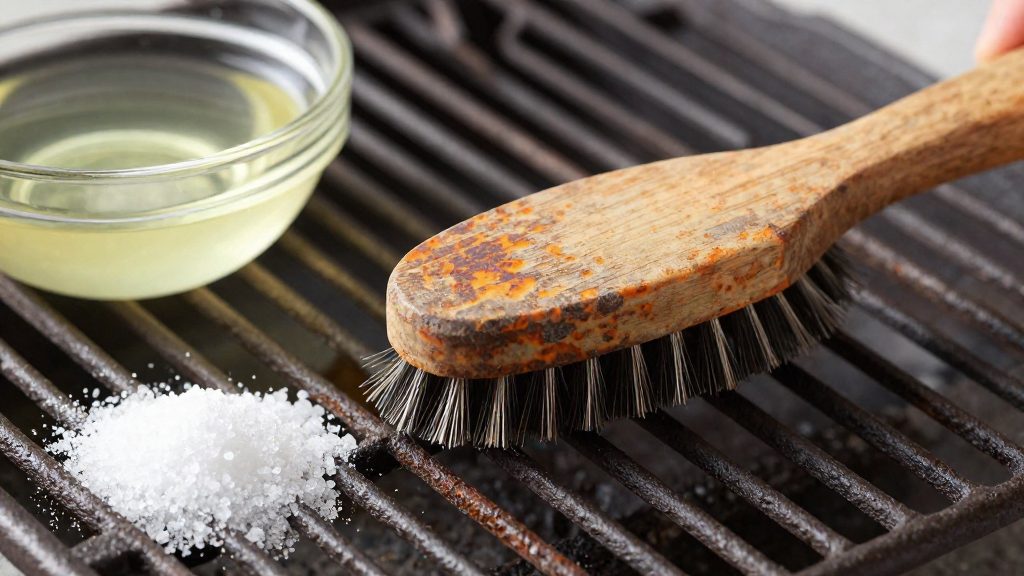
Cast iron grill grates rust when bare iron is exposed to oxygen and moisture. Iron reacts with both to form iron oxide, the reddish-brown layer that flakes and spreads over time. Rust develops fastest on grates left uncovered between uses, especially in damp conditions, and in spots where the protective layer of oil has worn away.
Why do cast iron grill grates rust?
Rust is an oxidation reaction. Iron combines with oxygen in the presence of water, producing iron oxide. Because the reaction requires moisture, grates stored in humid spaces or left exposed after rain are especially prone to it. Once rust has started, it can keep spreading if the exposed metal is not protected again.
Seasoning loss is the main reason bare iron appears. A seasoned cast iron grate carries a layer of baked-on oil that acts as a barrier between the metal and the air. Scraping during cleaning, or repeated high-heat use, can remove it in patches, and those patches are where rust tends to start.
Outdoor storage is the most exposed situation. Grates left outside are continuously exposed to rain, dew and humidity, so rust can form on the surface even when the grates appear only slightly worn. Without a protective layer, the iron has no defence against that moisture.
Rust that has progressed far enough causes lasting damage. Hunker (Static Media, 2018-04-25) states that heavy rust that cannot be removed, or rust that has eaten through large sections of the grate, is a reason to replace the grates. Protecting the iron between uses is therefore more effective than trying to reverse heavy corrosion later.
What you need before you start
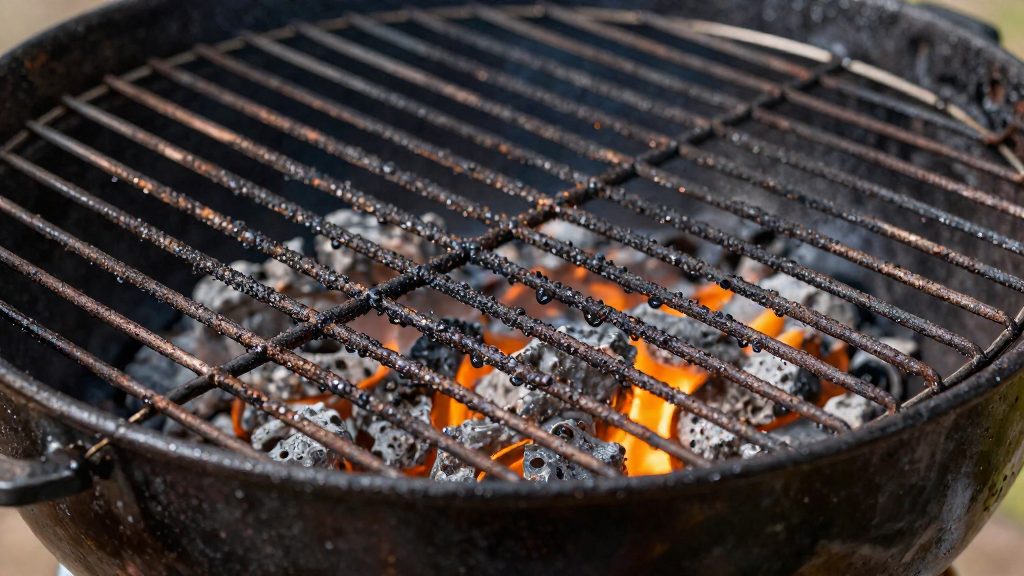
Gather the tools and materials before you touch the grates, so you can work through the surface in one pass. This stage uses only the items below.
Dry wire brush and metal scraper
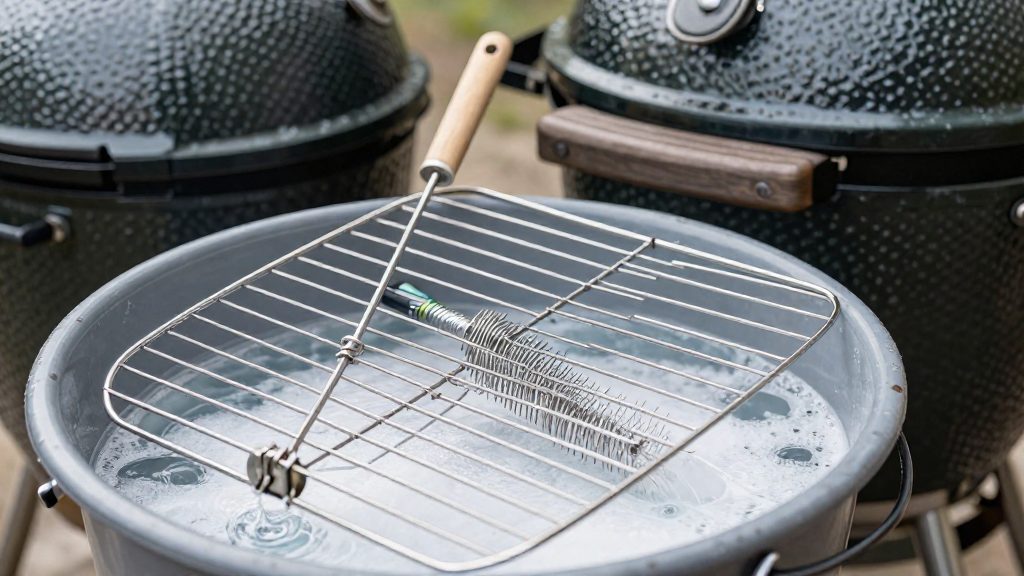
Start with a dry wire brush. According to Hunker (Static Media, 2018-04-25), the rusty grates are scrubbed with a dry brush first. A metal scraper handles the large chunks of loose rust that the brush cannot lift cleanly. Work with the grate dry so the brush can grip the rust itself rather than a film of moisture.
Paper towels and vegetable oil
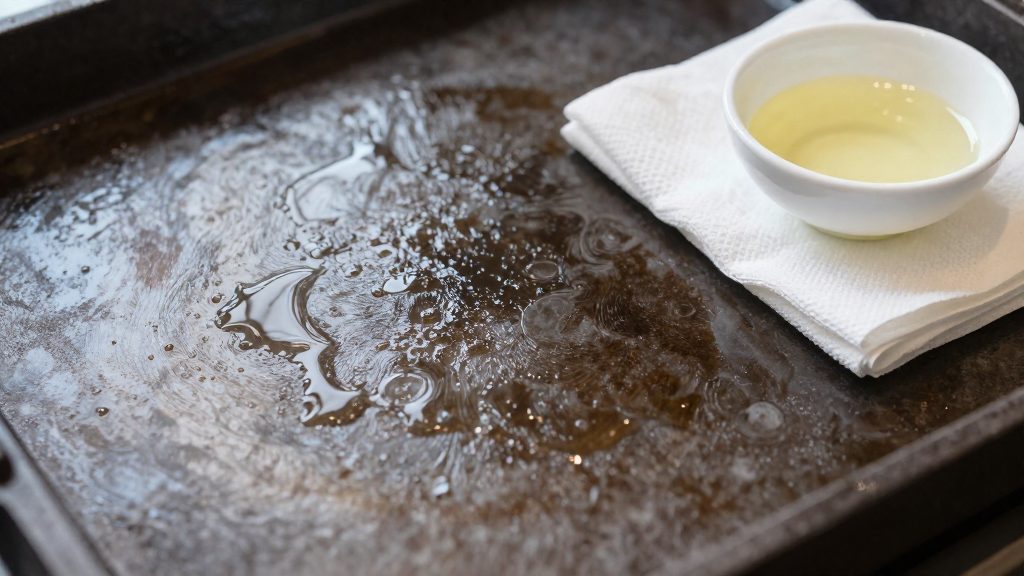
The second stage needs paper towels and vegetable oil. After brushing, a paper towel coated in oil is rubbed over the grate to lift the rust that remains. Keep a small dish of oil and a stack of paper towels within reach. Switch to a clean section of towel as soon as the one in your hand darkens with rust, because a dirty towel only moves the rust around.
Protective gloves and eye protection
Rust flakes and wire-brush debris can come off the grate as you scrape and brush, so put on protective gloves before you begin, and wear eye protection to shield your eyes from particles. When you finish, wipe the grate down and check it for loose bristles before you cook on it. Gloves also keep the oil off your hands during the wiping stage. Work in a well-lit space, and keep children and pets away from the area while the grates are being cleaned.
Brush off loose rust first
Mechanical removal comes before any chemical step. Loose, flaking rust is lifted by hand so that later treatments only act on rust still bonded to the iron. According to Hunker (2018), the sequence starts with dry scrubbing, followed by an oil wipe for what remains.
Scraping large chunks
Start with a metal scraper to knock off thick, scaled sections. Hold the blade at a shallow angle against the bar and push it away from your hand. Work over a bin or a sheet of newspaper so the flakes do not fall into the burner area or the drip tray.
Dry wire brush scrubbing
Next, scrub the bars with a dry wire brush. “Dry” means no water, cleaner or oil at this stage: the bristles grip loose rust and carry it off the metal. Brush along the length of each bar rather than across it, and cover both the top and underside of the grate. Continue until the brush no longer dislodges particles.
Oil-soaked paper towel pass
Finish with a paper towel dampened with vegetable oil. Fold it into a pad, then rub it across the grate in long strokes. The oil lifts the rust residue the brush left behind. Replace the towel as it darkens, and keep going until a clean towel comes away with no visible rust transfer.
Wipe away any loose flakes before you start the oil pass. Oiling over particles traps them under the film, which makes the surface harder to assess in the next step.
Can vinegar remove rust from grill grates?
Yes, for rust that survives brushing. According to Hunker (2018-04-25), any rust left after the loose flakes are removed can be treated by dabbing it with a paper towel dampened with white distilled vinegar, then re-oiling the grate and heating it at low temperature. The method works as a finishing step on the rust that remains. It does not replace the initial mechanical cleaning.
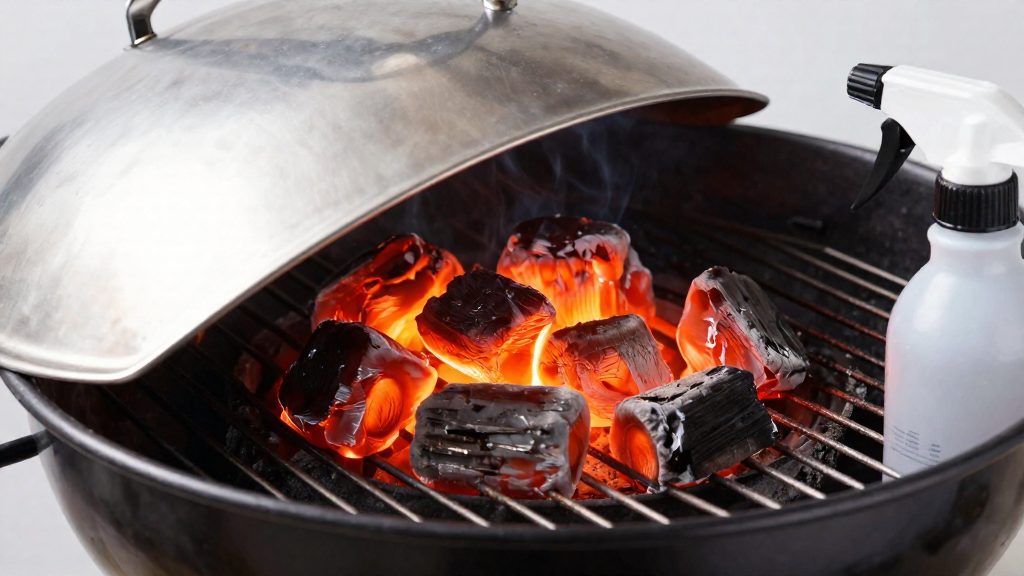
The treatment has four stages, and their order matters. The vinegar is applied only to the rust spots, so the paper towel should be damp rather than dripping. The grates are then re-oiled before heating, which leaves an oil film on the exposed metal while the iron is hot. The heating stage can be carried out in an oven or on a covered grill set to low.
| Stage | Action | Setting |
|---|---|---|
| 1. Vinegar | Dab residual rust with a damp paper towel | White distilled vinegar, spots only |
| 2. Oil | Re-oil the grates | Before heating |
| 3. Heat | Bake the grates | 300°F (about 150°C) for 30 minutes in an oven or covered grill on low |
| 4. Check | Inspect the oil film | Every 30 minutes |
Oil checks during heating
After the first 30-minute heating period, the grates need monitoring. The same source advises checking them every 30 minutes for one to two hours. If the surface looks dry, add more oil before the next interval. This keeps the iron coated during the full heating window, which is the period when bare metal is most exposed to air at temperature.
Once the rust has been dabbed away and the grates have been heated and checked, they can be returned to the grill. The method is limited to light residual rust. If rust remains after this treatment, the next step should be a different approach from the sections below.
What to do about heavy rust
When scrubbing and oiling do not remove heavy rust, The Grilling Dad (2023) describes two escalated treatments: a vinegar and baking soda soak finished by scouring, and an oven cleaner treatment finished by a rinse. The right choice depends on how deeply the rust has penetrated and how much time you can allow.
| Method | Agent | Contact time | Finishing step |
|---|---|---|---|
| Vinegar and baking soda soak | One bottle of vinegar and one cup of baking soda | One hour to overnight; several days for heavy rust | Steel brush or steel wool scouring |
| Oven cleaner bag | Oven cleaner, sealed in a bag | A few days, or as the cleaner’s instructions specify | Warm soapy water rinse, then complete drying |
Overnight soak is the gentler escalation. Submerge the grates in the vinegar and baking soda mixture for an hour or overnight. If the rust is still firmly attached afterwards, repeat the soak instead of scrubbing harder, because the source notes that heavy rust may need several days of soaking. Once the scale has loosened, scour the grates with a steel brush or steel wool to lift the remaining flakes.
Oven cleaner is the stronger option for severe rust. In a well-ventilated area and wearing gloves, coat the grates with the product and seal them in a bag. Leave them for a few days, or as the cleaner’s instructions say. Then rinse them with warm soapy water, dry them completely, and re-season them.
Steel wool scouring is the mechanical finish for the vinegar and baking soda soak. It removes softened residue, but it also removes some of the surface, so use it only on rust that the soak has already loosened. Avoid it on grates that still have a stable, dark patina.
How do you season grates after rust removal?
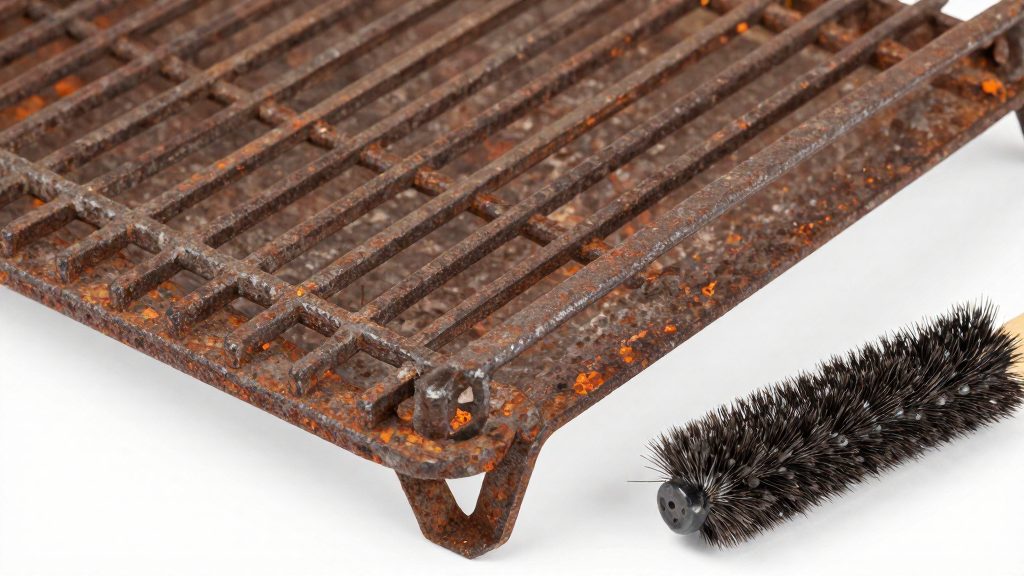
Re-seasoning rebuilds the protective oil layer on bare cast iron once rust has been scraped or dissolved away. The method is the same however the rust was removed: heat the grates, then build up thin coats of vegetable oil. According to The Grilling Dad (2023), the grill should be heated to 350–400°F (about 175–200°C) before any oil goes on, so the oil is applied to a warm surface.
Once the grill is at temperature, the process works as follows:
| Step | Action | Detail |
|---|---|---|
| 1 | Heat the grill | Bring the grill to 350–400°F |
| 2 | Apply oil | Wipe on a thin coat of vegetable oil |
| 3 | Repeat | Re-apply a thin coat every 20–30 minutes |
| 4 | Check the finish | Continue until the surface is black and shiny |
Apply the oil with a paper towel or cloth held in tongs, since the grates stay hot throughout. Thin coats are the key instruction: the oil is built up gradually over repeated applications rather than applied in one heavy layer.
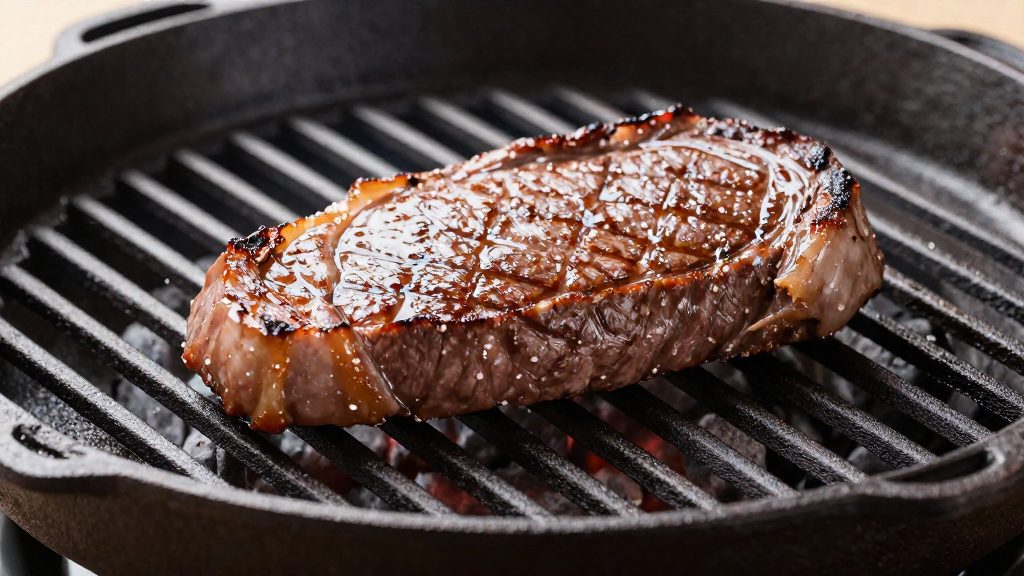
The target finish is a surface that is black and shiny. Reaching it indicates the oil has built up into a continuous coating over the iron. Stop once the grates reach that look, then let them cool before you use them.
Prevent rust from coming back
Rust returns when bare cast iron stays damp or unprotected between cooks. Prevention is a routine rather than a one-time fix, built on three habits: keeping the grates dry after each cook, maintaining a light oil film, and storing the grill where moisture cannot settle on the metal.
Dry the grates after each cook
Once the food is off, leave the burners or coals running briefly and keep the lid open so residual moisture evaporates. Avoid spraying water onto hot grates, since wet iron that cools quickly is prone to surface rust. When the grates are cool enough to handle, wipe off remaining grease and any moisture with a dry cloth or paper towel.
Maintain an oil film between sessions
The rust-removal guidance from Hunker (2018) advises re-oiling the grates and adding oil whenever they look dry, and the same check applies to routine care.
Store the grill covered in a dry location
Keep the grates in the grill and cover the cooking unit when it is not in use, or store removable grates indoors in a dry place. Storing grates outdoors in damp conditions, or sealing them while still wet, lets moisture stay against the bare iron.
| Routine | Timing | Action |
|---|---|---|
| Drying | After the grates have cooled | Wipe off grease and moisture |
| Storage | Between sessions | Cover the grill or keep removable grates in a dry place |
When to replace the grates
Rust treatment has a limit. Once cleaning and re-oiling have been tried, the grate is either restored or it is no longer worth saving. According to Hunker (2018), two conditions mark that point: heavy rust that cannot be removed, and rust that has eaten through large sections of the grate. In both cases the corrosion has gone deeper than the surface, so further cleaning will not restore the metal.
| Condition after treatment | Decision |
|---|---|
| Rust lifts with brushing and the surface re-seasons evenly | Keep and maintain |
| Rust persists after repeated cleaning and oiling | Replace |
| Rust has eaten through large sections of the bars | Replace |
Before deciding, inspect the cleaned grate in good light. Look for holes or thin spots where the surface has pitted, for flaking or sheets of metal lifting off, and for bars that look noticeably narrower than the rest of the grate. Then flex each section gently with both hands. A grate that bends, cracks along a bar, or feels loose at a joint has lost the structural integrity needed to support food over the fire, and cleaning alone cannot repair it.
Judge the metal, not the appearance. Discolouration and light surface rust are a maintenance issue. Missing metal and loss of rigidity are a replacement issue, regardless of how clean the grate looks.
Frequently asked questions
Can I remove light rust without harsh chemicals?
Yes. Scrub the grates with a dry wire brush, use a metal scraper for thick flakes, then rub them with a paper towel coated in vegetable oil. According to Hunker (2018), this lifts most surface rust before you need any stronger treatment.
When is rust too severe to fix at home?
Rust that cannot be removed, or rust that has eaten through large sections of the grate, means the grates should be replaced. Hunker (2018) gives this as the clear threshold, so cleaning cannot restore metal that has already been lost.
How do I re-season grates after a deep clean?
Heat the grill to 350–400°F (about 175–200°C), then wipe on thin coats of vegetable oil every 20–30 minutes. Keep going until the surface turns black and shiny, a process known as re-seasoning. The Grilling Dad (2023) recommends this step after its oven cleaner method, and it should be done only once the grates are fully dry.