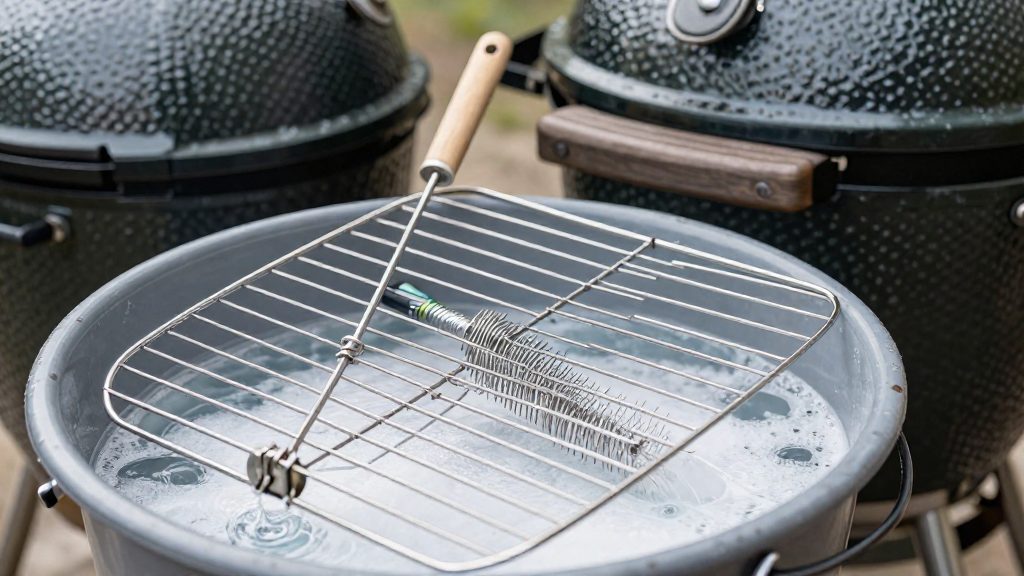
Leftover residue on kamado grill grates affects three things: the flavor of the next cook, the risk of flare-ups from accumulated grease, and how evenly heat moves across the cooking surface.
Why clean kamado grill grates?
Flavor carryover
Residue from earlier cooks stays on the grate and transfers into the next meal. Burnt fat and charred particles from a previous sear can give mild foods such as fish or vegetables a bitter or stale taste. Clean grates let each cook reflect its own seasoning and ingredients.
Grease buildup and flare-ups
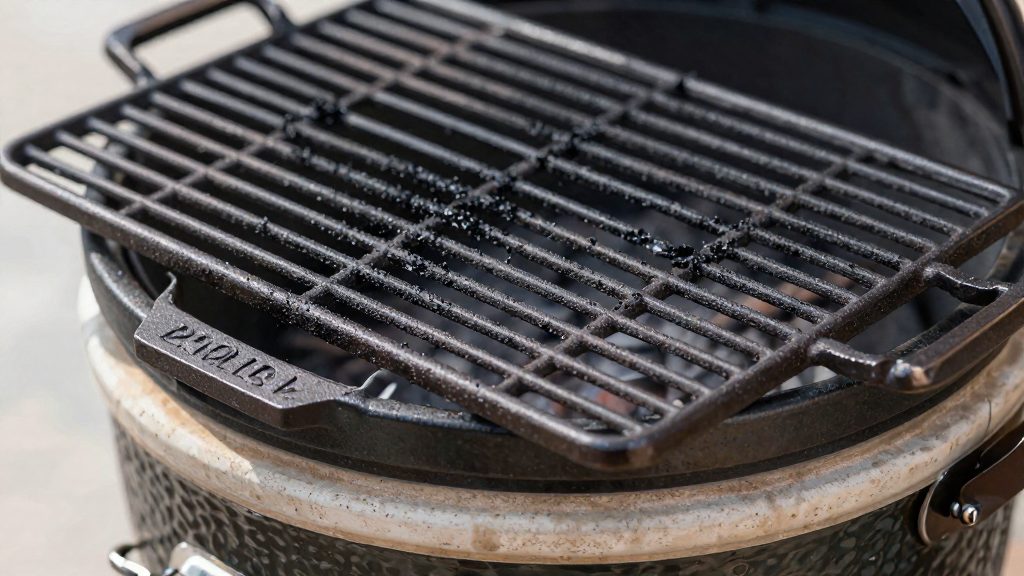
Fat that drips onto the grate and is not removed builds up in layers. When those drippings reach the hot fire, they ignite and cause flare-ups. The more grease that has accumulated, the more fuel there is for those flares, which can scorch the surface of the food and make temperature harder to control.
Temperature control and airflow
Kamado grills depend on the vents to regulate airflow and hold a steady temperature. Deposits on the grates and in the cooking chamber can change how heat and air circulate, so the grill may run hotter or cooler than the vent settings suggest. Regular removal of residue helps keep the vent settings predictable from one cook to the next.
What do you need to clean kamado grates?
Cleaning kamado grates requires three tools: heat-resistant gloves, a stiff grill brush, and an ash removal tool for the firebox. Each covers a different stage of the job, so gather them before you start.
| Tool | Role in the cleaning session |
|---|---|
| Heat-resistant gloves | Protect your hands when lifting grates in and out of the chamber during a deep clean |
| Stiff grill brush | Dislodges loose residue from the grate surface once the grates have cooled |
| Ash removal tool | Clears ash from the firebox |
Heat-resistant gloves are the first item to have ready. Grates handled during a heat-based deep clean remain hot, so direct contact with bare hands is avoided by wearing gloves for every step that involves moving them.
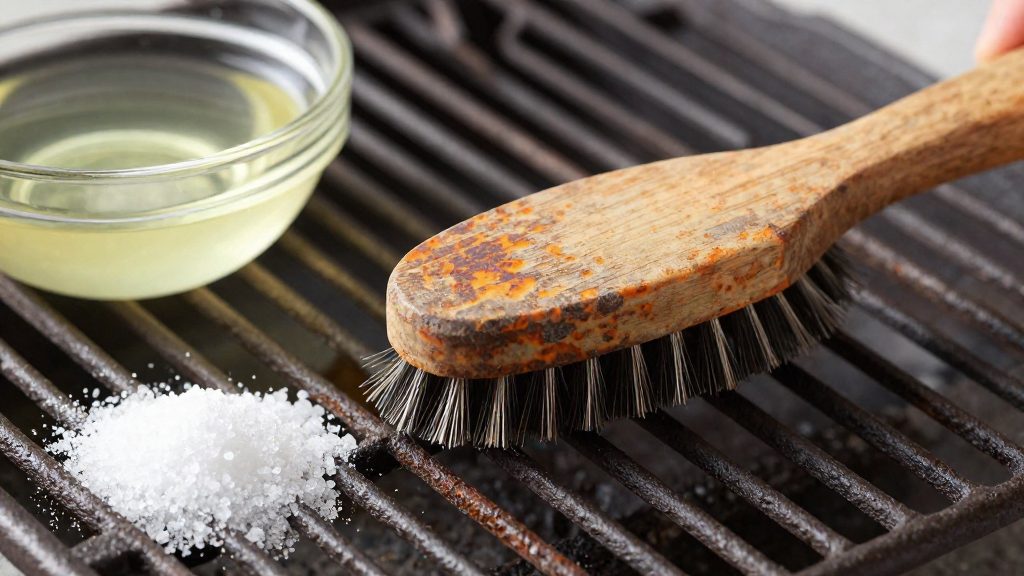
A stiff grill brush handles loose residue. The Online Grill (2026) describes brushing residue off the grates after its deep-clean and mould-removal heat cycles, once the grill has cooled. Choose a brush with firm bristles that can grip the bars rather than a soft brush that only pushes debris around.
The ash removal tool is used on the firebox, not the grates. Ash left in the firebox can restrict airflow.
Keep all three tools together in one place near the grill. A tidy setup makes it easier to start each session with the right equipment already at hand.
How to brush grates after every cook
The routine post-cook step on a kamado has three parts: cooling, ash removal and brushing. Kamado Joe (2026) advises letting the grill cool completely after each use before any cleaning begins, so grates and the ceramic body are handled only once they are no longer hot.
Once the kamado is cool, remove the ash. The Online Grill (2026) recommends removing ash after every use, which keeps the firebox clear before the next cook.
Brushing comes next. Use a grill brush on the cooking grates to lift loose food particles and drippings while they are still easy to remove. The table below sets out the routine.
| Step | Action | When |
|---|---|---|
| Cool | Let the kamado cool completely | After every use, before cleaning |
| Remove ash | Clear ash from the firebox | After every use |
| Brush | Brush residue off the grates | After every cook |
| Scrub | Wash grates with warm water, mild dish soap and a non-abrasive sponge | Routine cleaning |
| Soak | Soak grates in warm water with mild dish soap, then scrub | Stubborn buildup |
For stubborn buildup, Kamado Joe (2026) suggests soaking the grates in warm water with mild dish soap before scrubbing them.
Keep the steps in this order each time: cool, remove ash, brush, then wash the grates with warm soapy water and a non-abrasive sponge, as Kamado Joe (2026) recommends. Add a soak when buildup is stubborn. Do not brush while the grates are still warm. Wait until the kamado has cooled completely, as Kamado Joe (2026) advises, before brushing or washing.
Can you use soap and water on kamado grates?
Yes. Kamado Joe (2026) recommends cleaning kamado grates with warm, soapy water and a non-abrasive sponge, which covers routine cleaning and buildup that resists a quick scrub.
Routine scrubbing with warm soapy water
For everyday residue, the method is simple:
- Prepare a basin of warm water with a small amount of mild dish soap.
- Dip a non-abrasive sponge into the solution and scrub the grate surfaces.
- Rinse the grates thoroughly with clean water to remove soap residue.
The sponge should be non-abrasive. Kamado Joe’s guidance specifies this type, so harsher scrubbing materials are outside the recommendation.
Choosing a non-abrasive sponge over steel wool
Steel wool is an abrasive scrubber, which means it does not match the non-abrasive approach Kamado Joe describes. Choosing a soft, non-abrasive sponge keeps the cleaning method consistent with the manufacturer’s advice and avoids the harsher surface contact that steel wool produces.
Soaking stubborn buildup
When residue remains after routine scrubbing, the stubborn buildup needs more contact time. Soaking loosens the residue so the sponge can lift it with less effort.
How to burn off residue in a deep clean
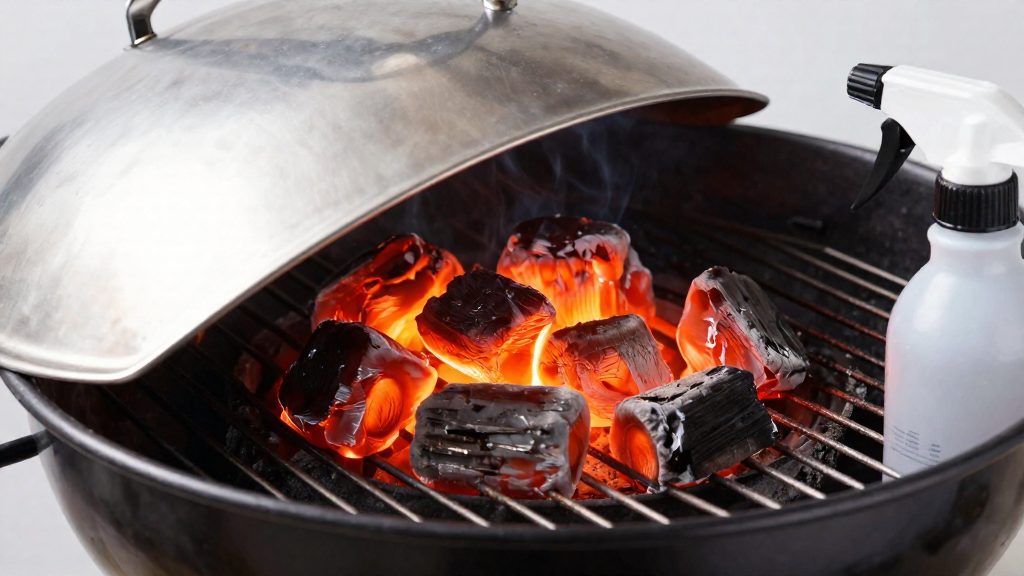
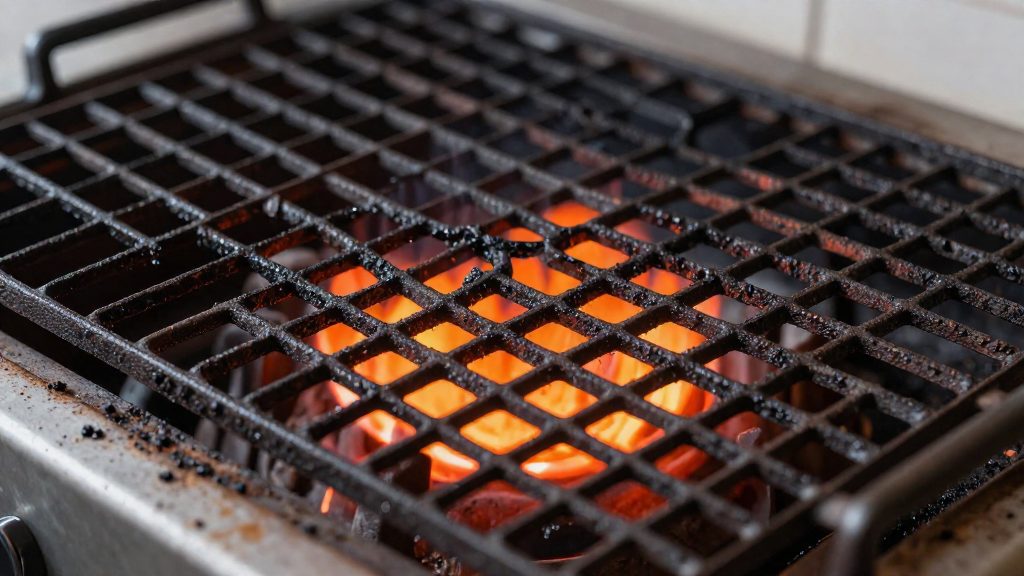
A burn-off uses heat instead of scrubbing to loosen residue that has built up on kamado grates. According to The Online Grill (2026), the method starts by heating the grill to about 260–315°C (500–600°F) with all vents fully open. The heat is held for roughly 30 minutes, after which the vents are closed so the unit can cool down gradually.
| Phase | Vent position | Temperature | Duration |
|---|---|---|---|
| Burn-off | Fully open | 500–600°F (260–315°C) | About 30 minutes |
| Cool-down | Fully closed | Falling from burn-off level | Until the grill is cool |
Open the vents before lighting or heating the charcoal, and monitor the dome thermometer throughout. Keep the grill within the target range for the full 30 minutes. Once the kamado has cooled, brush the loosened residue off the grates. Brushing while the metal is still hot can cause the debris to fall back into the firebox or onto the cooking surface, so waiting until the grates are cool is the safer sequence.
Burn-offs suit the periodic deep clean rather than routine maintenance.
How to remove mold from grates
Mold on kamado grates that have sat unused for a long period can be treated with a heat cycle followed by a manual brush. The Online Grill (2026) describes this as a two-phase process: a heating phase of about 20 minutes, then a closed-intake phase, with brushing only after the grill has cooled. The grates must be in place before the cycle starts, so they are inside the chamber for the full treatment.
Follow these steps in order:
| Step | Action | Duration |
|---|---|---|
| 1 | Place the grates in the grill before lighting | Before heating |
| 2 | Heat the kamado to about 500–600°F (260–315°C) | 20 minutes |
| 3 | Close the intake vent | 20 minutes |
| 4 | Close the exhaust vent, then let the grill cool | Until fully cool |
| 5 | Brush the grates | After cooling |
The first phase raises the chamber to the mold-treatment range while the vents are open. The second phase, with the intake vent closed, keeps the heat in the chamber for a further 20 minutes. Once the grill is fully cool, brush the grates to remove the loosened mold. Do not start brushing while the grill still holds heat, because the procedure specifies brushing only after cooling.
This cycle is intended for mold that appears after the kamado has gone unused for a long period.
How often should you clean a kamado?
Kamado cleaning follows two rhythms: routine cleaning after cooking and a deep clean at longer intervals. The Online Grill (2026) recommends a deep clean every few months, and its author does one twice a year, so the interval is a personal choice within that range.
Routine cleaning is the task you will repeat most often, using warm, soapy water and a non-abrasive sponge after each cook.
The deep clean is a separate, less frequent job. Because it is scheduled by time rather than by cook, it is easy to forget, so set a reminder for the interval you choose.
Adjust the interval to your cooking frequency. A kamado used several times a week builds up residue faster than one used only occasionally, so a heavily used grill may need a deep clean sooner than the every-few-months guideline suggests. A lightly used grill can follow the longer schedule, provided the routine cleaning after each cook is never skipped.
Drying and protecting grates
Kamado Joe advises rinsing the grates thoroughly and air drying them before reinstalling them (Kamado Joe, 2026). Drying is a separate step from washing, and it should be finished before the grates go back into the kamado.
Air drying
Air drying means leaving the grates in open air until no moisture remains on them. Use this sequence:
| Step | Action | Purpose |
|---|---|---|
| 1 | Rinse each grate thoroughly with clean water | Removes all soap residue |
| 2 | Stand or lay the grates in open air | Lets water evaporate from the bars |
| 3 | Check the underside and the joints by touch | Confirms no damp spots remain |
| 4 | Reinstall only when fully dry | Keeps moisture out of the firebox |
Check the joints where bars meet the frame, since water collects there and dries last.
Oiling the grates
If your grate material calls for it, and the manufacturer’s instructions allow it, apply a thin oil film once the grates are dry. Dip a paper towel in a neutral cooking oil, wipe a light coat over the bars, and wipe off any excess so the surface does not become sticky. A heavy layer collects dust and debris between cooks, so less is better. Reinstall the grates once the oil is applied.
Covering the kamado between cooks
Covering the kamado keeps dust, rain and humidity off the grates between cooks. Close the lid and place a fitted cover over the unit. A fitted cover fits the kamado’s shape and stays in place in wind, which a loose tarp does not. Store the grill in a dry area when it is not in use for long periods.
Frequently asked questions
How often should I clean my kamado grill grates?
The Online Grill (2026) recommends removing ash after every use and doing a deep clean every few months. Kamado Joe (2026) advises letting the grill cool completely after each cook before any cleaning begins.
Should I use a burn-off or soap and water on my grates?
A burn-off heats the kamado to about 260–315°C (500–600°F) with vents fully open for roughly 30 minutes, then the residue is brushed off once the grill has cooled (The Online Grill, 2026). For stubborn buildup, Kamado Joe (2026) suggests soaking the grates in warm water with mild dish soap, then rinsing thoroughly and air drying them before reuse.
What should I do if the grates have mold after long storage?
Place the grates in the grill and heat it to about 260–315°C (500–600°F) for 20 minutes, then close the intake vent for another 20 minutes before closing the exhaust vent, according to The Online Grill (2026). Brush the mold off only after the grates have cooled completely.