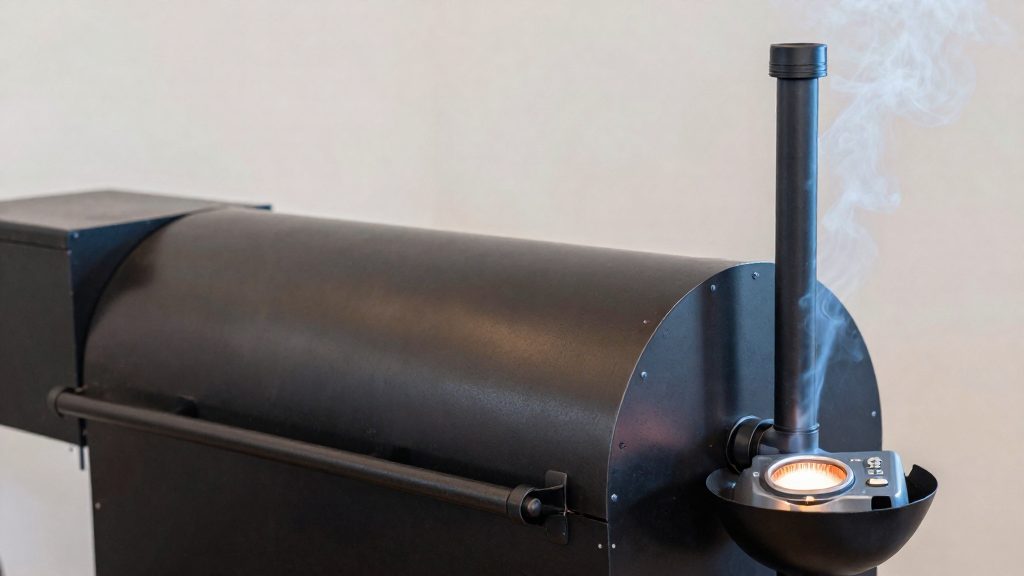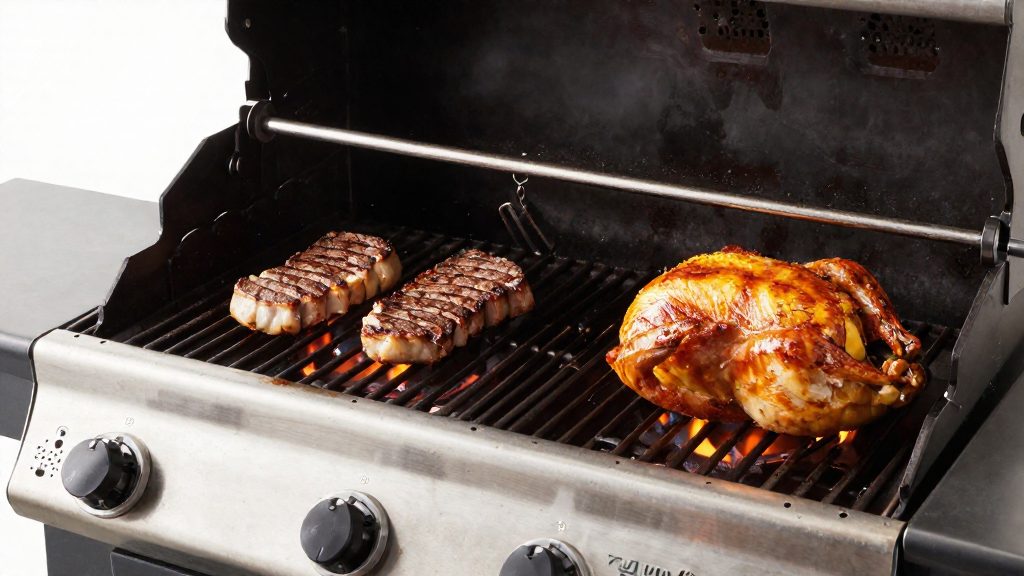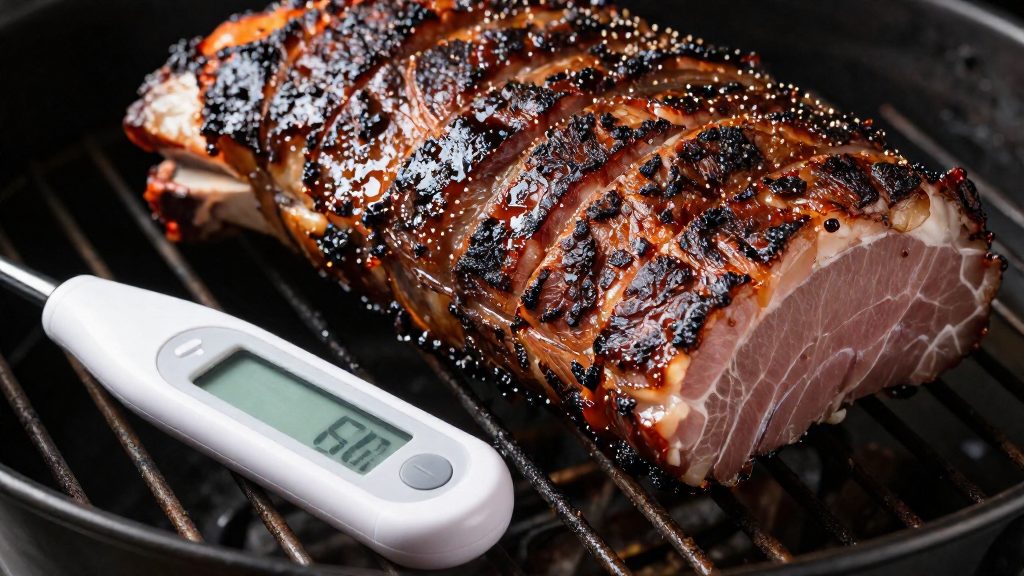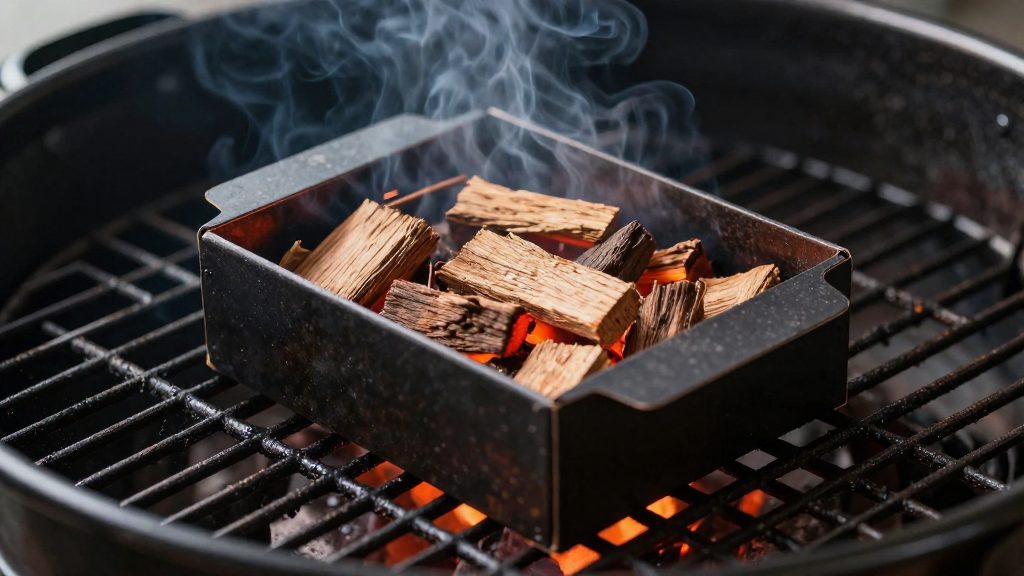
A smoker box is a small metal container that holds wood chips on a gas grill. The chips smolder over a burner and release smoke, which flows over food cooked beside the box. The food is cooked by indirect heat rather than over the lit burners, so the smoke, not the flame, supplies most of the smoked flavor. Weber (2026) advises placing food over unlit burners near the smoker box.
What does a smoker box do on a gas grill?
Smoke generation from chips inside the box
A box typically produces smoke for 30-60 minutes before it needs a refill.
Built-in versus stand-alone stainless smoker boxes
Built-in smoker-box burner designs use a dedicated burner to keep the chips smoldering. Weber (2026) suggests a stand-alone stainless steel box for grills without a built-in unit, placed on the cooking grate. A DIY option is a foil pan of drained chips, covered with foil and punctured, set over an unlit burner. Once that pan is running, chips cannot be added.
Food & Fire Friends (2026) advises burning off a new smoker box empty on the grill for 20-30 minutes before first use, so that manufacturing residue is removed before the box touches food.
Smoke versus heat: what the box contributes
The box supplies the smoke; heat comes from the burners, including the built-in smoker-box burner if your grill has one. When smoking below 250°F (121°C) on a grill with a built-in smoker-box burner, Weber (2026) advises turning off the main burners and using only the smoker-box burner. Vents do not control temperature on a gas grill, according to the same guidance.
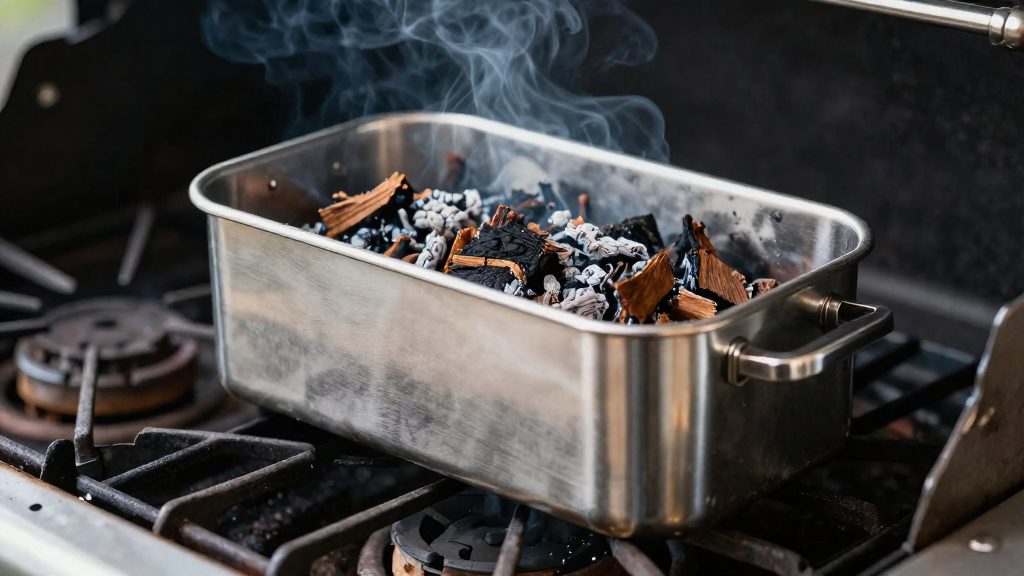
Which wood chips should you choose?
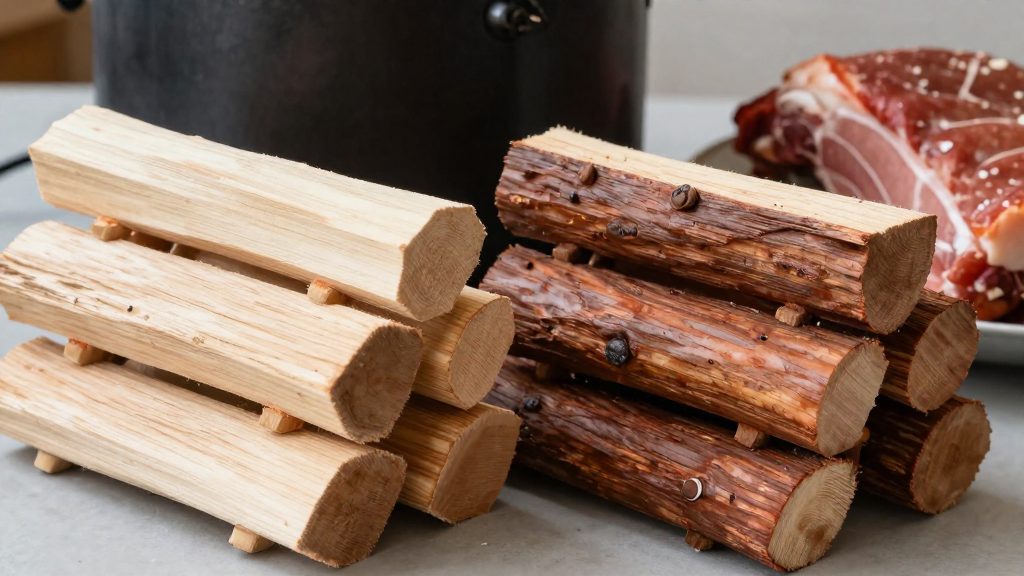
For a gas grill, the wood type matters more than the brand. Hardwood chips are the standard choice in a smoker box, and each species adds a different aroma. Match the wood to the meat or fish you are cooking, and use one wood at a time until you know how it tastes.
Hardwood chip types and common pairings
| Wood | Family | Common pairing |
|---|---|---|
| Hickory | Hardwood | Pork, beef, and ribs |
| Pecan | Nut wood | Pork, poultry, and beef |
| Apple | Fruitwood | Poultry, pork, and fish |
| Cherry | Fruitwood | Poultry, pork, and salmon |
Hickory is the most assertive option of the four. Its strong, bacon-like character suits long-cooked red meats, but it can overwhelm delicate fish. Pecan is a nut wood with a milder, sweeter smoke that works well across poultry and pork. Fruitwoods such as apple and cherry produce gentler smoke, which is why they are often chosen for poultry and fish, where a heavy profile would dominate the flavor.
Chips versus other formats on a gas grill
Chips are the most practical format for a built-in or stand-alone smoker box, because they fill the box evenly and start producing smoke quickly. This guide focuses on chips, the format used for gas-grill smoker boxes. Chip size affects burn time. For longer cooks, plan to refill the box or choose a wood that suits the length of the cook.
Matching wood to the food
- Red meats and pork: hickory or pecan, for a robust, savory smoke.
- Poultry and fish: apple or cherry, for a light, fruity aroma.
- Mixed cooks: start with a single fruitwood, then experiment with one stronger wood on the next session.
Keep one wood per box session. Mixing species makes it harder to identify which flavor came from which wood, and it becomes difficult to adjust your next cook.
Should you soak the wood chips?
Soaking is worth doing before you load a smoker box on a gas grill. Weber advises soaking wood chips for at least 30 minutes so they smolder rather than flare up (Weber, 2026). Treat 30 minutes as the minimum. Start soaking before you preheat, so the chips are ready when the box is.
Smoldering versus flaring
The purpose of soaking is to control how the chips burn. Chips that smolder produce a steady stream of smoke. Chips that flare produce open flame and short bursts of heat, which push the box past the temperature range you want for smoking.
Drained chips, not dripping ones
Weber’s loading method uses drained chips. Wet chips packed tight would limit airflow and slow ignition, so drain them well and load them loosely.
| Step | Guideline | Source |
|---|---|---|
| Soak | At least 30 minutes | Weber (2026) |
How do you set up the smoker box step by step?
Setup has three stages: prepare the chips, heat the grill, and load the box. Soak the chips as described above, then drain them before loading.
Next, preheat the grill on high for 10-15 minutes and clean the grates, as Weber recommends (Weber, 2026). Heating the grill first gets the box up to temperature so the chips start to smolder once they are added.
If the smoker box is new, perform a burn-off before its first use. Food & Fire Friends advises running the empty box on the grill for 20-30 minutes, which removes manufacturing residue and prepares the metal for smoke (Food & Fire Friends, 2026).
Load the box with the drained chips using these rules:
| Step | Action | Figure from source |
|---|---|---|
| Soak | Submerge chips before use | At least 30 minutes (Weber) |
| Preheat | Run grill on high | 10-15 minutes (Weber) |
| Burn-off | Run new, empty box | 20-30 minutes (Food & Fire Friends) |
| Fill | Add chips to the box | No more than about 80% full (Food & Fire Friends) |
| Pack | Place chips loosely | Do not pack them down |
Do not pack the chips tightly. Food & Fire Friends notes that loose chips let air circulate, which keeps the smoldering steady (Food & Fire Friends, 2026). Overfilling restricts that airflow and can cause the chips to flare.
Spread the drained chips evenly across the bottom of the smoker box. Close the smoker box lid, then close the grill lid (Weber, 2026). Keeping both lids shut traps the smoke inside the box and the cooking chamber.
For a gas grill with a built-in smoker box, these steps complete the setup. Once the box is loaded and the lids are closed, the grill is ready for the smoke phase described in the following sections.
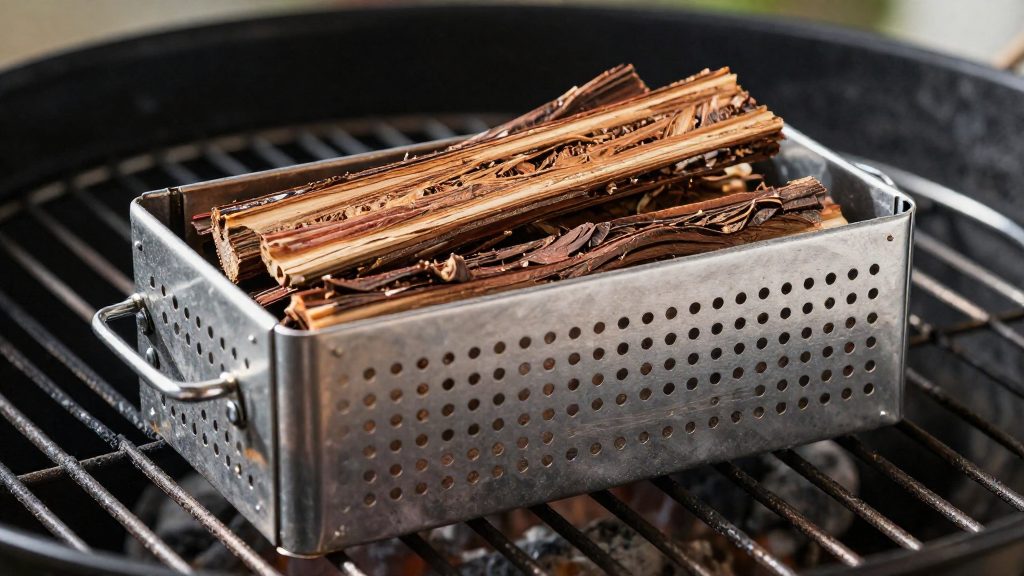
Where do you place the box and the food?
Box position and food position both control how soon smoke reaches the meat. The smoker box can sit on the flavorizer bars, the metal strips above the burners, or directly on the cooking grate. Food & Fire Friends (2026) gives the smoke onset window for each position:
| Box position | Smoke onset |
|---|---|
| On the flavorizer bars | About 5-10 minutes |
| On the cooking grate | About 15-20 minutes |
Use the flavorizer bars when you want smoke to start early in the cook. The grate position is slower to produce smoke, so use the flavorizer bars if you want smoke sooner. On a gas grill without a built-in smoker box, Weber (2026) suggests a stainless steel box placed on the cooking grate.
The food goes over the unlit burners, near the smoker box, not over the lit ones. Placing the meat away from the active flame keeps it in the smoke zone without direct heat from the burner beneath it.
If you use a DIY setup, a foil pan of drained chips is covered with foil, punctured, and placed over an unlit burner. Position it the same way as a built-in box, with the food on the unlit side.
What temperature works best for smoking on gas?
Food & Fire Friends (2026) suggests smoking at about 225–250°F (107–121°C) on a gas grill. Holding that band depends mostly on which burners are lit. Weber (2026) advises that for smoking below 250°F, the main burners should be turned off and only the smoker-box burner used as the heat source.
Below 250°F, the setup works as follows:
- Main burners: with a built-in smoker-box burner and a target below 250°F (121°C), turn them off for the whole smoke. With a stand-alone box or a DIY foil pan, keep a burner lit for heat and place the food over the unlit burners.
- Smoker-box burner: lit to start the chips smoldering. Once smoke builds, Weber (2026) advises lowering it to medium or low, which keeps the chips smoking without flaring.
- Lid: closed for the whole session. Weber (2026) advises keeping it closed, so heat and smoke stay inside the grill and the reading remains steady.
- Vents: not a temperature control. Weber (2026) states that vents do not control temperature on a gas grill, so opening or closing them will not reliably raise or lower the reading. The burner setting is the adjustment to make instead.
Because the grill is running on a single low-output burner, small burner changes have a noticeable effect. Make adjustments in small steps and allow the grill to settle before judging the result. Check the reading at grate level rather than relying on the built-in lid thermometer alone, since the two can differ across the cooking area.
How do you stay safe and clean the box?
Check the box before the chips burn down, rather than waiting until smoke stops. Each time you handle the box, wear heatproof gloves and tongs, because the box stays hot throughout the session.
If the chips catch fire
Flaming chips produce uncontrolled heat and smoke, so respond in this order:
- Remove the smoker box from the grill with heatproof gloves and tongs.
- Extinguish the flames.
- Lower the grill temperature.
Do not return the box to the grill until the chips are no longer burning.
Emptying and cleaning the ash
Let the box cool completely before emptying it. Once cool, transfer the ash into a metal can, which keeps hot residue contained and separate from your household waste.
After washing the box, dry it thoroughly. Moisture left inside the box can cause rust, which shortens its service life. Repeat the emptying and drying routine after every session so that ash and damp residue do not build up between uses.
Frequently asked questions
How long should I preheat the grill before lighting the smoker box?
Weber advises preheating the grill on high for 10-15 minutes, then cleaning the grates before any food goes on. This removes residue that would otherwise mix with the smoke.
What should I do if the wood chips catch fire?
Remove the box with heatproof gloves and tongs, extinguish the flames, and lower the grill temperature. Let the box cool completely before emptying it, and put the ash in a metal can.
How full should I load the smoker box?
Fill the box to no more than about 80% capacity and do not pack the chips down. Loose chips let air circulate, which keeps them smoldering steadily instead of flaring.