A pellet smoker is generally the easier choice for beginners because it holds a set temperature on its own and can be left unattended. An offset smoker needs ongoing attention, with regular monitoring and damper adjustments. The reason lies in how each unit produces heat and smoke, which determines how much control the cook has.
Pellet smoker vs offset smoker: the quick answer
Both styles cook with indirect heat and wood smoke, but they generate them differently:
| Feature | Pellet smoker | Offset smoker |
|---|---|---|
| Heat source | Hardwood pellets fed by an auger | Wood, or charcoal with wood chips, in a separate firebox |
| Power requirement | Needs electricity to run | Burns fuel only |
| Smoke character | More consistent, slightly milder | More intense smoky flavor |
| Temperature control | Automatic hold at a set temperature | Managed through damper adjustments |
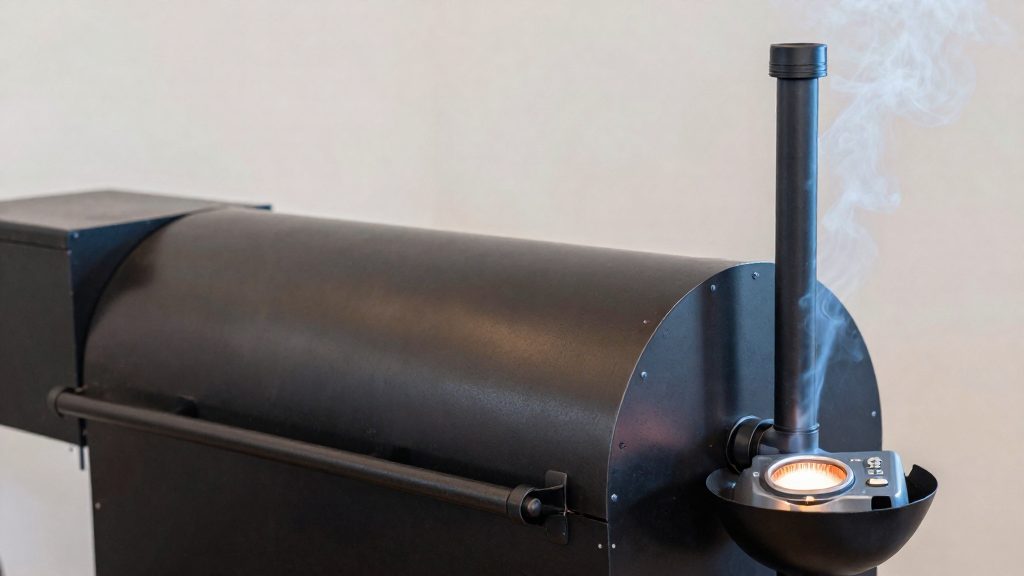
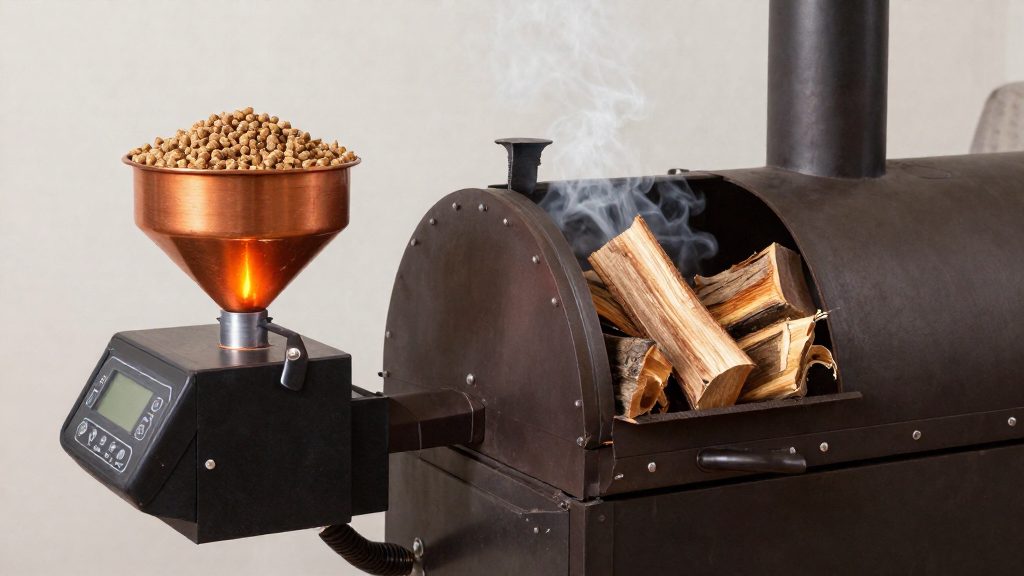
A pellet smoker is a single chamber in which the auger delivers a controlled amount of fuel to the burn pot, so the heat output stays steady once the setting is chosen.
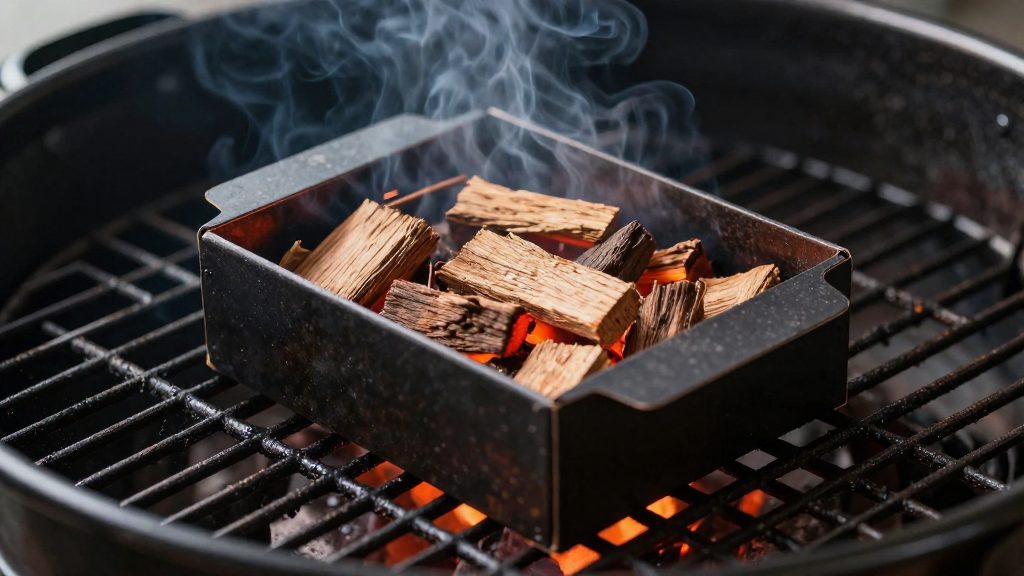
An offset smoker separates the cooking chamber from the firebox, and the smoke travels across the food before exiting. Because the cook controls the fuel, the flavor is more intense, but the heat varies with the fire. Watch the thermometer and adjust the dampers as needed.
Which is easier for a first-time smoker?
For a first-time smoker, the pellet smoker is the easier starting point. Z Grills (2026) states that pellet smokers hold a set temperature automatically and can be left unattended, while offset smokers need regular monitoring and damper adjustments and take practice to master.
Automatic temperature hold on pellet models
A pellet smoker feeds hardwood pellets into the burn pot with an auger and needs electricity to run. Once you set a target temperature on the controller, the unit regulates the fire itself, so you do not adjust airflow or fuel by hand. This matters most in the early hours of a long cook, when a beginner is most likely to overcorrect a chamber that is still settling.
Unattended operation for pellet smokers
Because the controller manages the fire, you can leave a pellet smoker running through a long cook, such as a pork shoulder or brisket, and check the meat at intervals rather than watching the chamber. Your attention is then needed for the meat and the probe readings, not for the fire.
Damper adjustment and fire management on offsets
An offset smoker burns wood, or charcoal with wood chips, in a separate firebox, and you control the heat through the dampers and by adding fuel. Temperature is set by opening or closing the dampers and feeding the fire at intervals, so the cook must stay with the smoker throughout. BBQHost (2026) ranks the offset as the steepest learning curve, because it requires fire management, regular wood additions and patience with temperature swings.
For a first cook, start with a pellet smoker set to a moderate temperature, then move to an offset once you can read how your fire responds to damper changes.
Does an offset really taste better?
Offset smokers produce the stronger smoke character of the two designs. According to Z Grills (2026), offsets give a more intense smoky flavor, while pellet smokers give a more consistent but slightly milder one. Whether an offset tastes “better” therefore depends on what you want on the plate: a bold, smoke-forward crust or a steadier, more neutral smoke profile. The difference comes mainly from how each unit generates smoke and which fuel it burns.
In an offset, the fire sits in a separate firebox, and you control it directly. Smoke density changes with the fuel you add and how you manage the fire, so the flavor is shaped by your decisions throughout the cook. Fuel choice adds another layer. An offset can burn wood, or charcoal with wood chips. With wood, the fuel itself supplies the smoke. With charcoal, the smoke comes from the chips you add, so the amount you add sets how much smoke reaches the meat.
Pellet smokers take a different route. They burn hardwood pellets that an auger feeds into the fire, and they need electricity to run that feed. Because the feed is automated, the smoke output is more consistent across the cook. That steadiness is what makes the flavor repeatable across long cooks, though the smoke is slightly milder.
| Factor | Offset smoker | Pellet smoker |
|---|---|---|
| Smoke intensity | More intense smoky flavor | Consistent, slightly milder flavor |
| Fuel choice | Selectable | Fixed to pellets |
Smoker price ranges in US dollars (check Canadian prices before buying)
Manufacturer price ranges give a starting point for budgeting a home smoker. Z Grills (2026) quotes the following ranges in US dollars:
| Smoker type | Manufacturer price range (USD) |
|---|---|
| Offset smoker | about 100 to 2,000 |
| Pellet smoker | about 300 to 5,000 |
| Z Grills typical range | 400 to 900 |
The offset range spans about twentyfold between its lowest and highest figure, and the pellet range about seventeenfold, so the category average says little about any single model. Comparing specific models with similar cooking area and features gives a more useful price comparison than comparing categories.
The Z Grills typical range of 400 to 900 USD falls within the pellet smoker band, which is consistent with the brand’s position in that category. Offset smokers cover the widest span, from the low end of about 100 USD to about 2,000 USD, so the entry price of a basic offset is well below any pellet smoker in the quoted range.
These figures are manufacturer price ranges in US dollars and do not reflect Canadian retail pricing. Canadian shelf prices can differ from US list prices, so check current prices in Canadian dollars with Canadian retailers and dealers before setting a budget or comparing models.
What fuel and upkeep do they need?
A pellet smoker burns hardwood pellets that an auger moves from the hopper into the burn pot, and it needs electricity to run that feed. An offset smoker burns wood directly, or charcoal with wood chips, so its fuel is added and managed by hand. According to BBQHost (2026), the pellet smoker’s routine centres on cleaning the auger and burn pot, while the offset’s centres on frequent ash and grease removal. Each design therefore needs a different maintenance rhythm.
| Aspect | Pellet smoker | Offset smoker |
|---|---|---|
| Fuel form | Hardwood pellets | Wood, or charcoal with wood chips |
| Fuel feed | Automatic, via auger | Manual wood additions |
| Main upkeep | Auger and burn pot cleaning | Ash and grease removal |
Pellet smokers: auger and burn pot cleaning
The auger carries pellets from the hopper to the burn pot, and fine dust and debris can collect along that path. Clearing the auger and burn pot keeps the feed consistent. Let the unit cool completely and disconnect it from power first. Then remove the grates and burn pot, brush out residue and ash, and reassemble before the next cook.
Offsets: frequent ash and grease removal
On an offset, ash builds up in the firebox and grease collects on the grates and in the cooking chamber. Remove ash from the firebox once the fire is out and the ash is cool, so airflow through the intake stays clear. Scrape grease from the grates and drip areas after each cook. Regular removal matters more here because the fire is managed by hand and not by an automatic feed.
Sourcing and storing fuel
Use hardwood pellets for a pellet smoker and dry, seasoned wood for an offset. Keep pellets in a sealed container in a dry place, and keep split wood dry and off the ground, so it burns cleanly and does not smoulder.
Can you smoke safely in a Canadian winter?
Both designs can be run outdoors in winter, but the cold affects them differently. A pellet smoker depends on electricity for its auger, igniter and controller. An offset smoker burns wood or charcoal and depends entirely on the fire you build. In both cases, the safest setup keeps the unit outside, on a stable, level surface, away from walls, doors and windows.
| Factor | Pellet smoker | Offset smoker |
|---|---|---|
| Power source | Electricity for auger and controller | Wood or charcoal, no electrical feed |
| Main winter concern | Moisture in pellets and power connections | Wind and heat loss through the firebox |
Cold-weather effects on pellet feed and electronics
Pellets absorb moisture easily. Store them in a sealed container in a dry place, and keep the hopper covered so snow and rain cannot reach them, since damp pellets can swell and jam the auger. Before loading food, confirm that the igniter and fan start normally, because cold can slow controller response. Use an outdoor-rated extension cord, keep connections off the ground where meltwater collects, and avoid running cables under snow.
Ventilation and carbon monoxide
Position the smoker in an open outdoor area, upwind of your home’s doors and windows, so exhaust and smoke disperse away from people. Keep a clear space around the unit and do not move it indoors when the temperature falls, even briefly.
Maintaining fire and temperature in freezing conditions
Cold air draws heat out of the cooking chamber, so temperature drops faster than in warm weather. On an offset, wind can make the firebox flare or die down depending on damper position. Shield the firebox side with a windbreak and plan to add fuel more often. In severe cold, a pellet smoker may need a longer preheat before the cooking chamber reaches setpoint. Check the temperature with an independent thermometer rather than relying only on the built-in display.
Safe internal temperatures for smoked meat
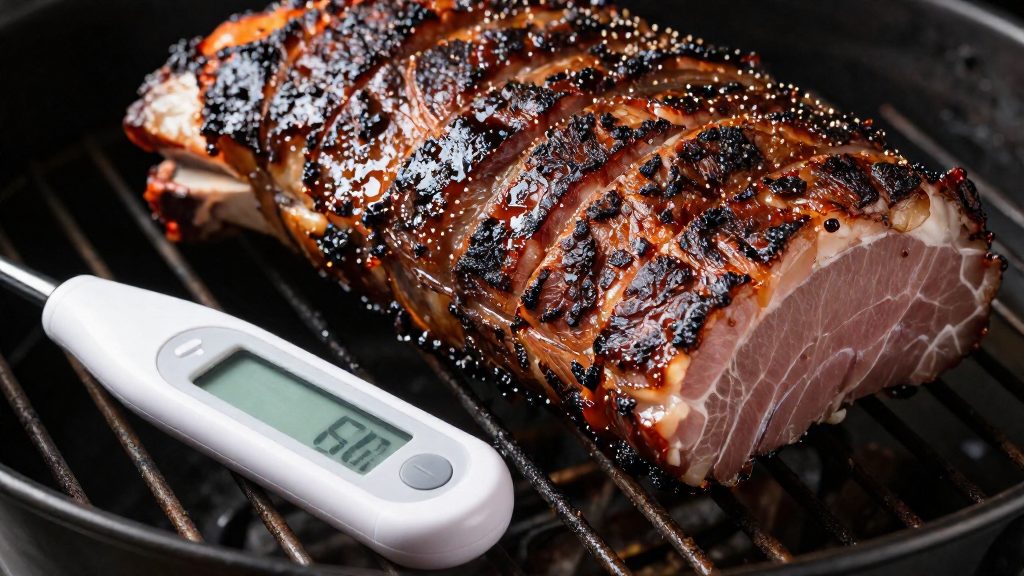
Health Canada (2026) publishes minimum internal temperatures for meat, poultry and fish. These thresholds apply to smoked food as much as to food cooked on a gas grill or in an oven, so a long, low-temperature cook on a pellet smoker or an offset smoker still has to reach them.
| Food | Minimum internal temperature |
|---|---|
| Whole beef, veal or lamb cuts, medium-rare | 63°C |
| Whole beef, veal or lamb cuts, medium | 71°C |
| Whole beef, veal or lamb cuts, well done | 77°C |
| Ground beef, veal or lamb | 71°C |
| Pork | 71°C |
| Poultry pieces and ground poultry | 74°C |
| Whole poultry | 82°C |
| Fish | 70°C |
Whole cuts of beef, veal and lamb
Whole cuts have three thresholds, so the target depends on the doneness you want. Medium-rare is the lowest of the three, at 63°C, and well done is the highest, at 77°C. Choose the figure before the cook starts and check against it, not against the colour of the meat or the bark.
Ground meat and pork
Ground beef, veal and lamb share the same 71°C threshold as pork. Because grinding mixes surface bacteria through the whole product, ground meat is held to a single minimum rather than the doneness scale used for whole cuts.
Poultry and fish
Poultry pieces need 74°C, while a whole bird needs 82°C. Fish has the lowest threshold in the table, at 70°C.
Which smoker should you buy first?
For most beginners, a pellet smoker is the more practical first purchase. An offset smoker can produce more intense smoke, but it asks the cook to manage the fire.
Budget can narrow the choice: the quoted entry price for an offset (about US$100) is well below that for a pellet smoker (about US$300). Beyond price, the choice depends on how you plan to cook.
Pellet smokers need electricity, so check for a nearby outlet before buying.
Choose a pellet smoker if your goal is repeatable results with little supervision, and you have a power source close to where you will cook. Choose an offset smoker if smoke intensity is your main goal and you are prepared to learn fire management. For a first purchase where the aim is to cook well without a long learning period, the pellet smoker is the better choice.
Frequently asked questions
Which smoker costs less to get started?
Offset smokers have the lower entry point. Z Grills (2026) lists offsets at about US$100 to US$2,000 and pellet smokers at about US$300 to US$5,000, with Z Grills models typically priced at US$400 to US$900. These are US dollar figures from the manufacturer, so local shelf prices will differ.
How much cleaning does each type require?
BBQHost (2026) notes that pellet smokers need their auger and burn pot cleaned, while offsets need frequent removal of ash and grease. Offset owners should expect the more regular cleaning routine.
What internal temperature should I cook to, whatever smoker I use?
Health Canada (2026) sets the minimum safe internal temperature at 71°C for pork and ground beef, 74°C for poultry pieces and ground poultry, and 82°C for whole poultry. Fish should reach 70°C, and whole cuts of beef can be served at 63°C for medium-rare.