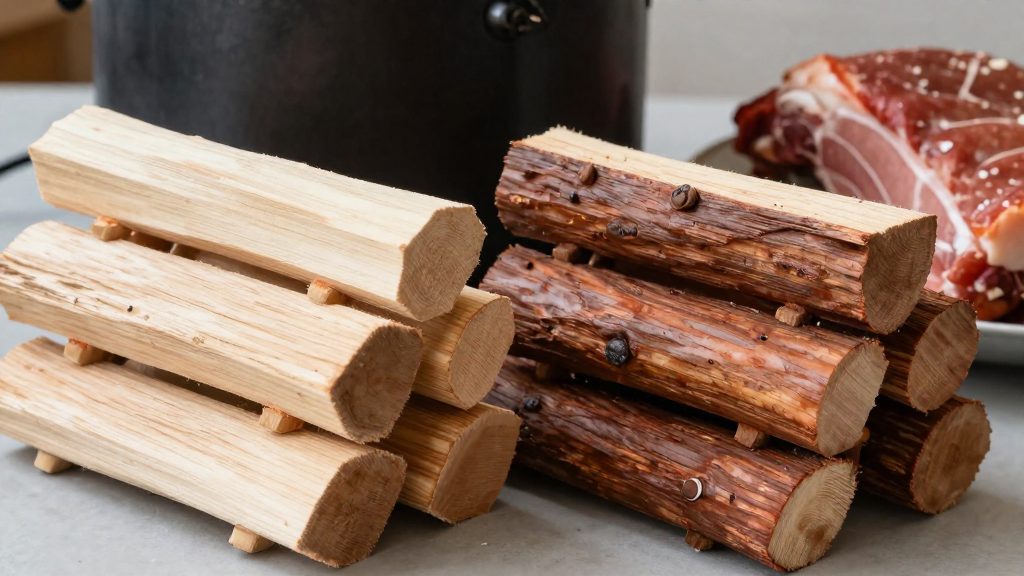
Hickory and apple sit at opposite ends of the pork smoking flavour range. Hickory gives a savoury, bacon-like taste, while apple is mild and sweet. For a first pork smoke, or whenever the cut is unknown, apple is the safer default. Hickory suits cooks who want a bolder, bacon-like profile and can judge when to stop adding wood.
Hickory vs apple: the quick answer
Core flavour contrast
Hickory is a strong smoking wood with a savoury, bacon-like flavour (BBQHost, 2026). Apple is a mild, sweet, fruity wood, and it suits lean pork cuts such as loin.
| Goal | Better choice |
|---|---|
| Savoury, bacon-like character on pork | Hickory |
| Sweet, fruity character on pork | Apple |
| Lean loin, where a delicate flavour fits | Apple |
Default when the cut is unknown
Apple is the safer default. Because hickory is strong and easy to overdo, a mild wood leaves more margin for error when you do not know how the meat will take the smoke. Reach for hickory once you know which cut you are cooking and what flavour you want.
Which wood for a first pork smoke
Start with apple. Use one wood only, so the flavour you taste at the end comes from that wood alone and you can judge it clearly. After a few cooks, you will know whether you want more savoury character.
How strong is each smoke?
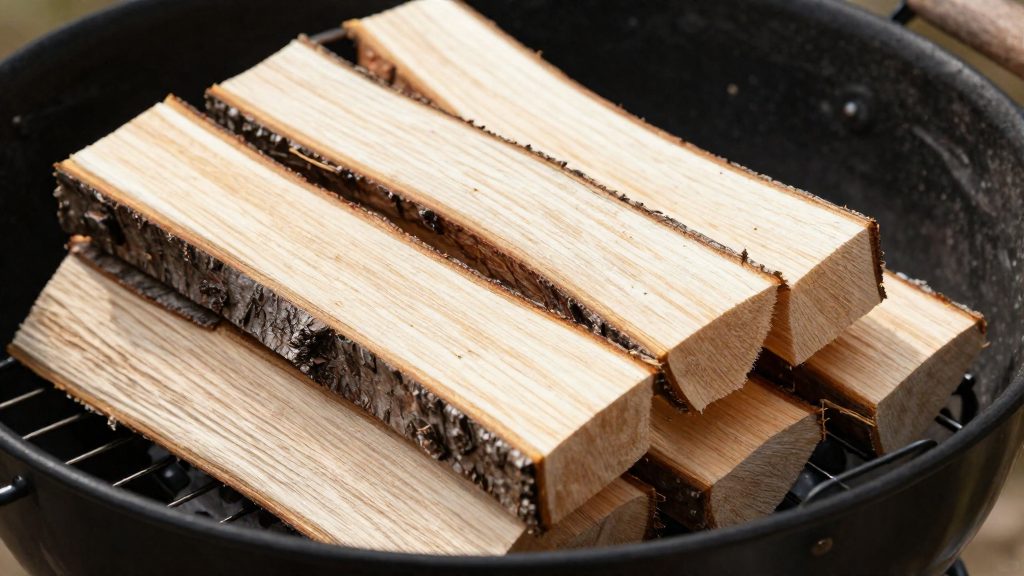
Hickory and apple sit at opposite ends of the smoke-strength range. According to BarbecueFAQ (2026), hickory produces a strong, pungent smoke, while apple sits at the mild end of the spectrum. BBQHost (2026) describes hickory as savoury and bacon-like, and apple as mild, sweet and fruity. For pork, hickory suits a pronounced smoky character, and apple suits a lighter touch where the meat’s own flavour stays in front.
Apple’s intensity is adjustable, whereas hickory gives less room for adjustment at the flavour end: its character is already assertive before any additions.
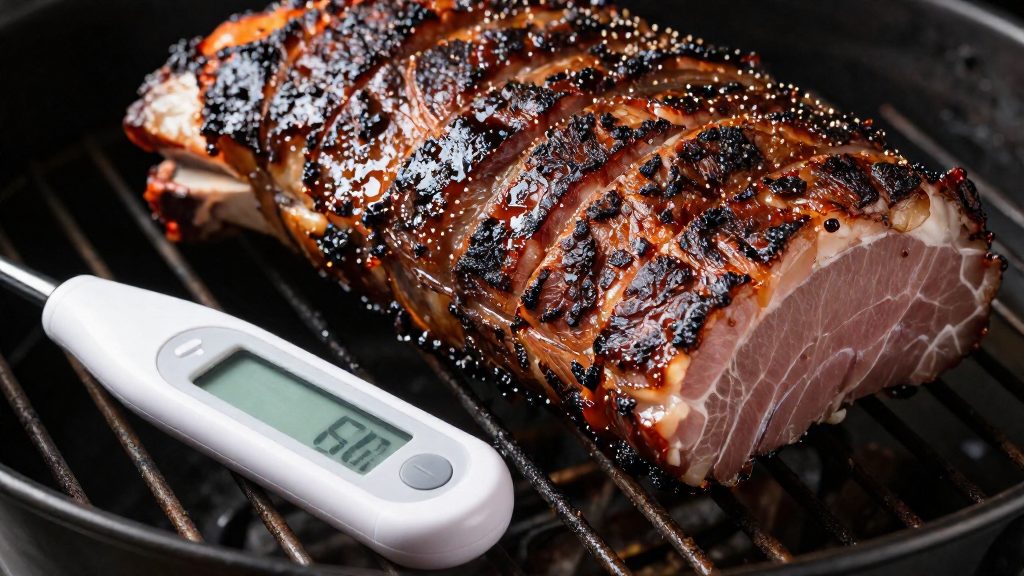
The most visible difference is on the surface. Hickory smoke gives pork a dark mahogany colour and helps build bark, the crust that forms on the outside of the meat during a long smoke. Apple is not described as giving a comparable dark colour.
Which wood suits pork shoulder and pulled pork?
For pork butt and pulled pork, BBQHost (2026) recommends hickory. BBQHost (2026-08-27) recommends it for these cuts, and it is a strong smoking wood with a savory, bacon-like flavour. Apple sits at the opposite end: it is mild, sweet and fruity. For a fatty, slow-smoked shoulder, the stronger profile is the one that stands up to the meat.
Why hickory suits large butts
Hickory smoke is strong and pungent. BarbecueFAQ (2026-08-26) identifies large bone-in butts as the cut it suits best, and as the choice for crowds that want a lot of smoke. Bone-in butts are big, dense cuts, so a wood with heavy flavour is less likely to disappear over a long cook than a delicate fruit wood.
Chef preference for sweet and smoky notes
Chef Robbie Shoults prefers hickory over apple for pork shoulder or butt, because it gives stronger sweet and smoky notes, according to Food Republic (2024-06-23). His choice is about flavour weight rather than fruit character: hickory brings more depth to the finished meat.
Controlling the amount of smoke
Keep the wood quantity moderate and judge the result by taste rather than by how much smoke is visible. Apple gives a gentler result that is harder to overdo, but it is better matched to leaner meat.
| Attribute | Hickory | Apple |
|---|---|---|
| Flavour | Savory, bacon-like | Mild, sweet, fruity |
| Intensity | Strong, pungent | Mild end of the spectrum |
| Typical cut | Large bone-in butts, pulled pork | Lean cuts such as loin |
Is apple better for ribs, loin and bacon?
Apple suits lean pork loin best, and it works as a gentle, sweet note on ribs and bacon rather than a dominant flavour. According to BBQHost (2026), apple is a mild, sweet and fruity wood that suits lean pork cuts such as loin. Lean loin has little fat to carry smoke, so a light profile lets the meat’s own flavour come through instead of being overwhelmed by a pungent wood.
For loin, the more effective route to a stronger apple taste is the brine, not more smoke. Brining the pork in apple juice or cider intensifies the apple flavour, so the wood can stay light. This keeps the cut from taking on the heavier character that stronger woods can leave.
Ribs and bacon are fattier than loin, and apple’s mild profile suits them when the aim is a subtle fruit note rather than a bold smoke. Apple sits at the mild end of the smoke spectrum (BarbecueFAQ, 2026), which makes it a low-risk choice for these cuts. If you want a more assertive result on bacon, the contrast with hickory is useful: hickory is described as savoury and bacon-like, so it reinforces the meat’s own character instead of adding a fruit note.
Practical points for these cuts:
- Loin: use apple wood with a cider or apple juice brine if you want the apple flavour to be clearly noticeable.
- Ribs: apple gives a sweet, fruity background without masking the pork.
- Bacon: apple is the milder option when you do not want a heavy wood flavour.
Can you blend hickory and apple?
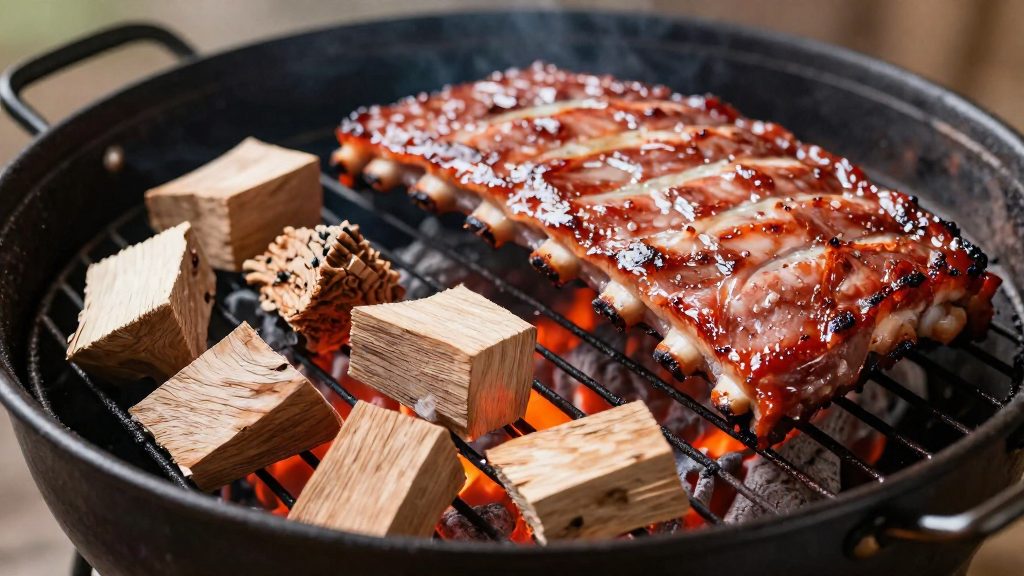
Yes, the two woods can share a cook, but the sources only mention hickory being blended with oak (BBQHost, 2026). Treat a hickory-apple mix as an adjustment you make yourself: let the cut decide which wood leads. Hickory is the strong partner, with a savory, bacon-like flavour, and BBQHost (2026) notes that it is often blended with oak in practice. Apple is the mild, sweet, fruity option, so it works as the softening partner rather than the main flavour.
The blend makes most sense on large cuts that run for hours. Adding a little apple alongside hickory may soften the flavour, but none of the sources test this blend, so add the wood gradually and judge by taste.
Lean cuts need the opposite balance: hickory’s pungency can overwhelm mild meat. For loin, use apple as the main wood, and add hickory only in a small share if you want a savory edge.
How much wood should you use?
Scale the wood to the length of the cook, not to a fixed habit. A short cook needs only enough wood to set the smoke profile early, while a long pork butt or shoulder run needs a replenishment plan so the smoke does not fade before the bark has formed. Add fuel in small, regular portions rather than one large load, and plan the total around the hours the meat will spend on the grill.
Chunks are the practical format for long cooks. Chips ignite quickly and release smoke in a short burst, which suits brief sessions or grills where you can refresh them often. Chunks are denser and burn more slowly, so they sustain a steady smoke output over many hours. For a pork butt or pulled pork run, use chunks as the base fuel and reserve chips for finishing a short cook.
The batch size changes how much wood you need:
| Batch | Wood approach |
|---|---|
| One small cut, short cook | One modest initial charge; add more only if the smoke thins |
| Several large cuts, long cook | Repeated wood charges through the cook, with chunks as the base |
A larger batch fills the cooking chamber with more meat mass and runs for more hours, so the total wood per session rises with it. Lean cuts such as pork loin are usually cooked for less time than a fatty shoulder, so plan a lighter wood load.
Wood choice on pellet, gas and kamado grills
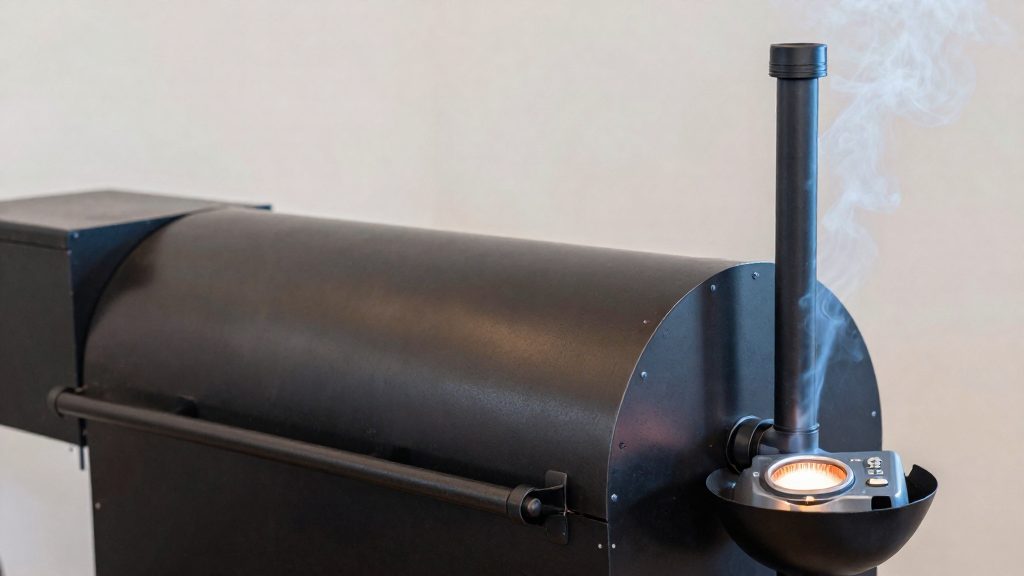
How the wood reaches the meat determines how much your choice of hickory or apple shapes the result. On a pellet grill, the pellets are both the fuel and the smoke source, so the pellet species sets the flavour across the whole cook.
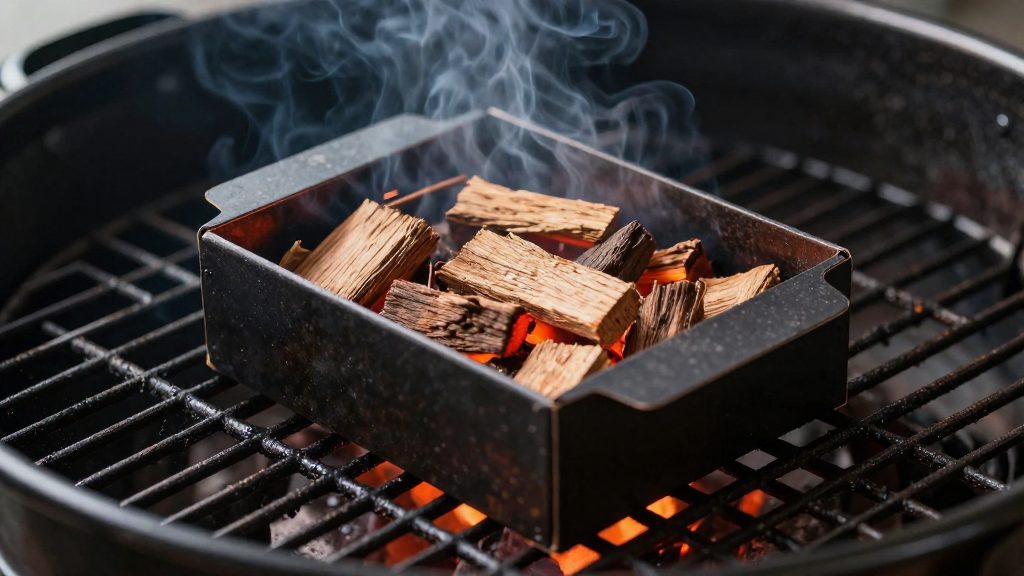
On a gas grill, wood is an add-on rather than the fuel. Place wood chips or a smoke box over the burner, and control intensity by how much wood you add. Load hickory in modest amounts. Apple gives a lighter result and is harder to overpower the meat with, but still add wood gradually and judge by taste.
On a kamado grill, add wood chunks to the charcoal bed for long cooks. The dense heat holds steady for hours, which suits a slow pork butt. Hickory’s dark mahogany colour helps build bark during these long sessions, as BarbecueFAQ (2026) observes. Apple, being mild, works well for longer, lighter smoking of lean pork, where a heavy smoke would mask the meat.
Across all three grills, match the wood to the cut and the duration: strong hickory for big, long-cooked butts, and mild apple for leaner, shorter or more delicate pork.
Frequently asked questions
Can I combine hickory and apple in one smoke?
The only documented blend pairs hickory with oak (BBQHost, 2026), so a hickory-apple mix is your own experiment. For a first cook, use one wood, then add a little apple to a hickory-led load and judge the result by taste.
Does apple work for pork loin, and can I boost its flavour?
Yes. Apple is the lighter choice for lean loin, and a cider or apple juice brine is the documented way to intensify its flavour (BBQHost, 2026). The brine changes the flavour before the wood reaches the meat.
Why would a chef pick hickory for pork shoulder?
Chef Robbie Shoults prefers hickory over apple for pork shoulder or butt because it gives stronger sweet and smoky notes (Food Republic, 2024).