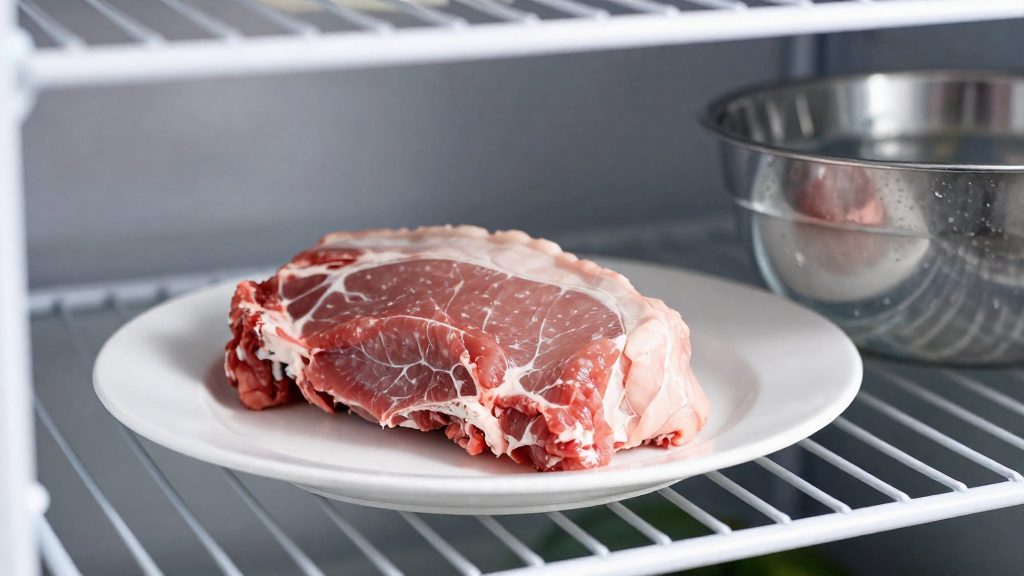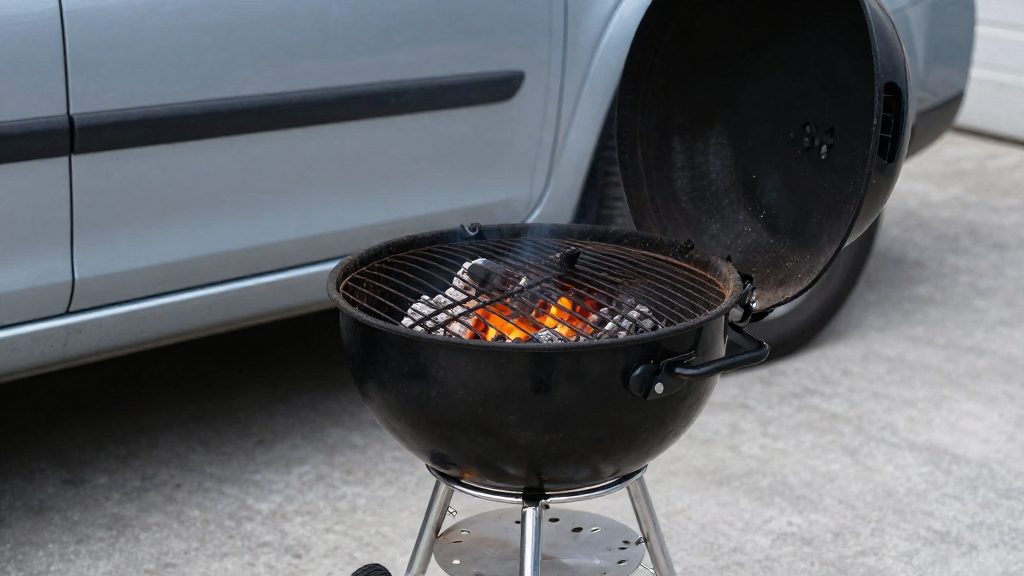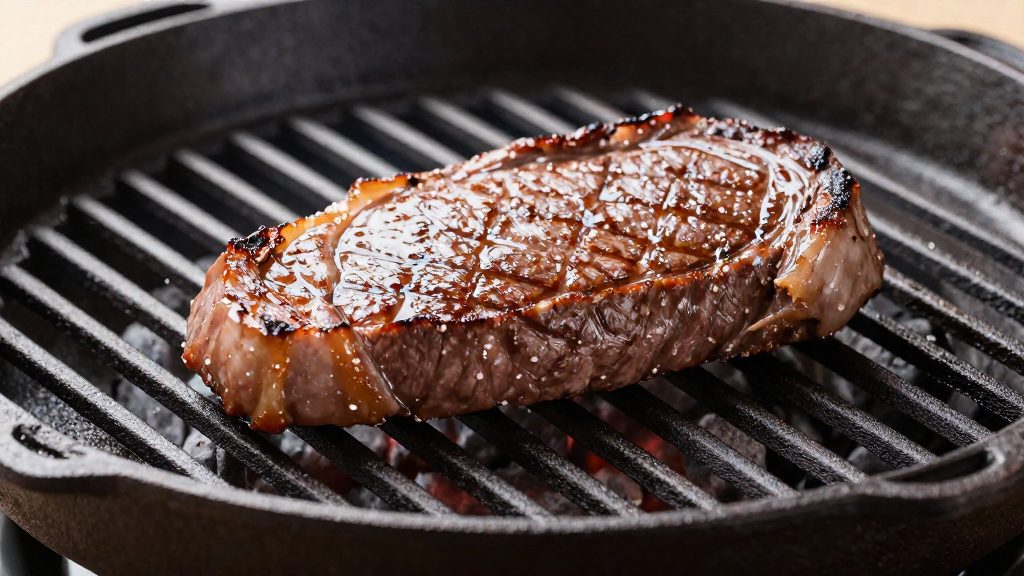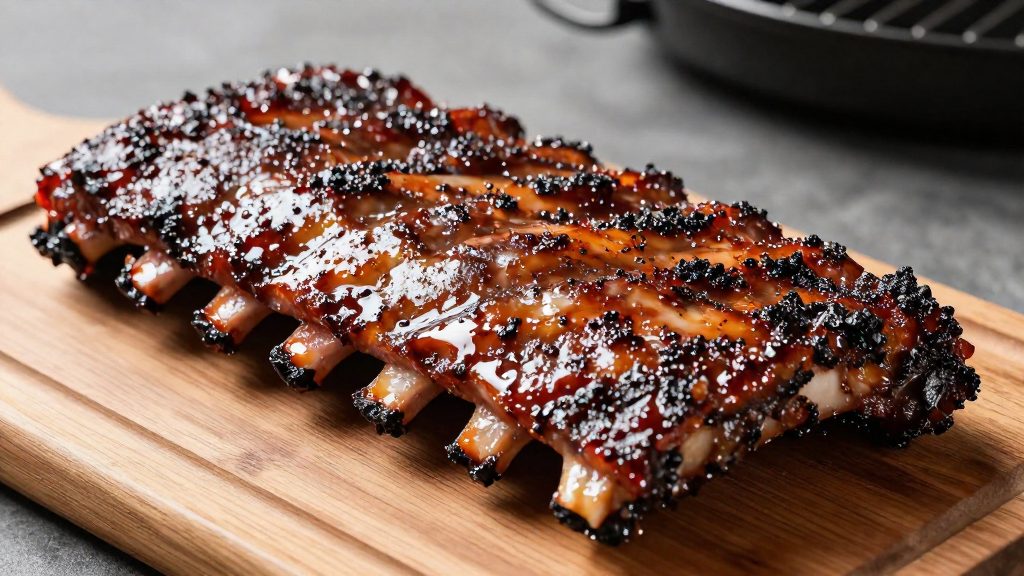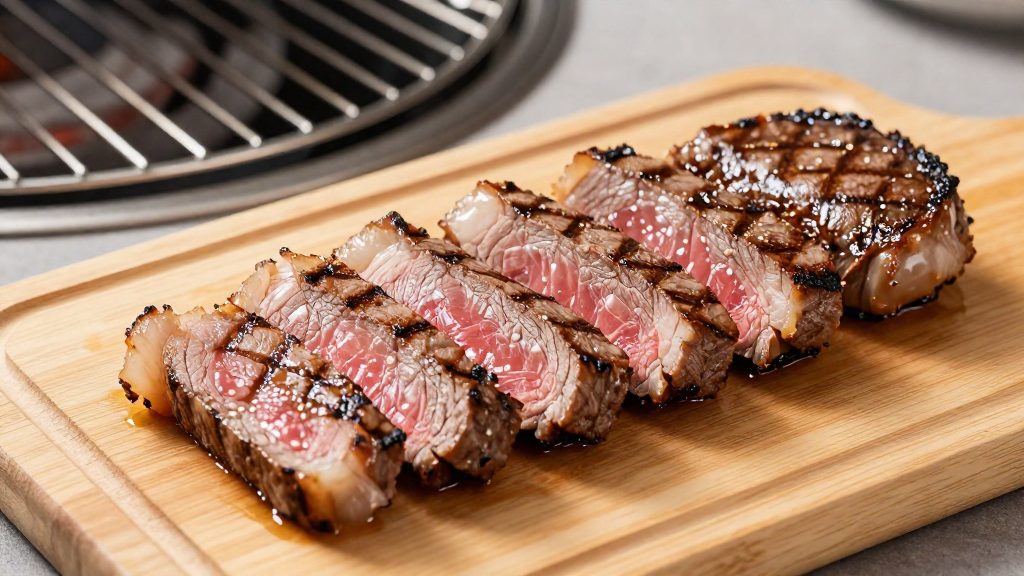
Cooked meat cannot sit out indefinitely. Bacteria multiply on food at room temperature, so the risk grows with every hour the meat is left out, and cooking does not make it safe for an unlimited time. According to Health Canada (2019), bacteria multiply on food left at room temperature, which means the time the meat spends outside matters as much as how it was cooked.
How long can cooked meat sit outside?
Time at room temperature is the factor that decides whether cooked meat stays safe. Heat kills bacteria during cooking, but meat that is cooled and left out can be recontaminated and bacteria can regrow. Each additional hour adds to that risk, so the meat should be moved out of the open air as soon as it is off the grill.
Cooked meat is not automatically safe once it has cooled. Surface contact with hands, utensils, and cutting boards can introduce new bacteria, and the meat itself can cool into the range where they grow fastest. Covering the meat does not stop the clock, and a grill that is merely warm does not keep it safe: meat is outside the danger zone only if it is held hot, above 60°C, or kept cold, at or below 4°C.
Practical steps for keeping track of time:
- Note the time the meat comes off the grill.
- Move leftovers to the refrigerator promptly rather than leaving them on the table or counter.
- Wrap or cover meat that is being served to reduce contamination.
Unsafe meat versus meat that tastes off is a distinction that matters. Bacteria can cause harm without producing a noticeable smell, slime, or change in colour, so a meat that looks and smells normal may still be unsafe. Time and storage conditions, not sensory checks, should decide whether cooked meat is safe.
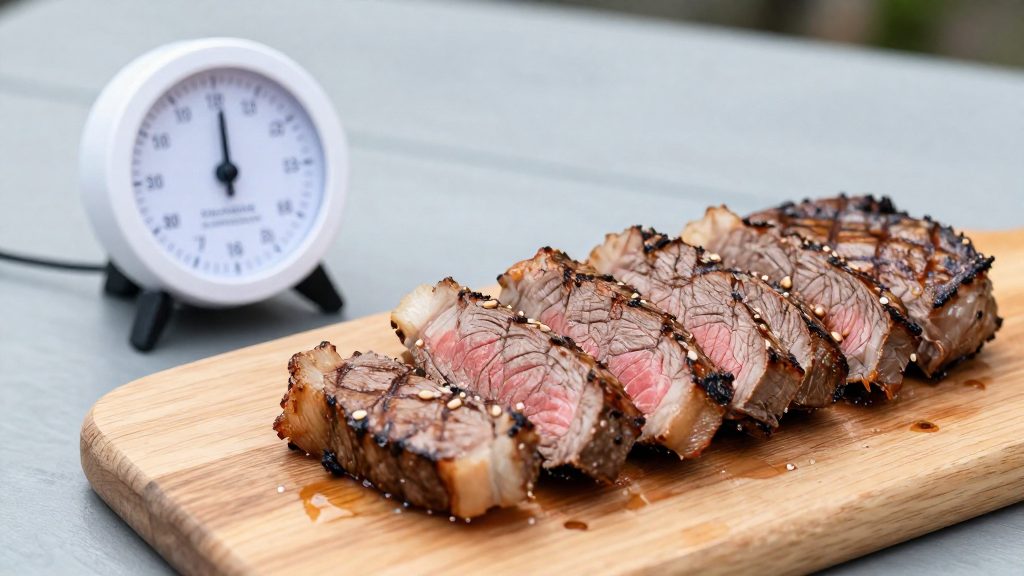
The 2-hour rule and the 1-hour hot-day rule
Health Canada (2019) sets the baseline for cooked meat that is not being kept hot on the grill: perishable food should be refrigerated within 2 hours, and any food left out for more than two hours should be discarded.
On hot summer days the one-hour hot-day limit applies instead. Health Canada (2019) states that food should not be kept at room temperature for more than one hour in those conditions, and the refrigeration deadline shortens to one hour as well. Hot weather therefore cuts the margin to half the standard window, which matters most at outdoor gatherings where the grill is far from a fridge.
Counting the window in practice:
- Start the clock when cooked meat comes off the grill and is set down at room temperature.
- Keep counting continuously. Time spent on a cutting board, a serving platter or a picnic table adds to the total. Do not reset the clock if the meat goes back on the grill to be reheated.
- Stop the clock when the meat goes into the refrigerator.
- Discard any meat that has been out past the applicable limit.
Why the 4°C to 60°C danger zone matters
Cooked meat becomes a food-safety concern when its temperature falls into the range Health Canada (2019-08-15) calls the temperature danger zone. Between these two temperatures, bacteria grow, so the risk depends on how much time meat spends inside this band, not only on how long it has been off the grill.
| Boundary | Celsius | Fahrenheit |
|---|---|---|
| Lower limit | 4°C | 40°F |
| Upper limit | 60°C | 140°F |
How bacteria multiply inside the range
Health Canada (2019-08-15) states that bacteria grow between 4°C and 60°C. Meat held above 60°C, such as freshly cooked meat kept hot, is outside this band. Meat held at or below 4°C is also outside it. Cooked meat that cools from serving temperature passes through the full band on its way down, and that passage is where growth occurs.
Why the range sets the timing limits
Because growth happens only inside this band, every time limit for cooked meat is a measure of how long the food spends there. Health Canada (2019-08-15) notes that food can become unsafe in as little as two hours within the range. The shorter limits that apply on hot days reflect the same principle: higher ambient temperatures bring meat into the band faster and leave less margin before growth becomes a concern.
How do you keep grilled meat hot while serving?
Keeping grilled meat hot between cooking and serving depends on controlling where it sits on the grill. Health Canada (2019) advises keeping hot food hot until it is served and suggests placing cooked meats at the side of the grill, not directly over the coals. The method is the same across fuel types: move finished cuts out of the direct heat zone, hold them there, and limit how long they stay uncovered.
Choose the right zone
A two-zone setup gives you a holding area beside the direct heat. The meat must stay hot there (above 60°C, checked with a thermometer). If it cools below that, the danger-zone time limits apply. The table below shows how to build it on each grill type.
| Grill type | Hot zone (cooking) | Holding zone (resting) |
|---|---|---|
| Charcoal | Coals banked on one side | Empty side, away from the coals |
| Gas | Burners on high | Burners off or set low on the other side |
| Kamado | Direct fire over the charcoal bed | Indirect side, using a heat deflector or ceramic plate if fitted |
Keep meat warm until it is served
- Move each piece to the holding zone as soon as it reaches your target, so it does not keep cooking over direct heat.
- Close the lid between checks to limit heat loss.
- Plate the meat as soon as the rest of the menu is ready, rather than leaving it on the grill while side dishes finish.
Cover between cooking and serving
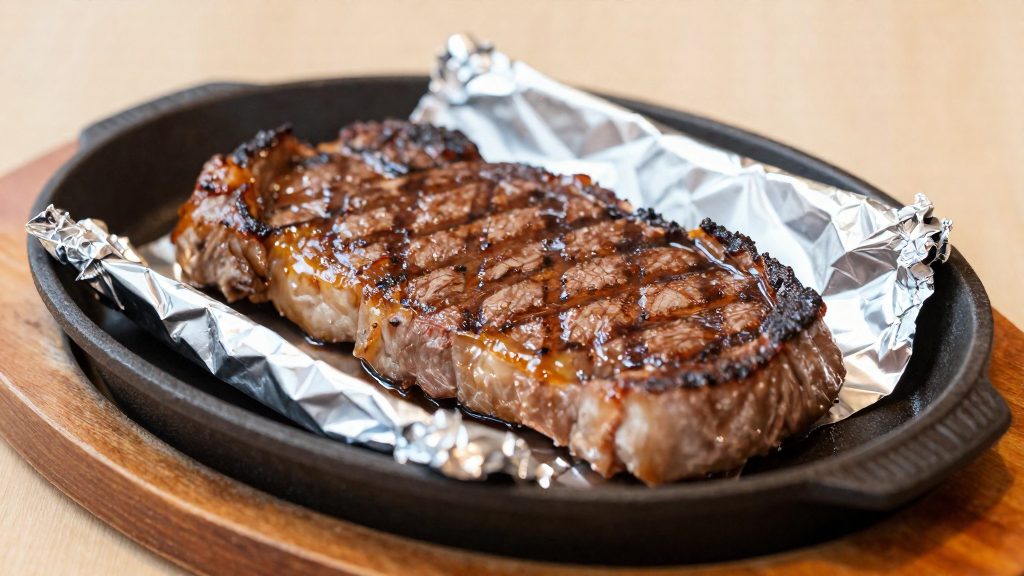
Loosely tent cooked meat with aluminium foil or place it under a clean dome. A loose cover traps heat and slows cooling. Seal it tightly and steam softens the crust, so keep the cover loose enough for air to circulate.
What should you do with leftovers?
Leftover grilled meat should leave the grill and reach storage quickly, in small portions. According to Health Canada (2019), the temperature danger zone runs from 4°C to 60°C (40°F to 140°F), and bacteria grow within that range. Cooling and reheating are the steps that limit how long meat spends inside it.
Cooling in shallow containers
Cool leftovers in shallow containers rather than storing a whole joint or a deep dish. Thick pieces hold heat at their centre for longer, while thin slices cool faster. Slice or pull the meat before storing it, spread it in a single layer where possible, and refrigerate it within the 2-hour limit (1 hour on hot days), covering the container once the steam has dropped. Then cover the container and refrigerate it. Leave space between containers so cold air can circulate around them.
Reheating to a safe internal temperature
Reheat only the portion you plan to eat, and avoid repeated reheating cycles. Use a food thermometer, because the outside of a piece can look hot while the centre stays cold. Probe the thickest part and confirm with the thermometer that it has reached the internal temperature Health Canada recommends for reheating leftovers before serving. A covered pan, an oven or a moderate part of the grill gives more even heat than direct flames, which can dry the surface before the interior warms through.
Freezing for longer storage
Freezing is an option when leftovers will not be eaten soon after cooling. Portion the meat before freezing, wrap each portion tightly in airtight packaging, and label it with the date. Freezing flat, in thin packs, speeds up the process and makes thawing easier. Start freezing once cooling is complete, not after the meat has sat at room temperature. Thaw frozen portions in the refrigerator rather than on the counter, then reheat them fully as described above.
When should you throw cooked meat out?
Discard cooked meat when it has been left out past the safe time limit, when you cannot establish how it was stored, or when it shows spoilage signs. Time out of refrigeration is the first thing to check, because it is the factor most often underestimated at barbecues where food is served over several hours.
Decision criteria once the time limit is exceeded
- Do not reheat meat to rescue it. Reheating kills some bacteria but does not reverse the time already spent in the danger zone.
- Refrigerating it afterwards does not reset the clock. The time out of the fridge still counts.
Spoilage signs to check
Meat that has exceeded the time limit must be discarded even if it looks and smells normal. If meat already shows any of the signs below, discard it as well.
| Check | Sign of spoilage | Action |
|---|---|---|
| Odour | Sour, sulphurous or otherwise off smell | Discard |
| Texture | Tacky, slimy or sticky surface | Discard |
| Surface colour | Grey or greenish patches on a previously uniform surface | Discard |
These signs are grounds to discard, never grounds to keep. Do not taste meat to test whether it is still safe.
Meat held under unknown conditions
If you cannot establish how long meat was out, where it was kept, or whether it was covered, treat it as unsafe. This applies to dishes brought by guests, leftovers left on a shared table, and meat moved between coolers and the grill without a clear record. The safe choice is to discard it.
Frequently asked questions
How long do I have if the meat was cooked hours before the meal?
Count from the moment the meat comes off the grill, not from when guests sit down. Health Canada (2019) sets the limit at two hours for food left out, dropping to one hour on hot summer days.
Is freezing a safe way to keep barbecue leftovers?
Freezing suits leftovers you will not eat soon after cooling. Refrigerate them within the time limit first, because freezing does not replace the time limit.
Do the same time limits apply to fish and vegetables?
Yes. Health Canada (2019) gives the two-hour refrigeration rule for perishable foods in general, not only meat, so cooked fish and vegetables from the grill fall under the same window, including the one-hour limit on hot days.