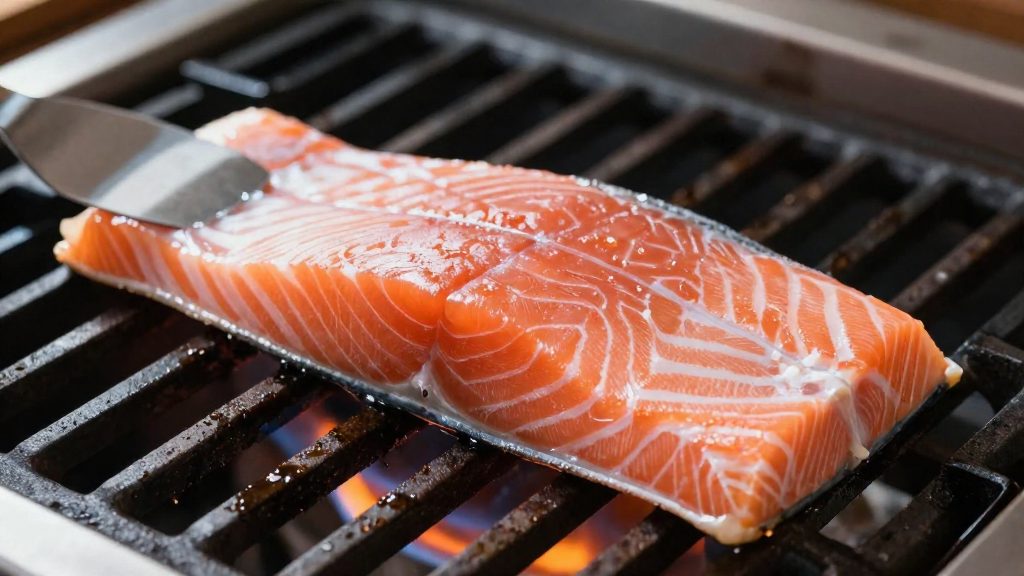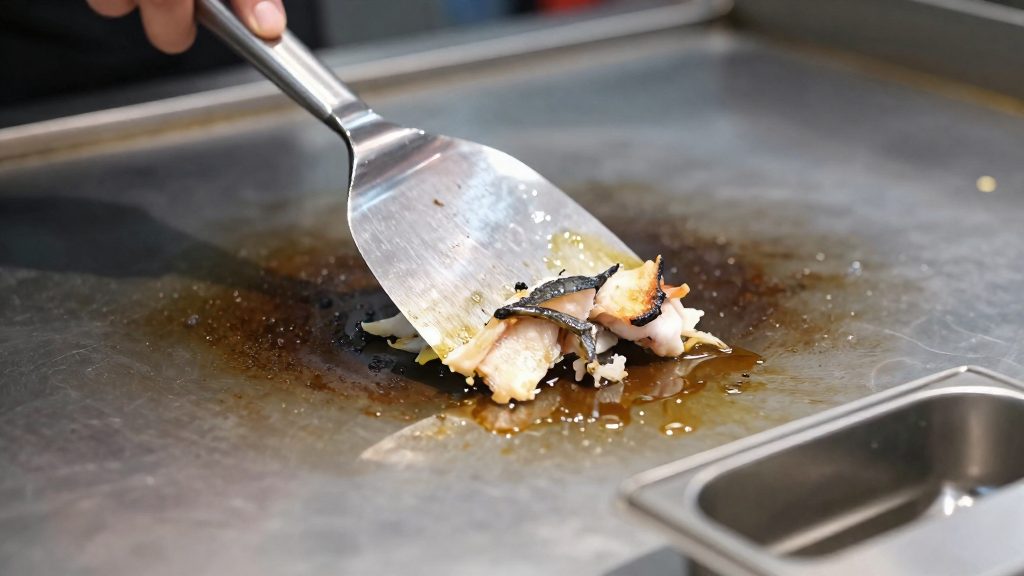
Fish leaves a residue that bonds to a hot plancha more tightly than many other foods. Protein and oil set onto the stainless steel during cooking, and the odour compounds they carry stay in that film until it is removed.
Why fish residue needs special care on a plancha
Protein and oil bonding to hot steel
When fish is seared, its proteins and oils contact the steel at high temperature and form a film that adheres to the surface. As the plate cools, this film hardens. Krampouz (2026) describes the result as stubborn build-up, which is harder to remove than residue that is still soft.
Why fish odours linger
Fish leaves odors on the plate, and white vinegar can help remove them. Odors can linger on the plate after cooking fish, which is why a final vinegar step is useful.
Risk of residue burning on the next use
Residue that is not removed is reheated the next time the plancha is switched on. The film can burn again under fresh food and make the surface harder to clean.
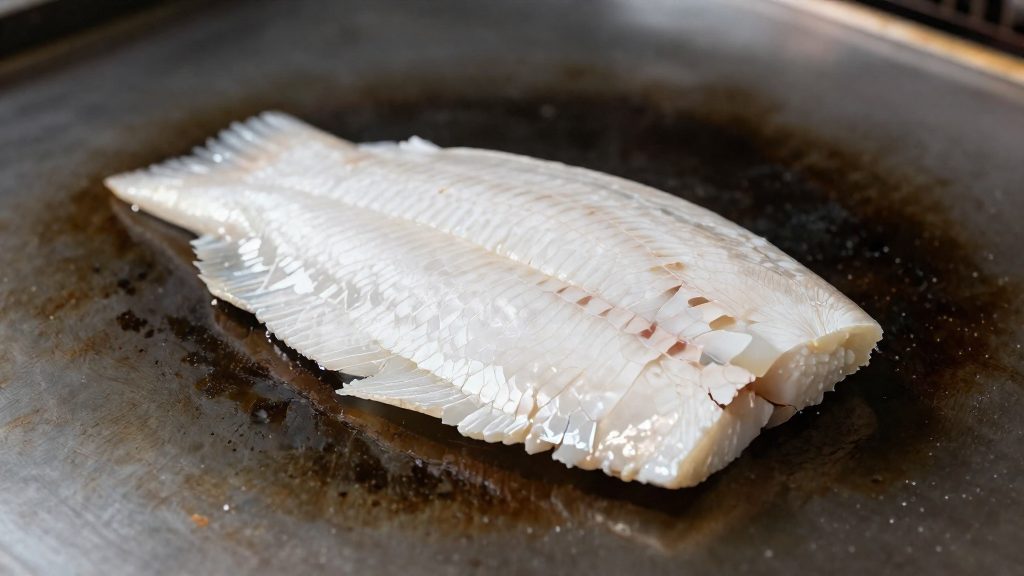
How do you clean a plancha right after cooking fish?
Cleaning starts as soon as cooking ends. Fish leaves fragments and oily residue that bond to the plate if they are left to set.
Step 1: Switch off and unplug
Turn off the heat source before you touch the plate. On an electric model, unplug the appliance from the mains as well. Doing this first removes the electrical hazard for the scraping that follows.
Step 2: Scrape with a stainless steel spatula
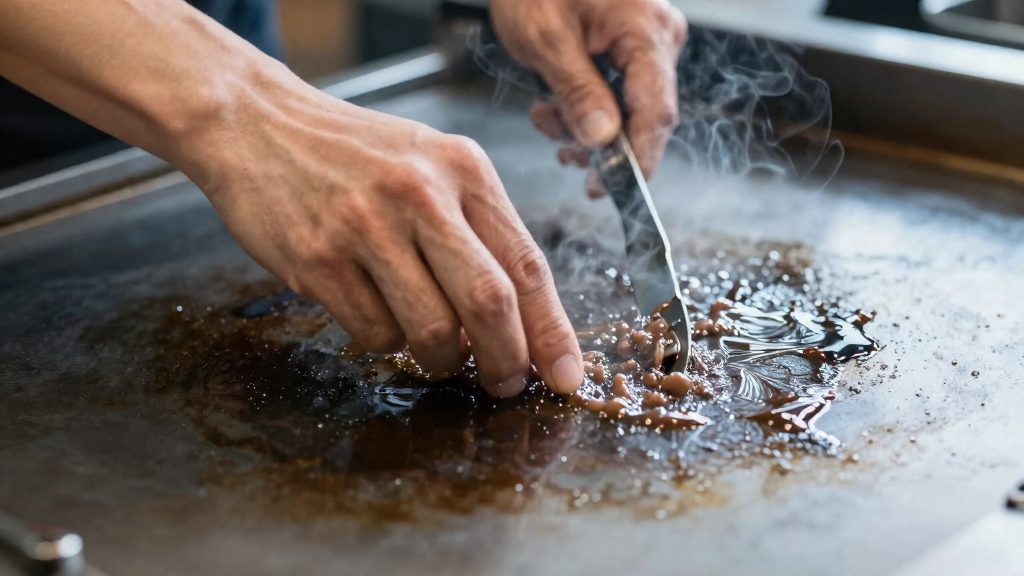
Use a stainless steel spatula to push deposits off the cooking surface. Work across the plate in consistent passes, keeping the blade flat, so the scraper lifts the residue rather than spreading it. The manufacturer specifies a stainless steel spatula for this step.
Step 3: Clear large deposits before any liquid
Remove all large pieces of fish skin, flesh and burnt fat before any liquid touches the plate. Thick deposits left in place make every later step harder, because they must be lifted on top of whatever has been added. Check the corners and edges, where fragments tend to collect, and scrape them out before moving on.
Scrape, deglaze, and rinse: the hot-plate method
Deglazing lifts the residue that remains after the initial scrape. According to Krampouz (2026), the work starts while the stainless plate is still hot: pour water over the surface or add ice cubes. The liquid wets the whole cooking area before residue dries onto it.
The sequence then follows a fixed order:
| Step | Action | Detail |
|---|---|---|
| 1 | Deglaze | Pour water over the hot plate, or add ice cubes |
| 2 | Soak | Let the liquid sit a few minutes on stubborn build-up |
| 3 | Scrape | Scrape the plate again to remove the loosened deposits |
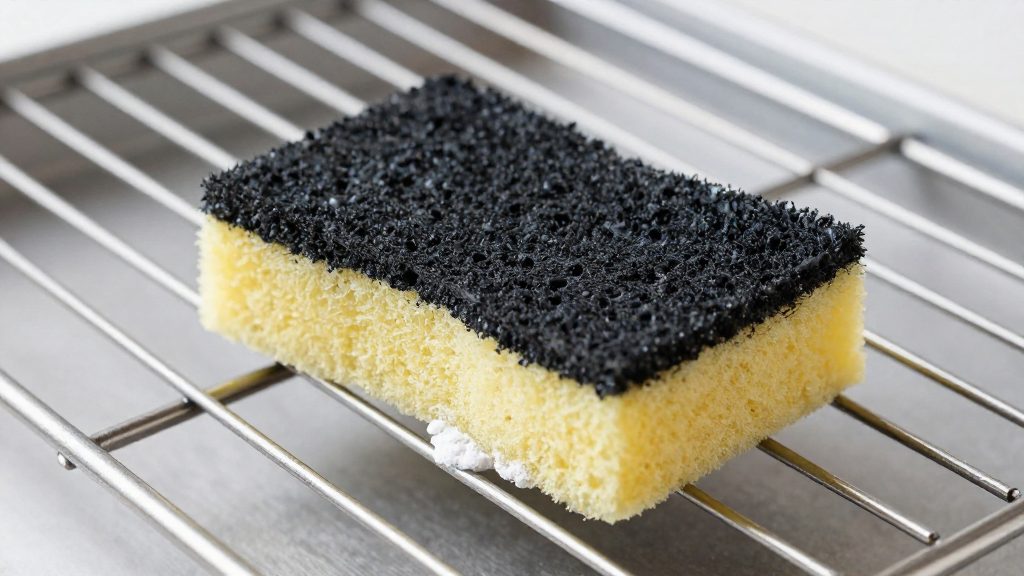
| 4 | Scrub | Rub the plate with a stainless steel scrubber |
| 5 | Rinse | Rinse with clean water and a soft sponge |
The soak time applies only to stubborn build-up. Light residue can move straight from deglazing to the second scrape. The timing is measured in minutes, so there is no need to leave the liquid on the plate for longer periods.
The stainless steel scrubber is used on the plate surface itself, while the soft sponge is reserved for the rinse. Keeping the two tools in separate stages means the final pass removes loosened residue with clean water rather than spreading it back across the plate.
Pour water or add ice while the plate is still hot, as the manufacturer advises. Take care with steam and splashes, and wear heat-resistant gloves. Complete the whole sequence before putting the plate away, so no wet residue is left on the cooking surface.
How do you get rid of fishy smells?
Fish leaves strong odors and oily residue that can remain on a stainless steel plancha after scraping and rinsing. According to Krampouz (2026), white vinegar can be used as an optional final step to remove odors, and the manufacturer specifically names fish as the case where it is useful. It supplements the standard cleaning routine rather than replacing it.
Vinegar on the frame
The same source states that white vinegar can also be used on the frame. The same source states that white vinegar can also be used on the frame.
What should you never use on a stainless steel plancha?
Chlorine-based products should never be used on a stainless steel plancha. According to Krampouz (2026), these products can corrode the stainless steel. Chlorine-based products can corrode stainless steel, so avoid them entirely. This applies to every cleaning session, including those after cooking fish, when the strong fish residue may tempt you to use a harsher cleaner.
Checking product labels for chlorine
Before buying or using a cleaner, check the label for chlorine content rather than relying on the front-of-pack wording:
- Read the full ingredient list, not only the marketing claims such as “disinfects” or “removes tough stains.”
- Look for chlorine-containing compounds. Look for chlorine-containing compounds, such as bleach.
- If the composition is not clearly stated on the label, do not apply the product to the plate.
- Keep chlorine-based products separate from the cleaning tools used on the plancha, so that residue cannot transfer to the cooking surface.
Choosing a safe alternative
Cleaning a stainless steel plancha does not require chlorine-based products. Pairing the spatula and scrubber with a product free of chlorine keeps the plate in good condition and avoids the corrosion risk described above.
Cleaning the frame and grease tray
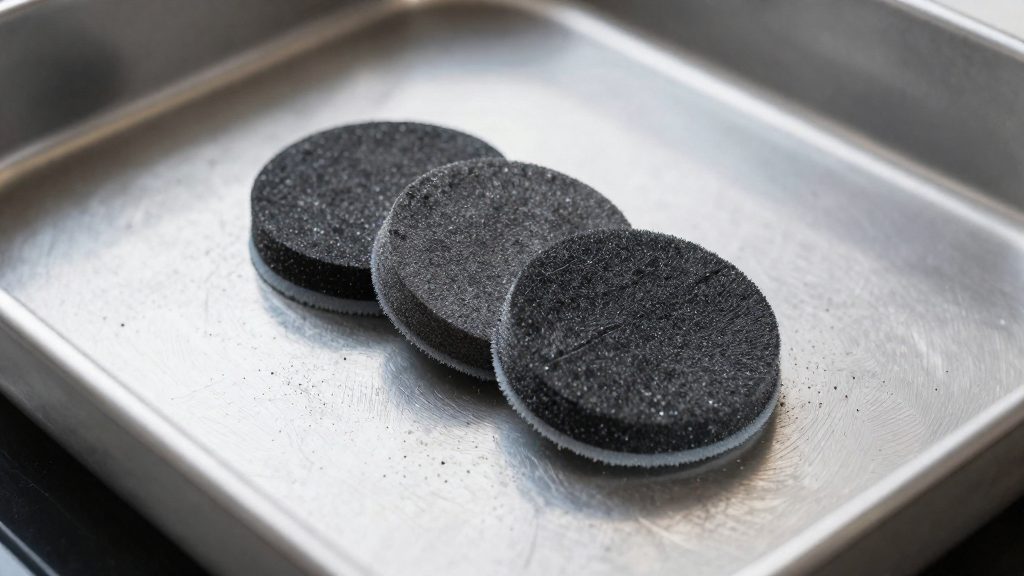
The frame and drip tray collect residue that never touches the cooking surface, and fish makes this more important.
Wiping the frame
Wipe the frame regularly with a damp sponge. This removes salty residues before they can build up and start to corrode the metal. Work along the sides, the legs and the edges of the plate, where drips and splashes tend to collect. Frequent light wiping is more effective than an occasional heavy clean, because it stops residue from hardening on the surface.
Emptying the drip tray
Empty and clean the drip tray after each use. It catches the grease and food debris that run off the plate, so leaving it full means residue sits in the grill between sessions. Emptying it immediately after cooking, while the tray is still easy to handle, keeps the routine short.
| Component | Frequency | Cleaning method |
|---|---|---|
| Frame | Regularly | Damp sponge wipe |
| Drip tray | After each use | Dishwasher or by hand |
Cleaning the drip tray
The tray can go in the dishwasher or be washed by hand, depending on what suits your kitchen. Either way, the goal is the same: remove all grease and debris, then return the tray to the plancha dry and in place for the next use. Make the drip tray part of the same post-cooking routine as the frame, so both components are cleaned in one pass.
Can you clean a cast iron plancha the same way?
The stainless steel routine published by Krampouz (2026) does not transfer unchanged to cast iron. Some steps are general enough to apply to both plates, while others depend on how each metal reacts to heat, moisture and abrasion.
Material differences drive most of the changes. Krampouz’s guidance covers stainless steel plates only. Cast iron is generally prone to rust if left damp, so follow your plate manufacturer’s instructions. The table below separates the steps that carry over from those that need a different approach.
| Step | Stainless steel plancha | Cast iron plancha |
|---|---|---|
| Scrape deposits after use | Stainless steel spatula, per Krampouz (2026) | Applies, but use a gentler tool to protect the seasoned surface |
| Water or ice on the hot plate | Recommended for stubborn build-up | Not directly transferable; treat as a separate decision |
| Scrub with stainless steel scrubber | Recommended | Use a softer abrasive |
| White vinegar as final step | Optional for odors after fish | Check against the plate’s seasoning before use |
| Rinse and dry | Rinse with clean water and a soft sponge | Dry immediately and thoroughly |
Rust risk is the main difference. Stainless steel tolerates residual moisture far better than cast iron, so the drying step matters more on a cast iron plancha. Leaving water on the plate after cleaning is the most likely cause of surface rust.
Before cleaning, check the manufacturer’s instructions for your model, because the stainless steel guidance does not establish which cast iron procedures are safe.
Quick maintenance checklist
Krampouz (manufacturer, 2026) describes a fixed post-cooking order for its stainless steel plancha. Following the same sequence after every session, including fish, keeps the cleaning routine short and consistent.
Per-use versus regular tasks
Because the frame wipe targets salt residue, it matters most after cooking salted fish or seasoned vegetables, when the frame is exposed to the same residue as the plate.
Frequently asked questions
Can I pour water on a hot plancha after cooking fish?
Yes. While the stainless steel plate is still hot, pour water over it or add ice cubes, let it sit a few minutes for stubborn build-up, then scrape again. Finish by rubbing the plate with a stainless steel scrubber, then rinse with clean water and a soft sponge, according to Krampouz (2026).
Can I clean the plancha with bleach or a chlorine cleaner?
No. Chlorine-based products can corrode stainless steel, so keep them away from the plate. The frame needs separate attention: wipe it regularly with a damp sponge so that salty residues left by fish do not cause corrosion.
Does this method work on a cast iron plancha?
The Krampouz guidance covers stainless steel plates only, so the steps above apply to stainless steel. For cast iron, the official sources consulted do not specify a procedure, so check the manufacturer’s care instructions before using water or ice on it.