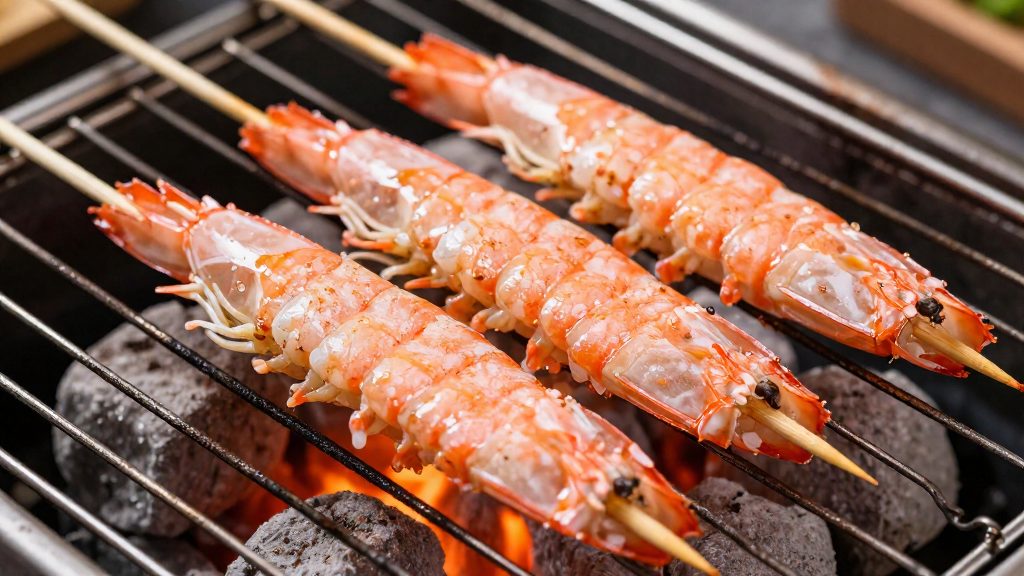
For charcoal shrimp skewers, America’s Test Kitchen’s tested recipe uses extra-large shrimp, with 1½ lb per batch. That size is the reference for the method below, which relies on a hot side of the fire and timings set for shrimp of that size.
Best shrimp for charcoal skewers
Extra-large shrimp is the size America’s Test Kitchen tested for charcoal grilling, so it is the safest choice when you follow its timings. The recipe grills the shrimp uncovered over the hot side of a two-level fire, which is the zone where the shrimp get lightly charred on the first side.
Tested size and quantity
| Parameter | Value (America’s Test Kitchen) |
|---|---|
| Shrimp size | Extra-large |
| Quantity | 1½ lb |
| First side on hot side | 4–5 minutes, sugared, lightly charred |
| Second side | 1–2 minutes, until opaque and fully cooked |
Doneness is judged by appearance, not by the timer alone. The shrimp are ready when they turn opaque throughout, so check each piece before removing the skewer.
Keeping the batch even
- Use one size per batch. Mixing sizes on the same grill makes smaller pieces finish before larger ones.
- Scale by weight. If you cook less than 1½ lb, keep the same size and reduce the count proportionally, then shorten the timing only after checking doneness.
- Thread similar pieces together. Grouping shrimp of matching size on the same skewer helps them cook at the same rate over direct heat.
Metal or wooden skewers?
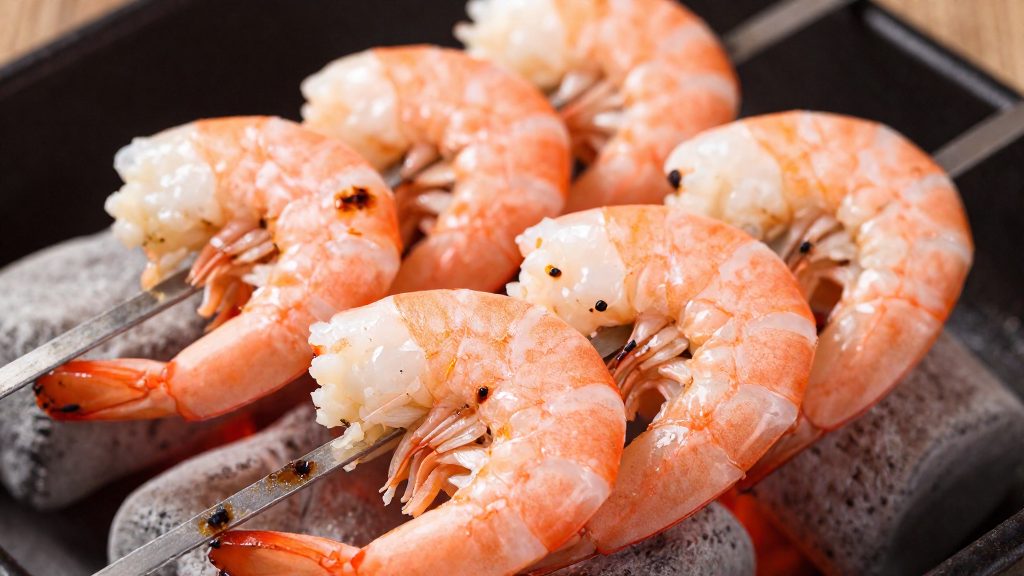
America’s Test Kitchen’s charcoal shrimp recipe threads the shrimp onto three 14-inch metal skewers and warns that wooden skewers will likely burn. The reason is the fire layout. Any skewer resting there is in direct heat for that whole period.
| Skewer type | Status in the recipe | Exposure on the hot side | Burn risk |
|---|---|---|---|
| Metal, 14 inches | Specified; three skewers used | About 5 to 7 minutes | Low, as tested |
| Wooden | Not used; flagged as likely to burn | About 5 to 7 minutes | High, according to America’s Test Kitchen |
Metal skewers suit this method for two practical reasons. They tolerate the direct coal heat for the full cooking window, and they keep the shrimp stable while you flip them once, which the recipe does after the first side has been sugared and lightly charred. Using the specified 14-inch length also keeps the setup consistent with the tested method, so the timings above apply as written.
If you only have wooden skewers, the recipe does not test them, so you cannot rely on its timings. Because America’s Test Kitchen warns that wooden skewers will likely burn over the hot side, use metal skewers of the specified length for this method. Otherwise, choose metal skewers of the length the recipe specifies.
How do you set up a two-zone charcoal fire?
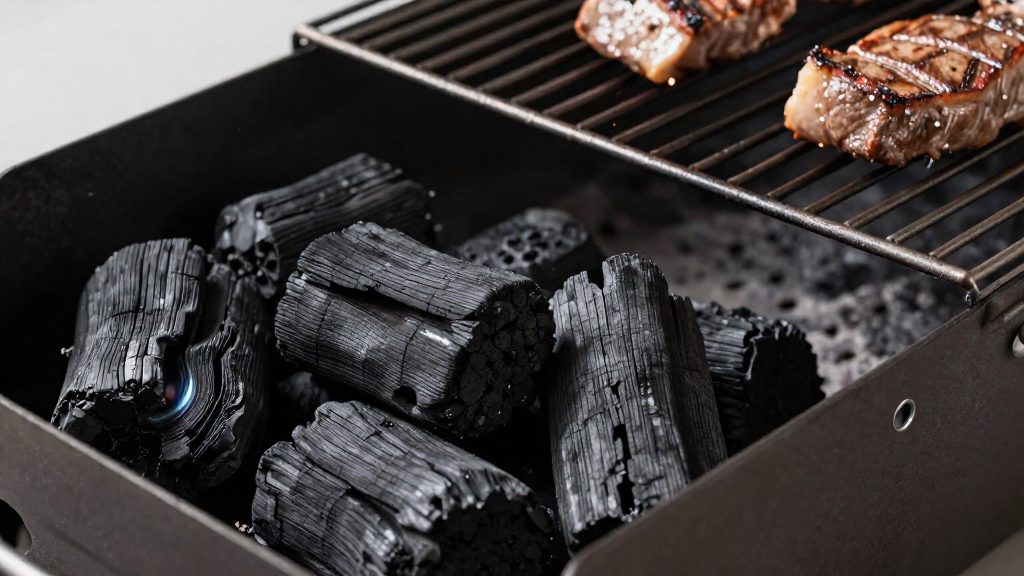
A two-zone charcoal fire concentrates the lit coals on one half of the grate and leaves the other half empty, giving you a hotter side and a cooler side. According to America’s Test Kitchen, the setup starts with a large chimney starter, filled with about 6 quarts (roughly 100 briquettes) of charcoal.
1. Light the charcoal in a chimney starter
Fill the chimney with the full quantity of briquettes and light it. Let it burn for about 20 minutes, until the coals are fully lit and lightly covered with ash. The ash layer shows that the briquettes are burning evenly. Pour them out only after this point, because coals that are still partly unlit will produce uneven heat.
2. Pile the coals on half the grill
Tip the lit coals onto one half of the charcoal grate, stacking them about 3 briquettes high. Keep the other half free of coals. The stacked side provides direct, intense heat, while the bare side becomes a lower-heat zone where you can move food when it cooks too quickly or when flare-ups occur.
3. Preheat the grate
Put the lid on and let the grill heat for about 5 minutes. This warms the cooking grate across the whole surface, including the empty half. Then remove the lid and scrape the grate clean with a grill brush, so that no residue remains on the cooking surface before you place any food on it.
The result is a fire with a clearly defined direct zone and indirect zone, both on a preheated grate. Keep the lid handy: closing it lets you control the temperature by limiting airflow when needed.
How to thread shrimp on skewers
Preparation happens before the grill is lit. America’s Test Kitchen’s charcoal recipe starts with 1½ lb of shrimp, peeled and deveined with the tails left on, and divides them across three skewers.
Peeling and deveining
Remove the shell from the body, working from the underside, but leave the tail segment attached. The tail gives you a handle for turning each shrimp on the grate. Make a shallow cut along the back to expose the dark intestinal vein, then lift it out with the tip of a paring knife. This step is called deveining. Rinse the shrimp briefly under cold water and pat them dry with paper towels so the surface takes on oil and sugar evenly.
Dividing the shrimp across three skewers
Divide the 1½ lb into three equal portions of about ½ lb (8 oz) each. Portion them before threading so that each of the three 14-inch skewers carries the same weight.
Threading technique
- Insert the skewer through the thickest part of each shrimp, near the head end, so the piece sits firmly.
- Alternate the orientation of each shrimp, head to tail, so the curves nest against each other and the shrimp lie flat on the grate.
- Leave a small gap between pieces. Packed shrimp block heat from reaching the surfaces that need to brown.
- Slide each shrimp along the skewer to the point where it sits level, then check that no shrimp is pulled loose at the end.
Once threaded, keep the skewers chilled until the grill is ready, so the shrimp hold their shape during the transfer to the grate.
How long do shrimp take on the grill?
According to America’s Test Kitchen, the charcoal shrimp skewer recipe cooks the shrimp in two timed stages over direct heat, with the grill uncovered. The first side takes 4 to 5 minutes, and the second side takes 1 to 2 minutes more. Together, the total cooking time is roughly 5 to 7 minutes.
Setting up the hot side
The recipe uses a two-level fire. The shrimp cook on the hot half, which is why the timing depends on that side.
First side: 4 to 5 minutes
Place the skewers on the hot side with the lid open. Leave them untouched for 4 to 5 minutes. This first side is the one that gets lightly charred, so it is the side that sets the browning on the finished skewers. Resist moving them during this window, because the char only forms if the shrimp stay in contact with the grate.
Flip and finish: 1 to 2 minutes more
Turn the skewers and cook the second side for 1 to 2 minutes. This short second phase finishes cooking the shrimp without adding significant char.
| Stage | Position | Duration | Purpose |
|---|---|---|---|
| First side | Uncovered, hot side | 4–5 min | Lightly charred surface |
| Second side | Flipped, uncovered | 1–2 min | Completes cooking |
Simple marinades and rubs
America’s Test Kitchen keeps the seasoning for its charcoal shrimp skewers to two ingredients applied before the shrimp reach the grate: olive oil and sugar. The oil gives a thin, even coat, and the sugar helps the surface brown quickly over a hot fire.
| Ingredient | Amount | Role |
|---|---|---|
| Olive oil | 2–3 tbsp, brushed onto the shrimp | Gives an even, thin coat before grilling |
| Sugar | ¼ tsp | Aids browning on the first side |
Brush the oil on rather than pouring it over the shrimp. A thin, even film covers the exposed surface of each piece, which helps the sugar stick and reduces the chance of dry patches while the shrimp cook. Apply the sugar to the side that will meet the hot zone first, sprinkling it evenly over the surface.
Keep the quantities as written. Sugar caramelises and darkens quickly on a hot grate, so adding more than the recommended amount increases the risk of scorching before the shrimp are cooked through. Because the seasoning is minimal, the charred edges and the natural sweetness of the shrimp remain the main flavours, which is the point of this method.
How do you know shrimp are done?
Shrimp are done when the flesh is opaque all the way through. That second side is where you confirm doneness, so check it before you move the skewers off the grate.
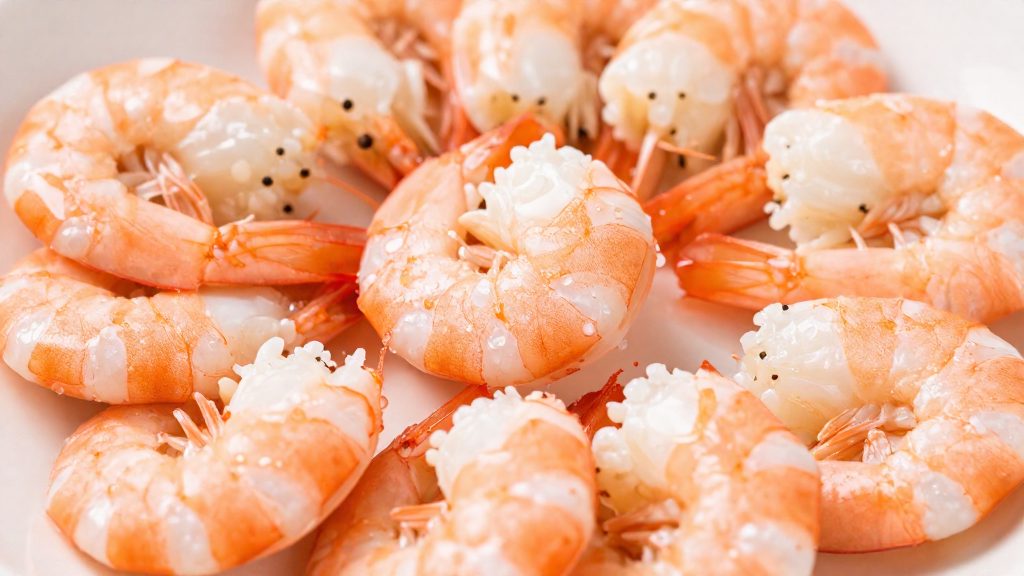
Raw shrimp look translucent and glossy. Once cooked, the flesh turns solid and opaque, and the change is most visible in the thickest part of the body, near the head end. Check each skewer in the same way, because shrimp of the same size can finish at slightly different times on a two-level fire.
Use this sequence to check the second side:
| Check | What to look for | Action |
|---|---|---|
| Flesh colour | Opaque from edge to edge | Remove the skewer from the grill |
| Thickest part | Still translucent in the centre | Return the skewer to the hot side and check again |
| Edges | Lightly charred, not blackened | Turn the skewer sooner if the char is deepening |
If you are unsure, cut into the thickest shrimp on a skewer. A fully cooked shrimp shows no translucent flesh at the cut. Shrimp that have been flipped and are opaque throughout are ready to serve, so take them off the grill promptly rather than leaving them on the grate while you finish other food.
Cleanup and grill safety
Once the shrimp are off the grate, the main hazards are the hot metal skewers and the spent charcoal ash. Both keep their heat well after the food is removed.
Handling hot metal skewers after cooking
- Move the skewers to the empty half of the grill, the side without coals, or to a heatproof surface.
- Let them rest until they are no longer too hot to touch.
- Lift them with tongs or heat-resistant gloves, never bare hands.
- Keep children and pets away from the grill area while the skewers and grate are still hot.
Disposing of spent charcoal ash safely
Ash can stay hot for a long time after the fire looks finished, so treat it as a hazard until it is fully cold.
- Close the lid and shut the airflow to smother the remaining coals.
- Leave the grill undisturbed until the ash is completely cold to the touch.
- Scoop the ash into a metal container with a tight-fitting lid.
- Place the container on a non-combustible surface, away from walls, decks and dry plants.
Cleaning the grate after cooking
Brush the grate while it is still warm. The recipe adds ¼ tsp sugar to help the shrimp brown, and that sugar can cook onto the bars, so warm residue is easier to remove.
Frequently asked questions
Do I need to peel and devein the shrimp before grilling?
Yes, America’s Test Kitchen’s tested recipe uses peeled and deveined shrimp, with the tails left on. The tails give you a natural handle, so you can turn each piece without touching the flesh.
How do I build a two-level fire for shrimp?
Fill a large chimney starter with about 6 quarts (roughly 100 briquettes) and light it for about 20 minutes, until the coals are fully lit and lightly covered with ash. Pile the coals about 3 briquettes high over half the grill, leave the other half empty, then cover the grill and heat the grate for about 5 minutes before scraping it clean. The two-level fire lets you move the shrimp to the cooler side if they char faster than expected.
How much oil and sugar should I add?
Brush the shrimp with 2–3 tbsp of olive oil, then add ¼ tsp of sugar to help browning, according to America’s Test Kitchen. Apply the oil just before the shrimp go on the grill, so the sugar sticks to the surface and caramelizes on the hot side.