Why make BBQ sauce without ketchup?
Making BBQ sauce without ketchup lets you set the sweetness, saltiness and acidity yourself rather than accepting the fixed balance of a bottled product. A no-ketchup recipe from From Scratch Farmstead (2026) starts from tomato sauce and adds each flavour component separately, so every element can be adjusted on its own.
Control over sweetness, salt and acidity
Bottled sauces are formulated once for a broad market. A homemade version lets you decide where the balance sits. The recipe uses maple syrup and brown sugar for sweetness, apple cider vinegar for acidity, and Worcestershire sauce and salt for savoury depth. Because each is a distinct input, you can reduce the sugar for a less sweet glaze or increase the vinegar for a sharper finish without changing the rest of the recipe.
Using pantry ingredients instead of bottled sauce
Most components are common kitchen staples: tomato sauce, vinegar, syrup, sugar, Worcestershire sauce, and dried spices such as paprika, onion powder, garlic powder, chili powder, salt and pepper. Building the sauce from these means you do not need a specialist bottle on hand, and you can make a batch whenever the grill is lit.
Adjusting heat and smoke to personal taste
Chili powder and paprika are added as dry spices, so the level of heat and smoky character depends on how much you add. Tasting the sauce during simmering lets you correct the seasoning before it reaches your target consistency.

What can replace ketchup in BBQ sauce?
A no-ketchup barbecue sauce replaces one bottled condiment with three separate components. Tomato sauce provides the tomato base, apple cider vinegar supplies the tang, and Worcestershire sauce adds savoury depth. The no-ketchup recipe published by From Scratch Farmstead (2026) combines these same three elements, so it is a useful reference for how they work together.
Tomato sauce as the base
Plain tomato sauce takes the place of the tomato body that ketchup normally supplies. Check the label: a plain tomato sauce with no added vinegar or sweetener leaves every other flavour in your control. Choose a smooth, plain sauce rather than a seasoned pasta sauce, because pre-added herbs and salt would be difficult to balance later.
Apple cider vinegar for tang
Ketchup gets its sharpness from vinegar. Apple cider vinegar performs the same role in a homemade sauce, adding the acidity that keeps the tomato base from tasting flat. Add it with the tomato sauce at the start so that its sharpness blends into the base as the sauce heats. You can adjust it at the end.
Worcestershire sauce for savoury depth
Tomato sauce on its own tastes lighter and less rounded than ketchup. Worcestershire sauce fills that gap with savoury depth, giving the sauce a fuller, more complex character. Stir it in with the other liquids so that its flavour distributes evenly through the base before the sauce thickens.
Simple no-ketchup BBQ sauce recipe
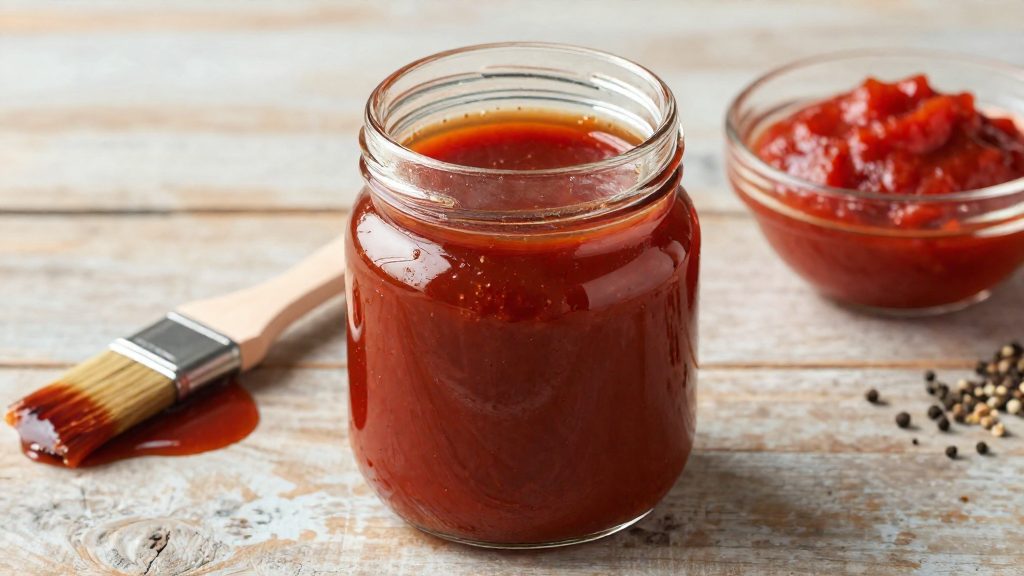
This stovetop recipe replaces ketchup with tomato sauce and builds sweetness and tang from maple syrup, brown sugar and apple cider vinegar. According to From Scratch Farmstead (2026), it yields about 2 to 2.5 cups of sauce.
Ingredients
| Ingredient | Quantity |
|---|---|
| Tomato sauce | 2 cups |
| Apple cider vinegar | ¼ cup |
| Maple syrup | ¼ cup |
| Worcestershire sauce | 2 tbsp |
| Brown sugar | 1 tbsp |
Add the following spices: paprika, onion powder, garlic powder, chili powder, salt and pepper. The source lists these without quantities, so adjust each one to taste.
Method
-
Combine everything in a saucepan. Whisk the tomato sauce, vinegar, maple syrup, Worcestershire sauce and brown sugar together before heating, so the sugar dissolves evenly.
-
Add the spices. Stir in paprika, onion powder, garlic powder, chili powder, salt and pepper. Start with small amounts of chili powder and add more after tasting, since it has the strongest heat of the group.
-
Bring to a bubble. Bring everything to a bubble over medium-high heat. Watch the pan closely at this stage, because the sugars can scorch on the bottom if you walk away.
-
Simmer for 15 to 20 minutes. Lower the heat to keep a steady simmer and stir regularly to prevent sticking. Simmer for 15 to 20 minutes for the base recipe. Simmer longer for a thicker sauce.
-
Taste and adjust. Correct the seasoning with salt, pepper or a little more vinegar or maple syrup before brushing it onto meat, fish or vegetables.
How do you thicken homemade BBQ sauce?
A homemade no-ketchup BBQ sauce thickens mainly through water loss. The tomato base and sweeteners start out fluid, and the only thickening step in the recipe is evaporation. According to From Scratch Farmstead (2026), simmering longer produces a thicker sauce, so cooking time is the main control over viscosity.
Controlling reduction with simmer time
Once the sauce reaches a bubble over medium-high heat, lower the heat to keep it at a steady simmer and extend the cooking time in short increments. Each additional period of simmering removes more water, so the sauce becomes denser and more concentrated in flavour. Check the texture between increments rather than cooking to a fixed time, because the starting thickness of the tomato sauce varies between brands.
A wider pan exposes more of the sauce to air, which speeds evaporation, while a deep pot slows it down. Choose the pan according to how quickly you want the sauce to thicken.
Stirring to prevent sticking
As water leaves, the sugars from the maple syrup and brown sugar concentrate. Scrape the bottom and corners with each stir, and reduce the heat if you see dark spots forming. Scorched residue gives a bitter taste that cannot be removed by thickening, so discard the sauce if it has burnt and start again in a clean pan.
Fixing a sauce that stays runny after cooling
If the sauce looks thin once it has cooled, return it to the pan and simmer again, stirring from the base, until the sauce reaches the consistency you want, then let it cool before judging the final texture.
Flavour variations: smoky, spicy, sweet
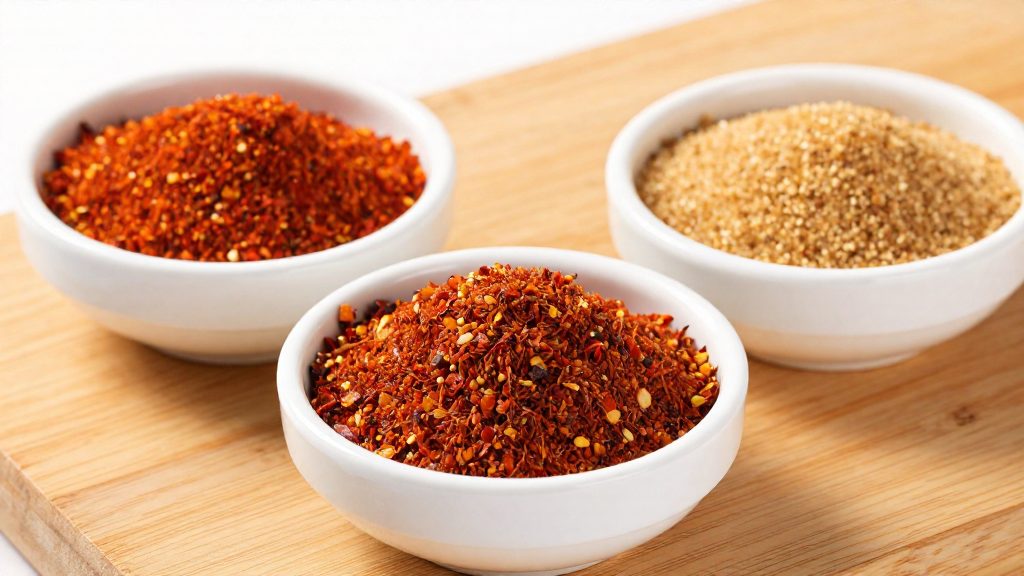
Smoky, spicy and sweet variations all work the same way: each addition is layered onto the tomato-based structure of the sauce without changing its method. In the From Scratch Farmstead (2026) base, paprika and chili powder already supply a mild warmth, so any variation shifts that balance rather than replacing the base. Add flavourings at the start of the simmer, when everything is brought to a bubble together, and stir regularly so they distribute evenly.
Smoky notes can come from two sources. Smoked paprika adds a wood-like aroma and leaves the texture unchanged, which makes it the easier option to adjust. Liquid smoke is much more concentrated, and a few drops can dominate a full batch.
Heat is adjusted with cayenne, dried chili flakes or hot sauce. Cayenne and flakes add pungency with little effect on colour or body. Hot sauce adds heat along with its own acidity, so it also changes the tang of the finished sauce.
Sweetness can be deepened with molasses or honey, both used alongside the maple syrup and brown sugar already in the base. Molasses gives a darker, slightly bitter-edged sweetness and darkens the colour. Honey is lighter and rounder and adds sweetness without visibly changing the colour.
| Addition | Flavour effect | Practical note |
|---|---|---|
| Smoked paprika | Smoky, earthy | Stir in with the base spices; no change to texture |
| Liquid smoke | Concentrated smoke | Strongest per drop |
| Cayenne or chili flakes | Direct heat | Stir in before simmering; retaste at the end |
| Hot sauce | Heat plus acidity | Alters the tang as well as the heat |
| Molasses | Dark, deep sweetness | Darkens the colour |
| Honey | Light, rounder sweetness | Keeps the colour unchanged |
When combining several additions, introduce one at a time. Smoke, heat and sweetness can each mask the others, so a balanced sauce usually needs modest amounts of each rather than a large dose of one.
When should you brush sauce on the grill?
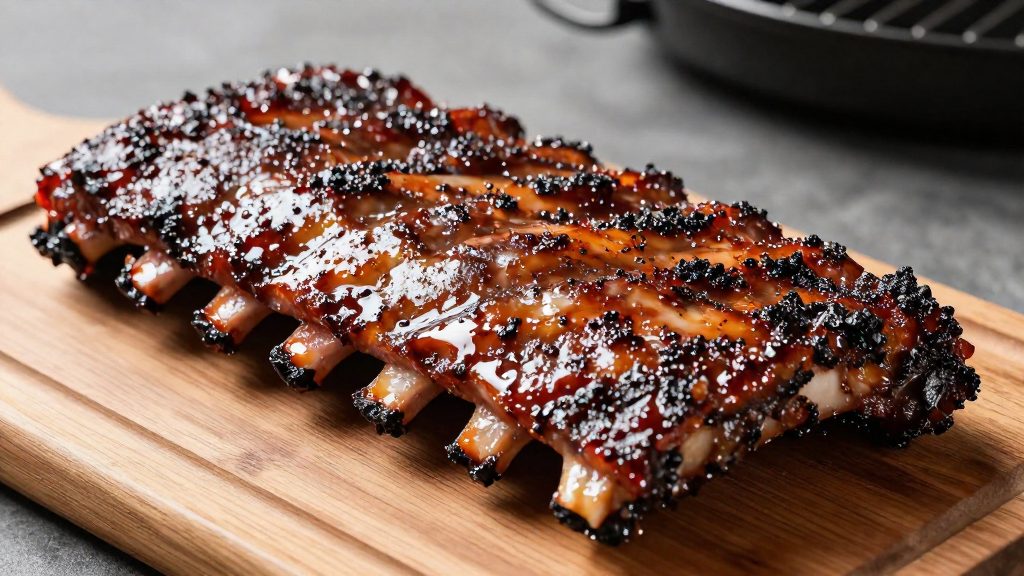
Brush a no-ketchup BBQ sauce onto food during the final stage of cooking, not at the start. This sauce is built on tomato sauce, apple cider vinegar, maple syrup and brown sugar, so it contains a lot of sugar. Sugar darkens quickly over direct heat. If you apply it too early, the glaze caramelises, turns bitter and bonds to the surface as a hard, sticky crust before the meat or vegetables are cooked through.
Apply the sauce in thin layers between turns. Brush on a light coat, move the food to a cooler zone or close the lid, then turn and repeat. Each thin coat sets slightly before the next, so the glaze builds up evenly without pooling or dripping. Avoid saturating one side in a single pass, because the exposed sauce will burn while the rest of the piece is still cooking.
Drips are the main cause of flare-ups. Sauce that falls onto coals, a gas burner or a flavourizer bar ignites instantly and scorches whatever sits above it. To limit this:
- Brush only over the indirect zone, or after moving the food away from the flames.
- Keep the lid closed between coats to reduce airflow and flame intensity.
- Wipe excess sauce from the brush against the rim of the bowl before applying it.
- Check the grate and burner area after each application and clear any sauce that has dripped there.
| Situation | Action | Reason |
|---|---|---|
| Surface darkening quickly over direct flame | Move food to indirect heat | Sugars burn before the interior is done |
| Sauce dripping onto flame | Reposition food or lower the burner | Drips cause sudden flare-ups |
| Glaze already dark and sticky | Stop brushing and turn the food | Further coats add bitterness, not flavour |
How long does homemade BBQ sauce keep?
Storage life is limited: according to Health Canada (2026), refrigerated leftovers should be eaten within 2 to 3 days or frozen. Portioning and labelling help you track this. The no-ketchup base, built on 2 cups of tomato sauce, yields about 2 to 2.5 cups according to From Scratch Farmstead (2026). Dividing that batch into several smaller portions means the main amount is opened and handled less often, so each portion stays closer to its original condition.
Airtight containers are the simplest option for refrigerated storage. Choose glass jars or rigid containers with lids that seal fully. Fill each container close to the top to reduce the air trapped inside, and use small containers so that you open only the amount you need for one meal or one cook.
Ice cube trays suit sauce you use in small quantities, such as brushing on meat during the final minutes on the grill. Spoon the sauce into a silicone or plastic tray, freeze until solid, then remove the cubes and move them into a sealed bag or container. Label the bag once, not each cube. To use them, thaw the cubes in the refrigerator, then bring the sauce to a full rolling boil and confirm an internal temperature of 74°C (165°F) with a digital food thermometer before using it as a glaze.
Use the preparation date on every container, bag, or tray, because the sauce looks similar across batches. The table below lists the label details that make a stored portion easy to identify.
| Label field | Purpose |
|---|---|
| Preparation date | Identifies the batch and its age |
| Storage type (fridge or freezer) | Shows which portions need thawing |
| Portion size (cube, jar, or cups) | Lets you pick the right amount without thawing everything |
Safe handling of sauce and leftovers
Homemade barbecue sauce is a cooked food, so its safety depends on how long it stays at room temperature, how it is chilled, and how it is reheated. Health Canada (2026) gives general rules for leftovers, and they apply to a batch made without ketchup. It also says to bring sauces, soups and gravies to a full rolling boil when reheating.
| Stage | Limit | Action |
|---|---|---|
| Cooked sauce at room temperature | More than 2 hours | Discard it |
| Refrigerated leftovers | 2 to 3 days | Eat within that window |
| Reheating | Full rolling boil | Bring the sauce to a rolling boil before serving |
The two-hour limit applies to cooked food left at room temperature. Discard the sauce if it has been out for more than 2 hours. If you plan to save leftovers, transfer them to a covered container instead of leaving the pot on the table or near the grill, where the sauce can stay warm for a long time without anyone noticing.
Once the sauce is chilled, treat refrigerated leftovers as a short-term product. If the sauce is past the 2 to 3 day window, discard it rather than tasting it to judge freshness.
When reheating, bring only the portion you intend to serve to a full rolling boil, stirring as it heats so it warms evenly. Repeatedly reheating the same batch means the sauce spends more time in the warm range, so portion it before storing. A simmer that barely bubbles does not meet the guideline.
Frequently asked questions
How long can I keep homemade no-ketchup BBQ sauce?
According to Health Canada (2026), refrigerated leftovers should be eaten within 2 to 3 days, or frozen for longer storage. Portion the sauce into labelled containers so you can track how long each batch has been in the fridge.
How do I make the sauce thicker without changing the recipe?
Simmer the sauce for longer than the 15 to 20 minute base time, stirring regularly to keep it from sticking. The reduction concentrates both flavour and sugars, so taste as you go, since the seasoning will become stronger as the sauce thickens.
How do I safely reheat frozen sauce for use as a glaze?
Thaw the sauce in the refrigerator, then bring it to a full rolling boil before using it. Confirm an internal temperature of 74°C (165°F) with a digital food thermometer, as Health Canada (2026) specifies.