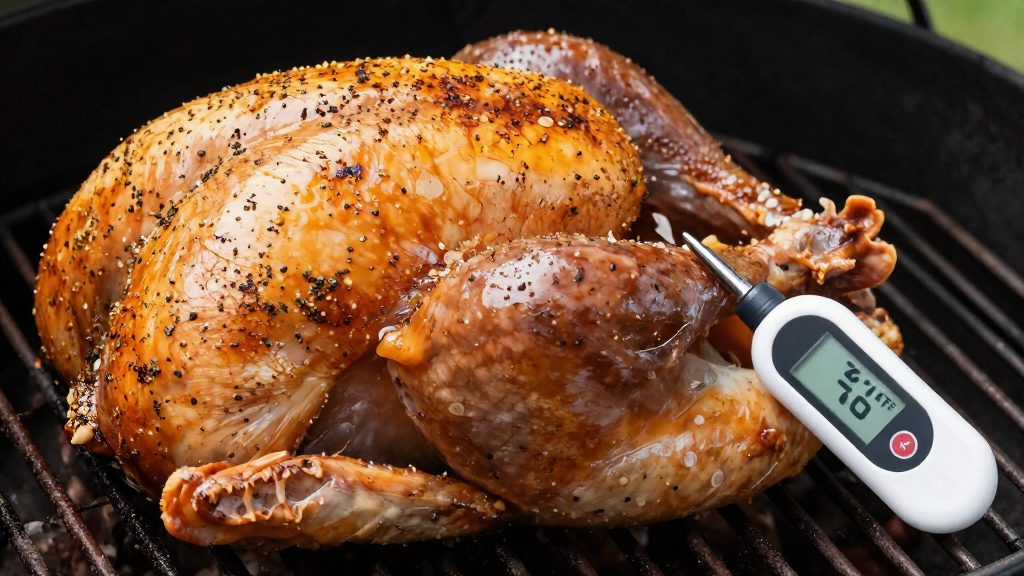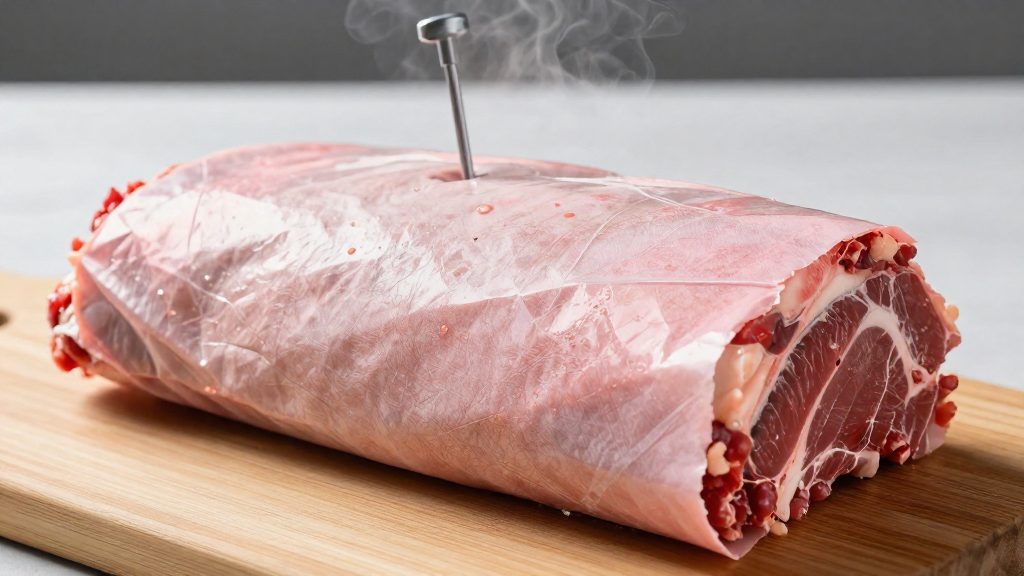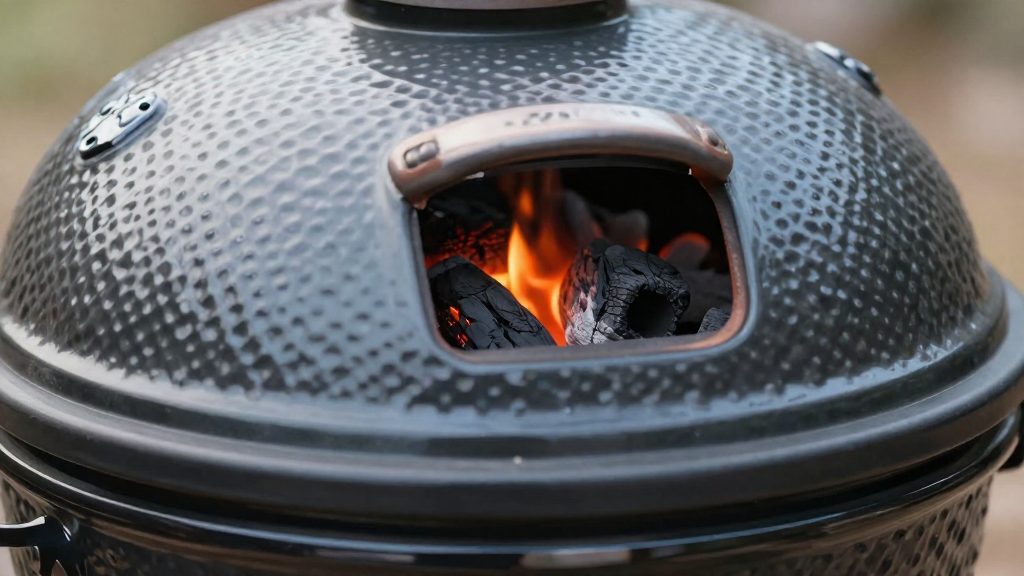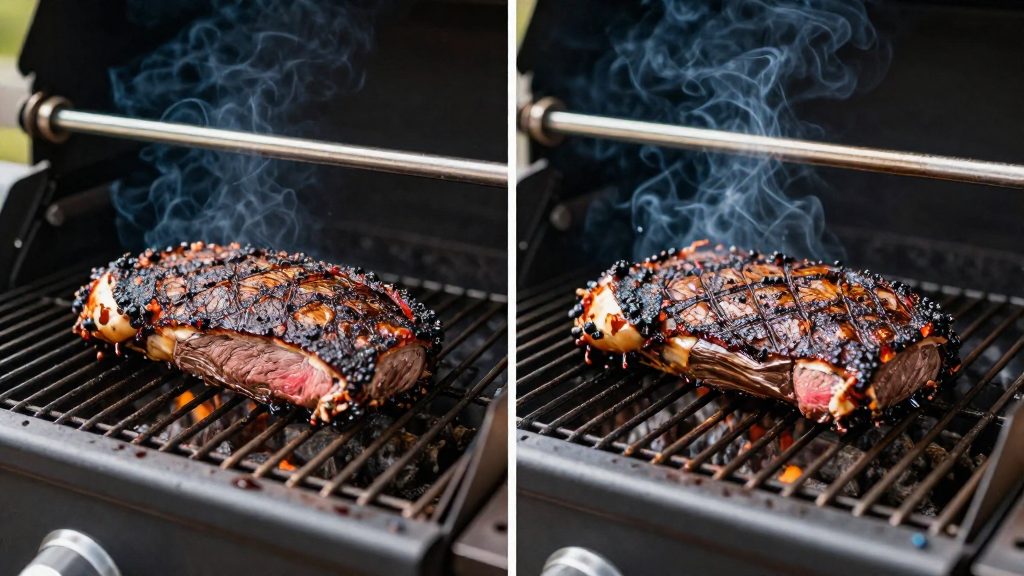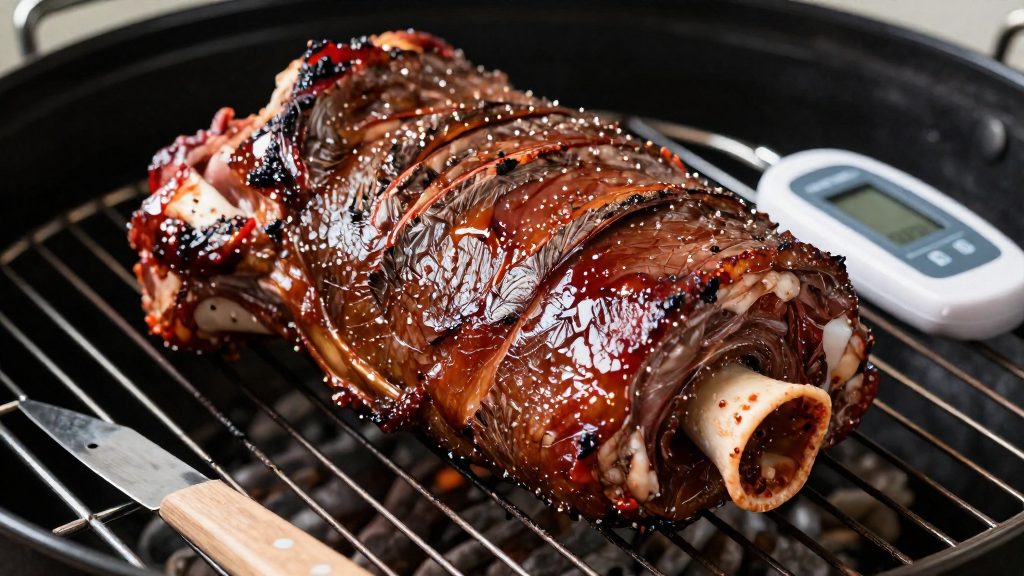
Pork shoulder suits a low, steady overnight cook at 225°F because its dense connective tissue needs many hours at modest heat to soften, while the surface gradually takes on smoke and forms a dark crust. At this temperature the meat stays moist and tender rather than tightening and drying out, and a long overnight run gives both processes the time they need. That is why the method depends on low temperature rather than speed.
Why smoke pork shoulder overnight at 225°F?
Shoulder connective tissue and why low heat tenderizes it
Pork shoulder comes from a heavily worked muscle group and carries a high proportion of connective tissue, the collagen that holds muscle fibers together. Collagen does not soften quickly. Over a long period at low, steady heat it breaks down gradually, which lets the meat pull apart into strands. Cooking the same cut quickly at high heat leaves much of that tissue firm, so the low-temperature approach is central to the texture of the finished meat.
Why moisture and smoke flavor develop slowly at 225°F
At 225°F, the meat’s internal moisture is released gradually instead of being pushed out in a rush. Juices redistribute through the muscle over hours, which helps the shredded meat stay moist. Smoke flavor builds over the same period, because the meat is exposed to smoke for the full length of the cook rather than a short burst. An overnight run extends that exposure, so the flavor develops more evenly through the cut.
Smoke absorption and bark formation during long cooks
Smoke absorption is most effective while the surface remains moist, so the early hours of a long cook shape much of the flavor. As the surface dries, the rub and smoke compounds darken into bark, the crisp, dark exterior that many pitmasters prize. A longer cook gives the bark more time to set and deepen in color, which is one practical reason overnight smoking produces a more developed crust than a shorter session.
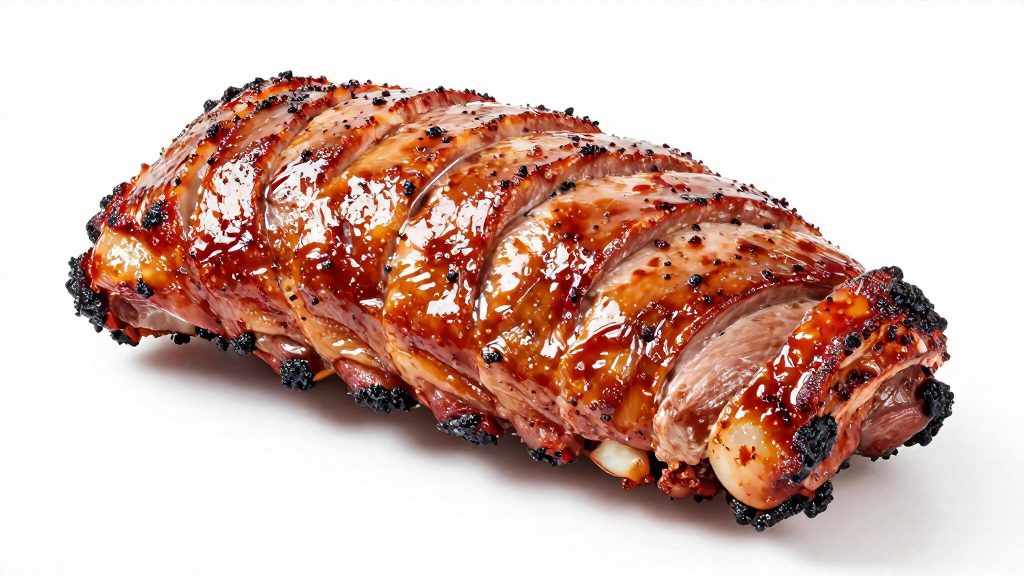
How long does a pork shoulder take at 225°F?
At 225°F, cooking time depends mainly on the cut and its weight. According to BBQHost (2025), a bone-in shoulder needs about 1.5 to 2 hours per pound at 225°F, and a boneless shoulder needs about 1 to 1.5 hours per pound. These are planning ranges, not finish times, so confirm doneness with a probe rather than the clock.
Time per pound by cut
| Cut | Time per pound at 225°F |
|---|---|
| Bone-in shoulder | 1.5 to 2 hours |
| Boneless shoulder | 1 to 1.5 hours |
Worked example: 8-lb bone-in shoulder
Multiply the weight by each end of the range:
- 8 lb × 1.5 hours = 12 hours
- 8 lb × 2 hours = 16 hours
The same guide also gives a lower total of 10 to 14 hours for an 8-lb shoulder, which does not match its per-pound figures. Plan on 12 to 16 hours for a bone-in shoulder, since the per-pound math is the conservative figure, and rely on the probe temperature rather than the clock.
Planning an overnight start
Work backward from the serving time using this formula:
start time = serving time − rest time − (weight in lb × hours per pound)
For example, if you want to serve an 8-lb bone-in shoulder at 7 p.m., the meat must come off the smoker between 5 p.m. and 6 p.m. Subtracting 12 to 16 hours from a 5 p.m. to 6 p.m. pull time gives a start window of about 1 a.m. to 6 a.m. (5 p.m. minus 16 hours is 1 a.m.; 6 p.m. minus 12 hours is 6 a.m.).
Starting at the earlier end of that window leaves a buffer if the shoulder runs toward the longer estimate. Weather, lid opening, and fuel changes can all shift the timing, so check the internal temperature well before the planned finish.
What internal temperature means pulled pork is done?
Pulled pork is done when its internal temperature reaches the pull temperature, not when a set number of hours has passed. According to BBQHost (2025), a pork shoulder is pulled at 195°F for classic pulled pork, or at 200 to 205°F when you want it to shred more easily. Sliced pork is pulled at a lower target. Choose the number that matches how you plan to serve the meat.
| Serving style | Pull temperature |
|---|---|
| Pulled pork, standard | 195°F |
| Pulled pork, easier shredding | 200 to 205°F |
| Sliced pork | 180 to 185°F |
These targets describe texture. At higher readings, the connective tissue in the shoulder has broken down enough to pull apart with forks, while sliced pork holds together at the lower range.
The USDA safe minimum
The USDA safe minimum for whole cuts of pork is 145°F, followed by a 3-minute rest. CIDRAP (University of Minnesota) reported this figure from the USDA FSIS announcement of 2011-05-24. Ground pork has a higher minimum of 160°F. Every pull temperature listed above is well above 145°F, but safety still depends on a correct reading: check the thickest part of the meat with a calibrated thermometer, away from bone. Take the reading in the thickest part of the meat.
Why pink pork can be safe
Pink pork is not automatically undersmoked. The USDA guidance states that pork can stay pink when it is safe, so colour alone does not show whether the meat has reached a safe temperature. Smoke can also colour the surface and the area near the bone. Base the decision on the thermometer reading rather than on the appearance of the meat.
How to prep and set up the smoker for the night
Overnight prep for pork shoulder involves three decisions made before the meat goes on the grill: how much fat to keep, how much rub to apply, and where the meat sits relative to the fire. BBQHost (2025) gives a specific target for each, and all three can be set up with basic tools.
Trimming the fat cap
Trim the fat cap to about 1/4 inch thick. Use a sharp knife to remove thick, loose patches, and work until the cap is roughly even across the surface. Trimming before seasoning means the rub contacts the meat directly rather than sitting on excess fat.
Applying the rub
Measure the rub ratio by weight: about 1 tablespoon per pound of pork. Weigh the shoulder before seasoning so the quantity is accurate.
| Item | Target |
|---|---|
| Rub quantity | About 1 tablespoon per pound |
| Example: 8-lb shoulder | About 8 tablespoons |
Apply the rub evenly on all sides, pressing it into the surface so it adheres during the cook.
Placing the meat and the thermometer
Keep the shoulder far from the heat source. On a charcoal or gas grill, set it on the section of grate farthest from the firebox or burner. On a pellet or kamado grill, use the cooler area of the cooking surface, away from the direct heat.
Insert the probe of an instant-read thermometer into the thickest part of the meat, keeping the tip clear of bone. Bone conducts heat differently from muscle, so a probe touching it can give a reading that does not reflect the meat around it.
Beating the stall: to wrap or not to wrap?
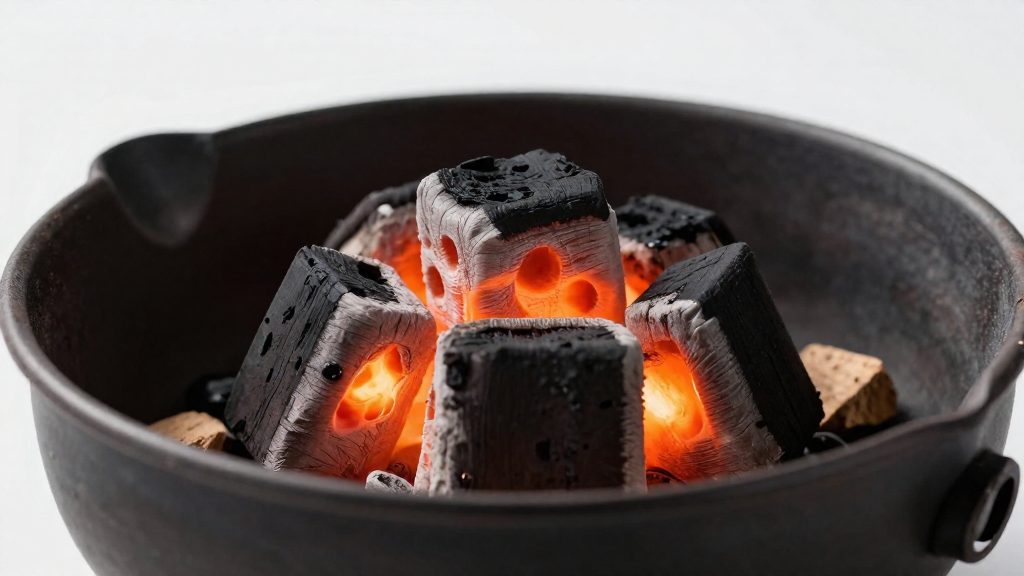
Wrapping a pork shoulder is a timing decision based on internal temperature, not a fixed step. The stall is a plateau that occurs at roughly 150 to 160°F internal, and wrapping is the technique used to move through it. According to BBQHost (2025), an overnight approach starts the smoker at 200°F for the unwrapped phase.
Locating the stall
At a 200°F smoker temperature, a large shoulder may not reach the stall until 6 to 8 hours into the cook. BBQHost (2025) recommends checking the internal temperature after about 6 hours, so you can confirm where the meat sits before deciding whether to wrap.
The wrap window
Wrap when the internal temperature reaches 155 to 175°F, using heavy-duty foil or butcher paper. This range overlaps the end of the stall, so wrapping inside it avoids waiting for a plateau that may have already begun to clear.
The 200°F to 225°F switch
Raise the smoker to 225°F once the shoulder is wrapped. The wrapped phase then runs until the meat reaches about 200°F internal, which BBQHost (2025) puts at roughly 4 to 6 more hours. Note that this staged schedule, with a 200°F start, differs from the steady 225°F per-pound estimates above, so use one plan or the other.
| Phase | Smoker temperature | Internal temperature | Action |
|---|---|---|---|
| Unwrapped start | 200°F | Up to 150°F | Smoke uncovered |
| Stall | 200°F | 150 to 160°F | Hold and monitor |
| Wrap window | 200°F | 155 to 175°F | Wrap in heavy-duty foil or butcher paper |
| Wrapped finish | 225°F | Rising toward about 200°F | Continue for roughly 4 to 6 hours |
Wrapping in the wrap window retains moisture in the wrapped phase, while the unwrapped start keeps the bark developing. The temperature switch is what allows the overnight schedule to run without constant adjustment.
Is it safe to sleep during an overnight smoke?
It carries real risk, and you can reduce it by setting up and monitoring the cooker carefully. The main risks are fire spreading to nearby structures, carbon monoxide building up in enclosed units, and a fuel or temperature problem going unnoticed for hours. The duration makes this a real concern: according to BBQHost (2025), an 8 lb shoulder takes about 10 to 14 hours in total, although its per-pound figures give 12 to 16 hours for bone-in, so the cooker will run through the night.
Fire placement away from structures and combustibles
Place the smoker on a stable, level, non-combustible surface, clear of walls, fences, deck railings, overhanging trees, eaves, and dry vegetation. Do not set it directly on a wooden deck unless it has a protective base. Check that the lid, vents, and grease tray have nothing near them that could ignite. Keep the meat away from the heat source, as BBQHost (2025) recommends for overnight prep. Dispose of ash only after it has fully cooled, and store it in a metal container away from the cooker.
Carbon monoxide and ventilation with enclosed smokers
Enclosed smokers, including offset, pellet, and kamado-style units, produce carbon monoxide during combustion. Run them outdoors only, never in a garage, tent, shed, or covered porch, even with the door open. Keep the intake and exhaust vents in their set positions rather than sealing them, because a starved fire smolders and produces more carbon monoxide. If your bedroom is near the cooking area, install a battery-operated carbon monoxide alarm in that room and test it before the cook starts.
Remote temperature alarms and fuel monitoring overnight
A remote temperature alarm, such as a wireless or Bluetooth thermometer with adjustable thresholds, lets you hear about problems from your bed. Set a high alarm and a low alarm around your target pit temperature of 225°F. The low alarm matters most overnight, because a dying fire is the most common silent failure. Before bed, check the charcoal, pellet, or propane level, and keep a spare supply within reach. Confirm that the receiver is loud enough to wake you, and keep the receiver within the transmitter’s stated range, since a dropped signal gives you no warning.
Resting, shredding and storing leftovers
After the cook, rest the shoulder for 1 to 2 hours before shredding. BBQHost (2025) recommends this window, which lets the meat relax so the pulled strands hold more of their juices. Keep the shoulder wrapped in its foil or butcher paper during the rest, and shred it on a board or in a large pan so the drippings stay with the meat.
Once shredded, mix the pork with some of its juices before storage. Moisture helps the leftovers reheat without drying out, and the juices are the most flavourful part of the cook.
Leftovers need to be cooled and put away promptly. According to BBQHost (2025), you should refrigerate leftovers within 2 hours of finishing the cook. Do not leave shredded pork out on the counter while it cools down, and do not wait for it to reach room temperature before packing it.
| Stage | Guideline | Practical action |
|---|---|---|
| Resting | 1 to 2 hours | Keep wrapped, shred after the rest |
| Refrigeration | Within 2 hours | Pack into airtight containers |
| Storage life | 3 to 4 days refrigerated | Label containers with the cook date |
Use shallow, sealed containers so the pork cools faster and stays fully covered in the fridge. Portion the batch into meal-sized amounts before storing, so you open only what you need. Reheat only the portion you plan to eat, and keep the rest in the fridge.
Frequently asked questions
How long does a bone-in pork shoulder take at 225°F?
BBQHost (2025) gives 1.5 to 2 hours per pound for bone-in shoulder at 225°F, which works out to roughly 12 to 16 hours for an 8-lb cut. The same guide’s lower total of 10 to 14 hours does not match its per-pound figures, so use the probe reading to decide when the meat is done.
Should I start at 200°F and then raise the heat to 225°F?
BBQHost (2025) describes a staged method: 200°F while the shoulder is unwrapped, then 225°F after wrapping. Choose either this schedule or a steady 225°F cook and plan around that one, because the per-pound times for 225°F do not apply to the slower 200°F phase.
Is it safe to leave a smoker running overnight?
Unattended cooking carries real risk, and careful setup and monitoring reduce it. Keep the intake and exhaust vents in their set positions rather than sealing them, because a starved fire smolders and produces more carbon monoxide.