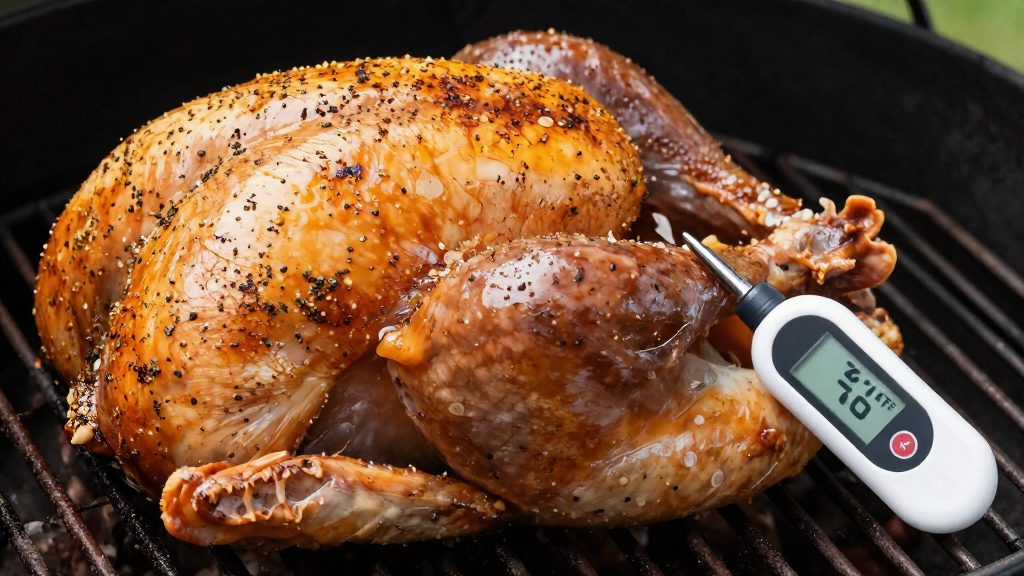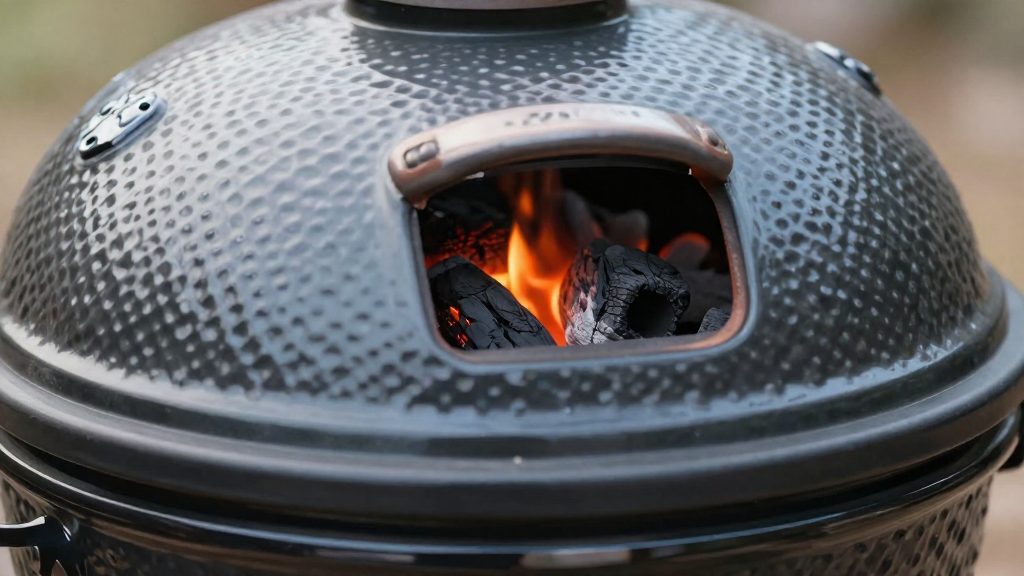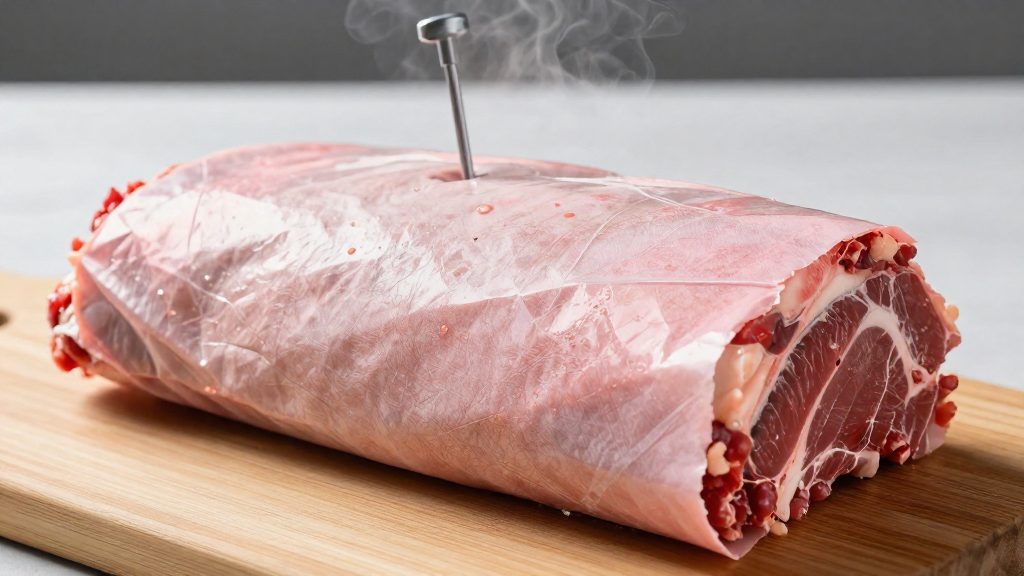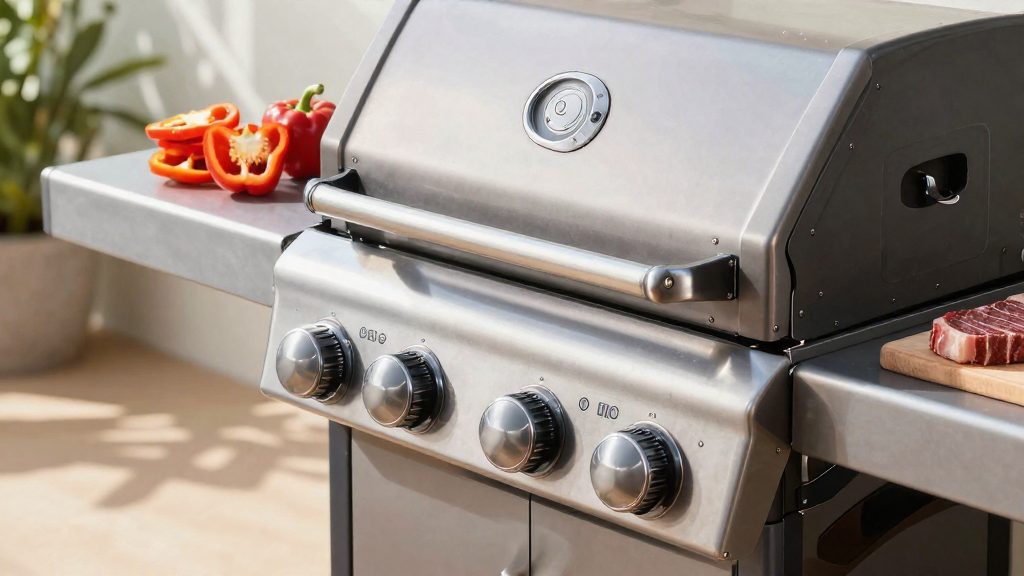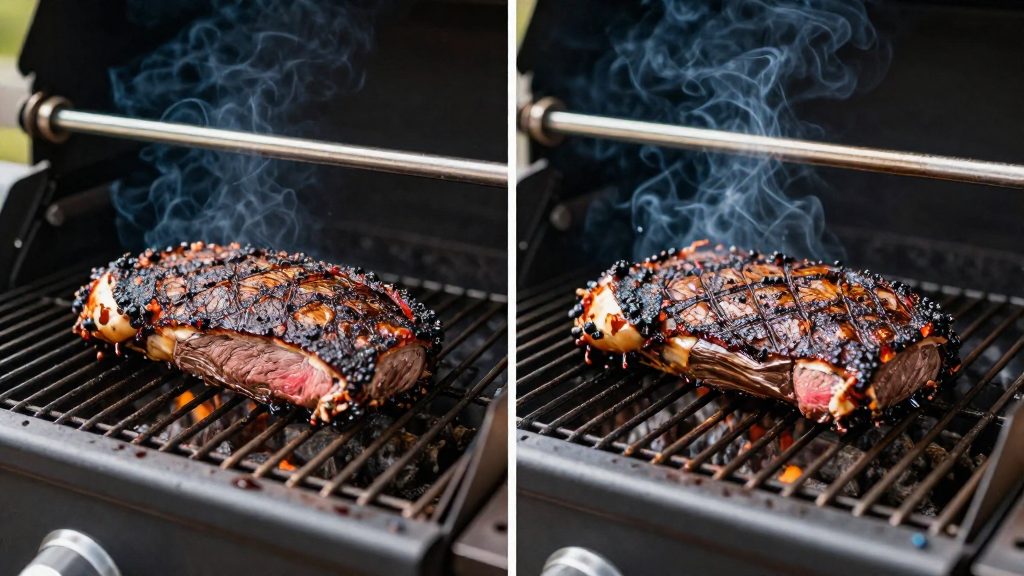
Pellet grills are the better choice for brisket because they hold steady low heat for the many hours a brisket needs. According to Smoked BBQ Source (2026), pellet grills excel at low-and-slow cooking, while gas grills are described as poor smokers because they retain heat poorly and struggle to hold low temperatures. Gas grills still have a role for high-heat finishing, but for the main body of a brisket cook, a pellet grill is the more suitable design.
Pellet grill vs gas grill: which is better for brisket?
Overall verdict
The core trade-off is heat stability against maximum heat output. Pellet grills give the steadier low-temperature environment that a brisket needs over a long cook. Gas grills offer more top-end heat, but they drift more at low settings. Because a brisket is cooked mostly low and slow, pellet grills suit the job better.
Why brisket needs sustained, steady low heat
Brisket is a tough cut with dense connective tissue. It becomes tender only after prolonged exposure to low, even heat. Temperature swings lengthen the cook and can dry out the outer layers, since a grill that keeps drifting from its set point cooks less evenly. The key requirement is not a high peak temperature but a set point that stays constant for hours.
Where each design performs
- Pellet grills: Built for extended low-temperature cooking. Some models hold temperature within ±5°F, according to Smoked BBQ Source (2026).
- Gas grills: Most reach about 500°F, and better models reach about 700°F. Their heat retention is weak, and cheaper models may struggle to hold a steady 250°F.
Side-by-side summary for brisket
| Criterion | Pellet grill | Gas grill |
|---|---|---|
| Low-temperature holding | Designed for low-and-slow cooking | Poor heat retention; cheaper models may struggle to hold 250°F |
| Temperature stability | Some models hold within ±5°F | Weak heat retention makes low temperatures hard to maintain |
| Typical maximum temperature | Older models generally struggle above 450°F; newer models such as the Weber Searwood reach 600°F | Most reach about 500°F; better models reach about 700°F |
| Best role in a brisket cook | Main low-and-slow cook | High-heat finishing, where the model supports it |
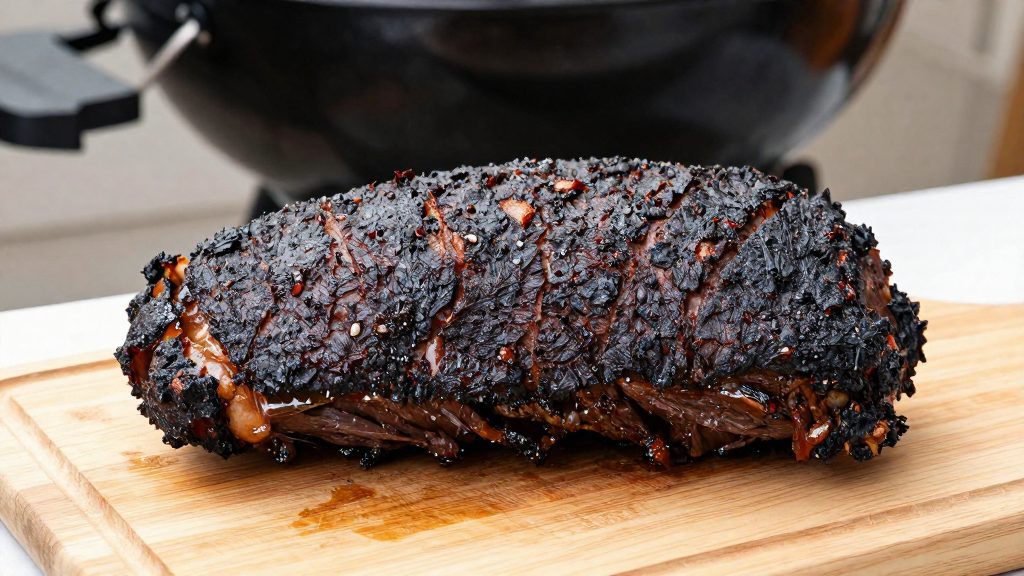
Temperature control for low-and-slow cooking
Pellet grills are designed for the low-and-slow range. According to Smoked BBQ Source (2026), their sweet spot is 200-350°F, which covers the usual window for smoking brisket. Within that range, the controller regulates fuel feed and airflow, so the cook needs little manual adjustment once the setpoint is entered.
The upper limits separate the two designs. Most gas grills reach about 500°F and better models about 700°F. Older pellet grills generally struggle above 450°F, and newer ones such as the Weber Searwood reach 600°F. This ceiling matters only if you want intense heat at the end of a cook.
Gas behaves differently at the bottom of the range. Gas grills retain heat poorly, so low temperatures are hard to hold, and cheaper models may struggle to hold a steady 250°F. Pellet grills are designed for low-and-slow cooking, so they suit long, steady cooks, while gas suits high-heat work.
| Grill type | Operating range or ceiling | Source note |
|---|---|---|
| Pellet, sweet spot | 200-350°F | Designed for low-and-slow cooking |
| Pellet, older models | Generally struggles above 450°F | Limited high-heat headroom |
| Pellet, newer models (e.g. Weber Searwood) | Can reach 600°F | Higher ceiling than older pellet units |
| Gas, typical | Mostly about 500°F | Retains heat poorly at low temperatures |
| Gas, better models | About 700°F | Highest ceiling reported |
For a steady smoke, set the target on the controller, then wait for the grill to settle before loading the meat.
Can a gas grill smoke a brisket?
A gas grill can produce a usable brisket, but it is the less forgiving option for low-and-slow cooking. Maximum heat is rarely the limit. The difficulty is holding the low end of the range steadily for the many hours a brisket needs, typically at 250°F.
Heat retention and low-temperature control
Gas grills retain heat poorly, which makes low temperatures hard to hold. Expect drift at low settings and check the grate-level temperature with a separate thermometer. (Smoked BBQ Source, 2026-05-06)
What to look for in a gas grill for brisket
- Burner control: independent burners let you run one side low and the other side off, which is the basis of the setup below.
- Lid and body insulation: a heavier, better-sealed body loses less heat, so the burners need less work to hold temperature.
- Ability to hold 250°F: test the grill with an empty chamber before buying, since this is the figure budget models are most likely to miss.
Two-zone indirect setup and heat deflector
Light only the burners on one side and place the brisket over the unlit side, so the meat cooks by indirect heat rather than direct flame. Install a heat deflector, a metal plate between the burners and the grate, so flare-ups and dripping fat do not reach the meat directly. Set a separate probe thermometer at grate level on the meat side, then adjust the lit burners to correct drift.
How much smoke flavor do you really get?
Smoke intensity depends on the fuel more than on the grill’s label. A stick burner, which burns split wood logs, sets the reference point for smoke strength. A pellet grill produces a subtle smoke flavor that is milder than a stick burner’s, according to Smoked BBQ Source (2026-05-06). Its wood pellets burn in a controlled way, so the smoke it creates is lighter. For brisket, this gives a clean, mild smoke profile, but it may not satisfy anyone who expects the heavy bark-and-ring character of an offset smoker.
A gas grill adds no smoke of its own. Smoked BBQ Source (2026-05-06) describes gas as a flavorless fuel, so any smoke flavor has to come from an add-on, such as a smoke tube filled with wood pellets or chips. The flavor you get depends on the wood you choose and how much of it the tube burns, so gas-grill smoking is a matter of adding wood on purpose rather than relying on the burner.
| Fuel or setup | Smoke contribution | Source of smoke |
|---|---|---|
| Stick burner (wood logs) | Reference level for smoke intensity | Burning wood |
| Pellet grill | Subtle, milder than a stick burner | Burning wood pellets |
| Gas grill | None inherent | Add-on, such as a smoke tube |
To judge what you are getting, compare the smoke density you see and smell at the start of a cook with the color and flavor of the finished meat. A pellet grill’s smoke flavor is subtle and milder than a stick burner’s. On gas, a smoke tube should be lit and checked before the meat goes on, so that smoke is already present when you start.
Cost: grill, fuel and upkeep
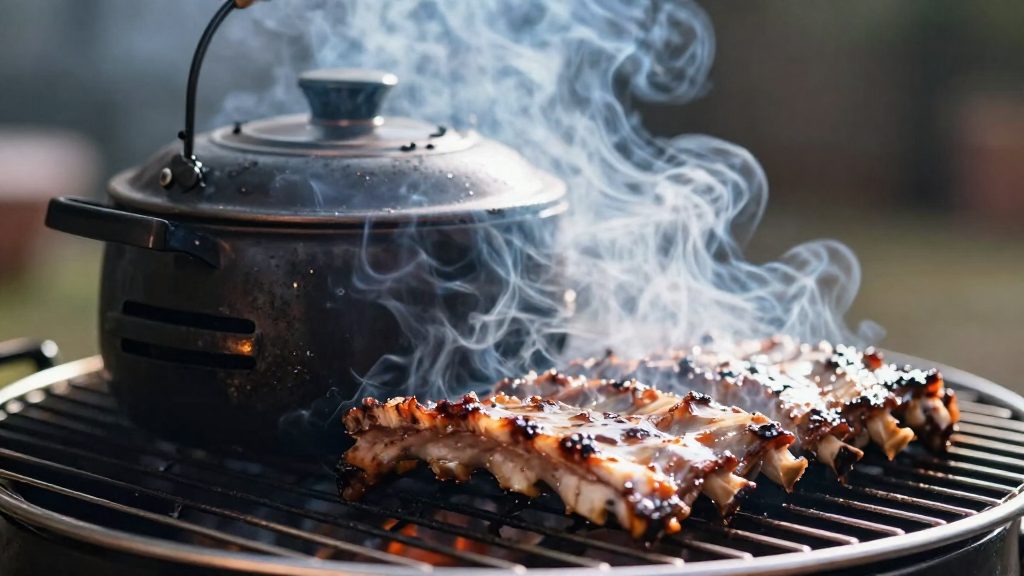
Total ownership cost for a brisket smoke combines the purchase price with the fuel used per cook. The two grill types differ most at the entry point. According to Smoked BBQ Source (2026-05-06), quality pellet grills generally cost more, at least about $400. Gas grills are available at almost any budget, so a gas unit is the lower-cost route to buying a grill.
Fuel is the second variable. The same source states that a typical LPG (propane) tank gives roughly 20 hours of cooking. A long brisket cook can therefore use a substantial share of one tank, and the cost per cook depends on how many hours you run the burners. The source does not say how burner settings or outdoor conditions change that figure.
To compare fuel cost per cook, use this method:
- Find the local price of one full LPG tank and divide it by 20 to get the cost per hour.
- Multiply the cost per hour by the number of hours in your planned brisket cook.
- Find the local price of one bag of pellets and the grill’s stated consumption rate in the owner’s manual. Multiply the two to get the pellet cost per hour, then multiply by cook hours.
- Add the purchase price, spread over the number of years you expect to use the grill, to the fuel cost per cook.
The result depends on your local market.
Convenience, startup and cleanup
For a long brisket cook, the practical difference between the two designs is how much attention the grill needs once it is running. A pellet grill feeds fuel from a hopper through an auger that a controller drives, so the cooker can run unattended for hours. Check the hopper level before starting an overnight cook and fill it to a level that covers the full expected run. If the hopper runs empty, the grill stops feeding and the temperature will drop.
A gas grill depends on a fuel tank instead. According to Smoked BBQ Source (2026-05-06), a typical LPG tank gives roughly 20 hours of cooking. That figure is useful for planning a long brisket session, but it assumes steady burner output, so check the gauge before the cook starts. Gas ignition is quick: open the lid, light the burners, and close the lid to preheat until the grate reaches your target. Preheating with the lid closed lets the grill stabilize before the meat goes on. Judge readiness by the built-in thermometer rather than by time.
Ash and grease handling differs by design. A pellet grill produces fine ash from the burn pot, which you empty from the firepot after the cook, once the unit has fully cooled. A gas grill has no ash, but grease drips from the meat into a drip tray or cup. Check its level during a long cook. If it is nearly full, shut off the burners and let the grill cool completely before emptying it, to limit flare-ups. Clean the grates and the drip path after each session, to remove leftover fat.
Which grill should you buy?
For brisket, the deciding factor is whether you need to hold a low, steady temperature for many hours. If your brisket plans center on long, low smokes, a pellet grill is the better match. A gas grill can work, but only if you accept its limits and plan for add-ons.
Buyer profile for a pellet grill
Choose a pellet grill if you smoke brisket regularly and want low-temperature control without tending a fire. Two specifications matter most:
- Maximum temperature. Confirm the upper limit, since it sets how hot you can finish after the long smoke.
- Temperature stability. Check the manufacturer’s stated tolerance before buying, because the range varies by model.
Buyer profile for a gas grill with add-ons
A gas grill suits buyers who already own one or who cook mainly at higher heat. Its upper heat range is useful for searing. Prioritise a higher-end model and confirm it holds the low range.
Decision table
| Factor | Pellet grill | Gas grill with add-ons |
|---|---|---|
| Smoke source | Pellet fuel | Requires an add-on such as a smoke tube |
Named pellet shortlist
Start the shortlist with the Weber Searwood, the model the source cites as a newer pellet grill reaching 600°F. Evaluate any other pellet model on the same two criteria: maximum temperature and a stated ±5°F stability claim. Traeger and Pit Boss are widely sold pellet brands, so confirm their figures on each manufacturer’s site before you compare.
Frequently asked questions
Can a beginner smoke brisket on a gas grill?
Yes, but the gas grill’s heat retention is weaker, so the dial alone may not hold a steady low setting. According to Smoked BBQ Source (2026), cheaper gas models may struggle to hold a steady 250°F. Gas also adds no smoke flavor of its own, so a smoke tube or similar add-on is needed.
Is a pellet grill worth the higher price for brisket?
Quality pellet grills generally cost at least about $400, while gas grills are available at almost any budget, according to Smoked BBQ Source (2026). If you cook brisket often, the steadier low-temperature control of a pellet grill can justify the higher price. Occasional cooks can usually get acceptable results from a mid-range gas grill with a separate thermometer.
How much fuel does a long brisket cook use on a gas grill?
A typical LPG tank gives roughly 20 hours of cooking, according to Smoked BBQ Source (2026). Check the gauge before starting a long cook, and keep a spare tank within reach. Running out of gas mid-cook disrupts the temperature and can extend the cook considerably.