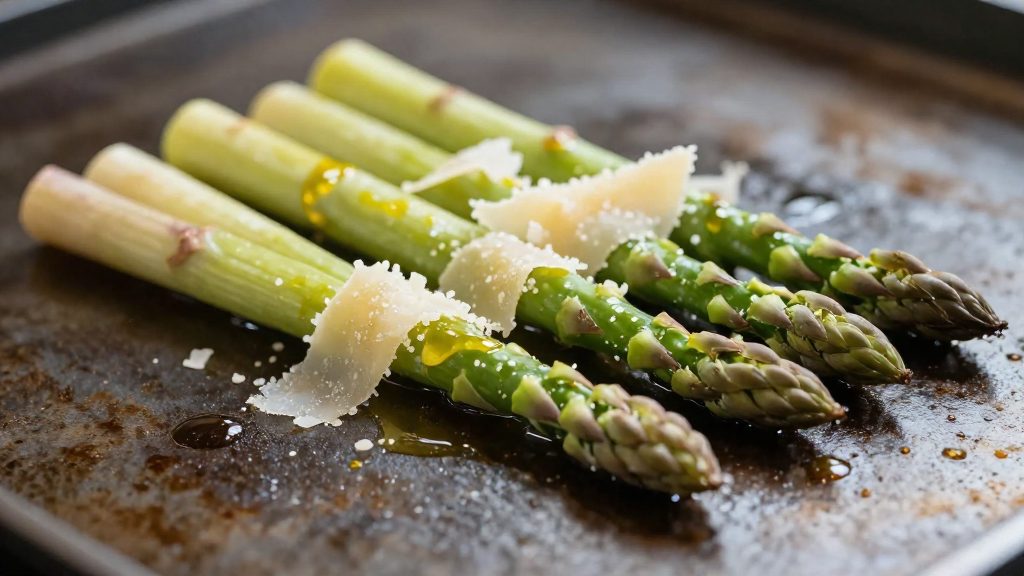
Asparagus suits a plancha because a flat steel surface supports thin spears along their full length, where a grate lets them fall through. Arteflame (2026), a flat-top cooktop grill maker, states that a flat steel cooktop suits small or sliced vegetables that would fall through grates, and it lists asparagus among them. The result is a cooking surface where spears stay in place and brown through direct metal contact, with no need to hold them over open flame.
Why cook asparagus on a plancha?
Flat steel versus grate
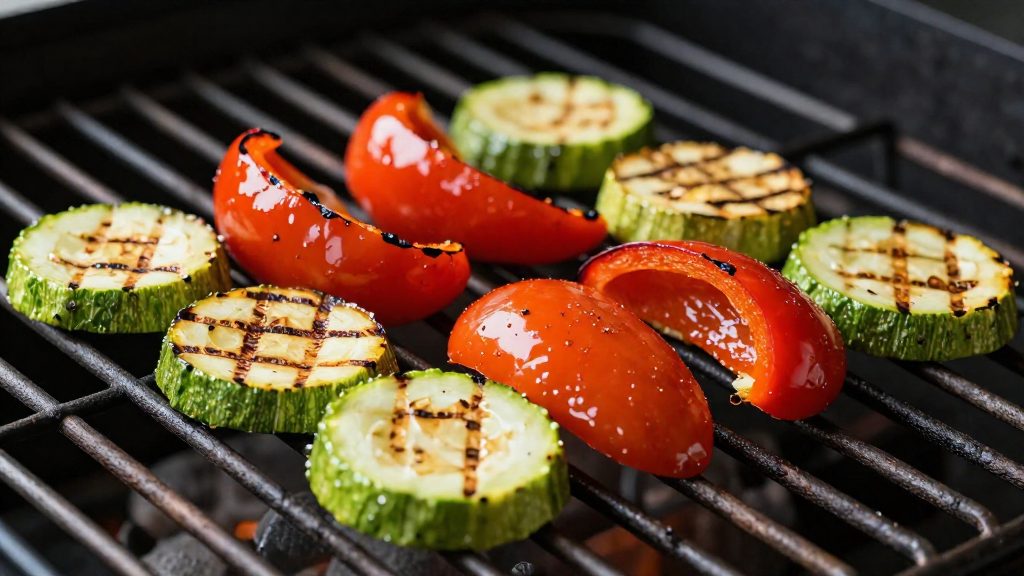
A grate is a set of parallel bars with open gaps between them. A thin spear can bridge two bars and drop through, or roll off when turned with tongs. A flat steel surface has no gaps, so the spear rests on its whole length and stays where it is placed.
| Feature | Grate | Flat steel plancha |
|---|---|---|
| Support under a spear | Bars with gaps | Continuous surface |
| Risk of thin spears falling through | Present | Absent |
| Heat transfer for browning | Partly open flame and radiant heat through gaps | Direct contact with the metal |
Contact area and browning
Browning depends on how much of the spear’s surface touches a hot surface at once. On a plancha, that contact is wide and continuous, so the spear browns evenly along its length. Sliced asparagus pieces benefit in the same way because they lie flat rather than rolling.
Practical handling
- Single layer: Spread spears so each one touches the steel. Overlapping spears shade each other and steam instead of browning.
- Lift, don’t roll: Use a wide spatula or tongs to turn spears in one motion, so they do not slide off the edge.
- Keep the spears moving: Leave them undisturbed until the underside colours, then turn them so no spear sits in one spot too long.
Choosing and trimming the spears
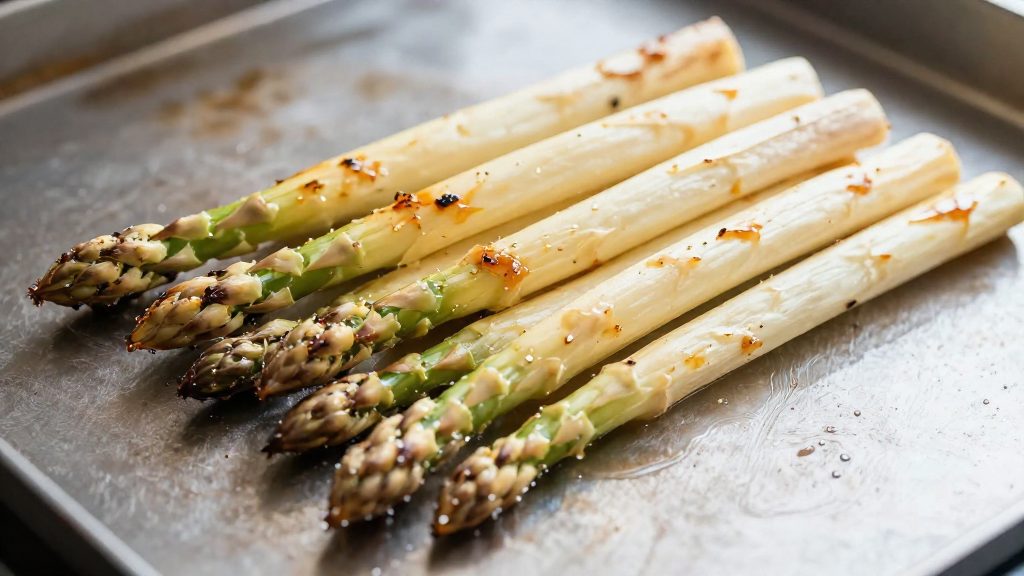
Uniform spears are what let a whole batch finish at the same time on a flat surface, so sorting and trimming matter more here than on a grate.
Sorting by diameter comes first. Thickness varies within a single bunch. Thick spears need longer for the stalk to soften, while thin spears can char before the centre is tender. Separate the bunch into thick and thin piles, then cook each pile separately or add the thinner spears later, so neither group overcooks. Choose spears with firm stalks and tightly closed tips, since limp or open-tipped spears lose texture quickly on hot steel.
Removing the woody base is best done by bending rather than cutting. Hold a spear near each end and bend it gently. It usually snaps near the point where the stalk turns fibrous. Use that break point as a template: lay a snapped spear beside the rest of the bunch and trim the others at the same position. This gives every spear a comparable tender length without guesswork.
Cutting to fit the plancha means checking each spear against the cooking surface. Spears that hang over the edge of the steel can drip or char unevenly, and very long spears are harder to turn. Trim them so they lie flat on the steel. If a spear is still too long, cut it into shorter pieces, following Arteflame’s logic that smaller cuts suit flat steel. Keep the pieces roughly equal in length so they heat and soften at a similar rate.
How hot should the plancha be?
A plancha is not heated evenly across its cooking surface, and asparagus cooks best when you use that difference on purpose. Arteflame (2026), a maker of flat-top cooktop grills, recommends using the hot zone near the fire to sear vegetables and the cooler outer edge to soften them slowly. Working with two zones lets the surface of each spear colour and char while the stalk cooks through without burning.
| Zone | Position on the plancha | Role for asparagus |
|---|---|---|
| Hot zone | Closest to the burner or fire source | Searing and colour |
| Cooler outer edge | Farthest from the heat source | Slow softening |
Hot zone near the burner for searing
Place the spears in the hot zone first so each one touches the steel directly. Leave them until the underside takes colour, then turn them until each side shows colour. Keep the spears here only long enough to set that colour, because the stalks have not yet softened.
Cooler outer edge for slow softening
Once the surface has coloured, move the spears to the outer edge. The lower heat lets the interior soften gradually. Stay on this zone until the stalks yield when pressed gently with tongs.
Adjusting zones as the spears soften
- Start in the hot zone until colour appears on the surface.
- Move the spears to the cooler edge to finish cooking.
- Check tenderness by pressing a spear with tongs every minute or so.
- Return a spear to the hot zone briefly only if it needs more colour, then remove it once it is both coloured and soft.
Step-by-step grilled asparagus with Parmesan
Cooking asparagus on a plancha follows a fixed sequence: prepare the spears, sear them on the hot part of the plate, finish them on the cooler edge, then serve while they are still hot.
| Step | Zone | Action |
|---|---|---|
| 1 | Prep tray | Oil and salt the spears |
| 2 | Hot zone | Sear in a single layer |
| 3 | Cooler outer edge | Turn and soften |
| 4 | Warm serving dish | Plate and serve |
Oil and salt before contact
Oil and salt before contact so the seasoning stays on the vegetable. Oil the spears just before they reach the plate rather than earlier, so the oil does not run off onto the cooking surface. Use a neutral oil and apply it with a brush or by rolling the spears in a bowl. Keep the spears in a single layer on a tray until they go onto the plate.
Sear in the hot zone
Lay the spears across the hot zone so each spear touches the steel directly. Leave them undisturbed until the underside begins to take colour, then start turning.
Turn and finish on the cooler edge
Turn the spears regularly with tongs so every side receives heat. Once they show colour, slide them toward the cooler outer edge. Total cooking time depends on spear thickness and how hot your plate is, so judge doneness by texture rather than by a fixed timer.
Check doneness and plate immediately
Test a spear with tongs. It should bend slightly while staying firm. Transfer the spears to a warm dish and serve straight away, since cooked asparagus loses texture and heat quickly if it waits.
When should you add the Parmesan?
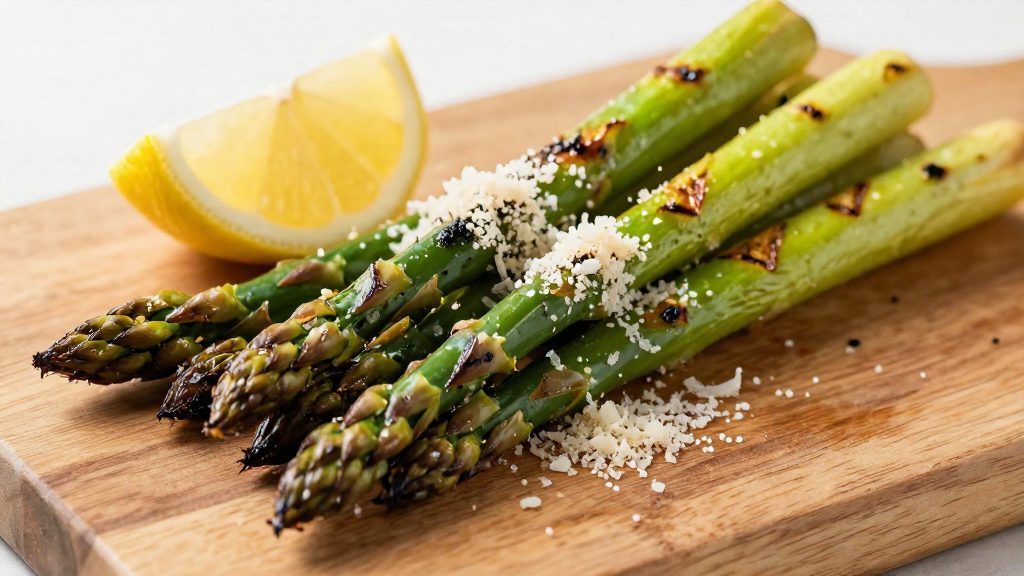
Add Parmesan in the final minute of cooking, once the spears are already tender, and keep the cheese off the bare hot steel. Cheese melts within seconds on hot metal, and if it stays in contact with the surface too long it darkens and bonds to the metal. Adding it late keeps the cheese golden and prevents the bitter taste that comes from scorching.
Melting versus scorching depends on how long the cheese sits on the hot surface. A thin layer melts almost at once, so the window between melted and burnt is narrow. When the cheese bubbles and starts to colour, lift the spears off the heat rather than letting them keep cooking.
Grated Parmesan spreads into an even film and melts quickly, which makes it the more forgiving choice on a flat-top. Scatter it lightly over the spears in the last minute, on the cooler edge or just after lifting them off the steel, so it melts into an even film without bonding to the plate. Use a light layer, since a thick mound takes longer to melt through and can brown unevenly.
Shaved Parmesan holds its shape longer and softens rather than fully liquefying. Because the slices are thin, their edges can curl and char if they go down too early. Lay them on spears that are already off the steel, where residual heat softens them without scorching.
Spears that have reached that tender stage need only a brief final pass with cheese. Cheese added to raw or firm spears keeps them on the heat longer, which raises the risk of sticking and burning.
Seasoning and flavor variations
On a flat steel cooktop, asparagus rests directly on the surface instead of over grate bars, so powders, oils and herbs stay where you place them. Using the zones of the plate lets you add flavors in layers.
Lemon zest and acid finishing
Add acid after the spears leave the steel. Finely grated lemon zest added off heat keeps its aroma, while the peel can turn bitter if it is exposed to a very hot surface. Squeeze the juice just before serving to sharpen the vegetable and offset the richness of the cheese. Use zest for aroma and juice for brightness, and do not cook them together.
Garlic and herb pairings for steel cooking
Garlic scorches quickly on hot metal, so keep it out of the hot zone.
| Addition | Placement | Purpose |
|---|---|---|
| Thinly sliced garlic in the oil | Cooler outer edge | Softens and flavors the oil without browning fast |
| Chopped thyme or parsley | Added off heat | Keeps color and fresh aroma |
| Chives | Sprinkled after cooking | Adds a mild onion note without wilting |
Add herbs with the cheese when serving, not while the spears are on the steel.
Balsamic and chili for contrast
Balsamic vinegar contains sugars that caramelize and can blacken on very hot steel. Brush it on in the cooler outer edge during the final moments, or drizzle it over the spears after cooking. Chili flakes add heat that contrasts with the mild, grassy flavor of asparagus. Toss them with the oil before cooking so they toast briefly rather than scorch on dry metal. Use a light hand, because a small amount of chili is enough to change the flavor.
Cleaning the plancha afterward
Cleaning a flat steel plancha works best while the surface is still warm, because cooked-on residue loosens more easily before it hardens. Turn off the burner or let the fire die down, wear heat-resistant gloves, and use a long-handled metal scraper held at a shallow angle to push caramelised juices, small vegetable pieces and other debris toward the grease channel. Keep the motion firm and steady, and collect the residue in a bin rather than letting it fall into the burner area.
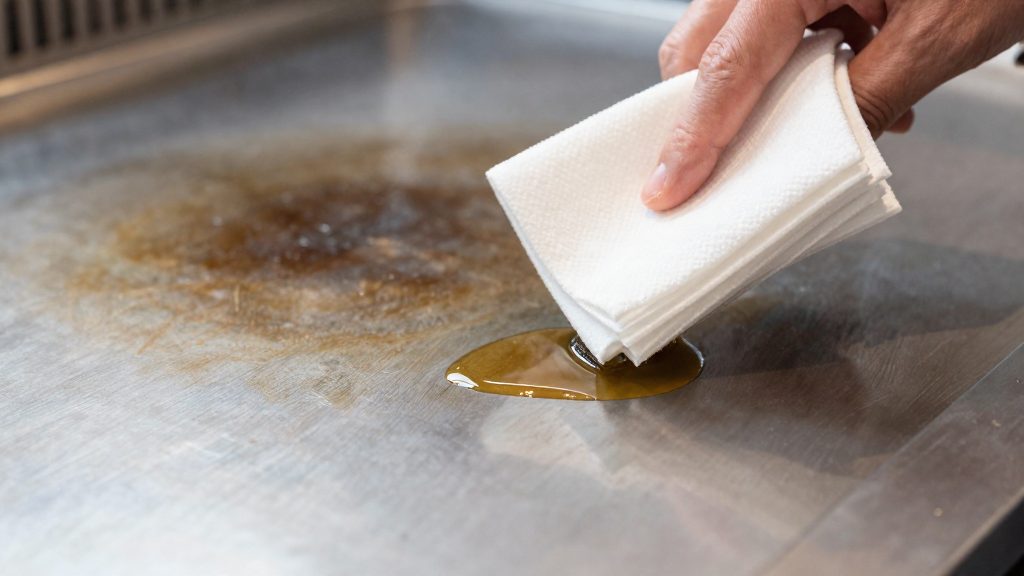
After scraping, once the surface is only warm, hold a folded paper towel with long tongs and wipe up the remaining particles. Do not pour water onto a hot flat steel plancha. A sudden temperature change can throw steam and hot grease, so keep the surface dry until the scraping is finished.
Oiling after cleaning protects the steel from moisture and surface rust. When the plancha is cool enough to handle safely, apply a thin oil film with a paper towel, spread it across the whole cooking surface, and wipe away any excess. A thick layer becomes sticky and can smoke the next time the plancha is heated, so a light coat is the goal.
Cooling and storage come last. Let the plancha cool completely before covering it, since heat trapped under a cover encourages condensation on the steel. Store it in a dry place, using a fitted cover that keeps dust and rain off the cooking surface. Empty and dry the grease tray so no old fat builds up between uses.
Frequently asked questions
Can I cook asparagus on a regular grill grate instead of a plancha?
Thin spears can slip between the bars of a grate, so a grate is harder to use for asparagus than a solid surface. Arteflame (2026) lists asparagus among the vegetables that suit a flat steel cooktop because they would otherwise fall through grates.
Should I cook asparagus over the hottest part of the plancha?
Not for the whole cook. Arteflame (2026) recommends searing vegetables in the hot zone near the fire, then moving them to the cooler outer edge to soften slowly. This two-zone approach lets you brown the spears without overcooking the stems.
Why do my spears turn limp and pale instead of browning?
The most likely cause is a crowded surface. When spears touch each other, they trap moisture and release steam, which prevents the direct metal contact needed for browning. Cooking in smaller batches gives each spear room to sear.