A mop sauce for smoked chicken is a thin, watery basting liquid applied with a mop brush during cooking. According to Smoked BBQ Source (2025), a mop sauce is thinner and more watery than barbecue sauce, and it keeps meat moist during long, low-and-slow cooks while adding flavor. Its purpose is to add liquid and taste to the surface of the bird, not to build a thick glaze.
What is a mop sauce for smoked chicken?
Consistency compared with barbecue sauce
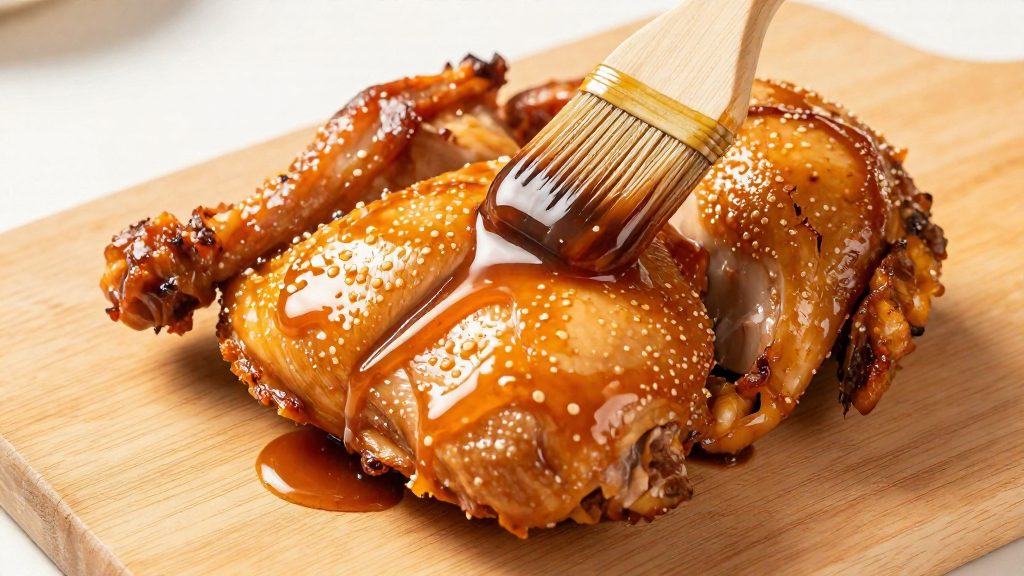
A mop sauce is defined by its fluidity. Because it is thinner than barbecue sauce, it soaks into and runs over the skin rather than sitting on top as a sticky layer. That is why it is applied with a brush dipped in liquid rather than spread with a spoon or painted on as a thick coat.
Moisture and flavor during long cooks
Smoked chicken is typically cooked for an extended period at low heat. Over that time the surface can dry out, and the moisture supplied by a mop sauce is the main reason it is used. The same liquid also carries seasoning onto the meat, so the flavor is distributed across the skin as it cooks.
Application with a mop brush
The mop sauce is applied with a mop brush, which allows the cook to coat the chicken several times without opening the cooker more than necessary. In the Sanderson Farms (2025) vinegar recipe, the sauce is used during the last half of cooking, and it can also be drizzled over pulled chicken once the meat is shredded.
| Use | Method |
|---|---|
| Whole grilled or smoked chicken | Brushed with a mop brush during the last half of cooking |
| Pulled chicken | Drizzled over the shredded meat |
The easiest vinegar mop recipe
This Eastern North Carolina-style vinegar mop is built on a vinegar base with a small amount of oil and spices, and it takes about five minutes to prepare. According to Sanderson Farms (2025), the recipe makes about 3 cups, enough for 5–6 lb of meat, and it needs a 12–24 hour fridge rest before use.
| Ingredient | Amount |
|---|---|
| Apple cider vinegar | 1 cup |
| Distilled white vinegar | 2 cups |
| Crushed red pepper | 1 tbsp |
| Coarse black pepper | 1 tbsp |
| Salt | 1/2 tbsp |
| Celery seed | 1 tsp |
| Minced onion | 2 tsp |
| Smoked paprika | 2 tsp |
| Canola oil | 1 1/2 tbsp |
Preparation method
- Measure the two vinegars into a non-reactive bowl or jar.
- Add the crushed red pepper, coarse black pepper, salt, celery seed, minced onion and smoked paprika, and stir until the salt dissolves.
- Add the canola oil and whisk briefly. Oil and vinegar separate, so the mixture must be shaken or stirred again before every use.
- Cover the container and refrigerate it for 12–24 hours. This rest lets the dry spices and onion infuse the liquid before the mop goes on the grill.
Because the yield is about 3 cups, the recipe covers 5–6 lb of meat. For larger cooks, scale the quantities proportionally rather than reducing the rest time.
Can you make a sweeter mop?
Partly. The Texas coffee mop is the sweeter option because it lists sugar and ketchup. The beer mop still contains cider vinegar and lists no sweetener, so it is a milder, more savory alternative. Both variants keep that thin consistency, so the difference lies in their ingredients.
Beer mop combines beer with cider vinegar, oil, water, onion and garlic, plus Worcestershire and a seasoning. The listed quantities are 12 oz beer, 1/2 cup cider vinegar, 1/2 cup oil, 1/2 cup water, 1/2 onion, 2 garlic cloves, 1 tbsp Worcestershire and 1 tbsp seasoning. Because it still contains cider vinegar, it is tangy, but the beer and onion give it a fuller, more savory base than a pure vinegar mop.
Texas coffee mop uses coffee, sugar, ketchup, pepper, salt, butter and Worcestershire. Sugar and ketchup supply the sweetness, and butter adds richness. It is the only one of the three that lists sugar and ketchup, which supply the sweetness.
| Mop | Liquid base | Sweetening ingredients | Fat |
|---|---|---|---|
| Vinegar base (Eastern NC style) | Apple cider and distilled white vinegar | None listed | Canola oil |
| Beer mop | Beer, cider vinegar, water | None listed | Oil |
| Texas coffee mop | Coffee | Sugar, ketchup | Butter |
The core contrast is acidity against sweetness and richness. Choose the vinegar base for sharp, pepper-led flavor on chicken, the beer mop for a more savory, rounder base, and the coffee mop when you want a sweeter finish.
When should you mop smoked chicken?
Mop sauce goes on during the last half of cooking, not from the start. The Eastern North Carolina-style vinegar mop published by Sanderson Farms (2025) is applied with a mop brush to grilled or smoked chicken in this window. Because it is a liquid that runs off the surface, it works best as a finishing layer on the outside of the meat rather than a base applied throughout the cook.
The same recipe also covers a second application method, which suits chicken that has already been cooked and shredded. Once the chicken is off the grill or smoker, the mop sauce can be drizzled over pulled chicken instead of being brushed onto whole pieces. This gives the shredded meat moisture and seasoning without the need to reheat it in a separate sauce.
| Stage | Method | Equipment |
|---|---|---|
| Last half of cooking | Brush mop sauce onto grilled or smoked chicken | Mop brush |
| After cooking | Drizzle mop sauce over pulled chicken | Spoon or ladle |
The Sanderson Farms recipe says to mop during the last half of cooking. The source does not explain why, so use that window as the default. Mopping in the second half of the cook is the approach the recipe describes, and it is the default point to start brushing.
Can mopping damage the bark on smoked chicken?
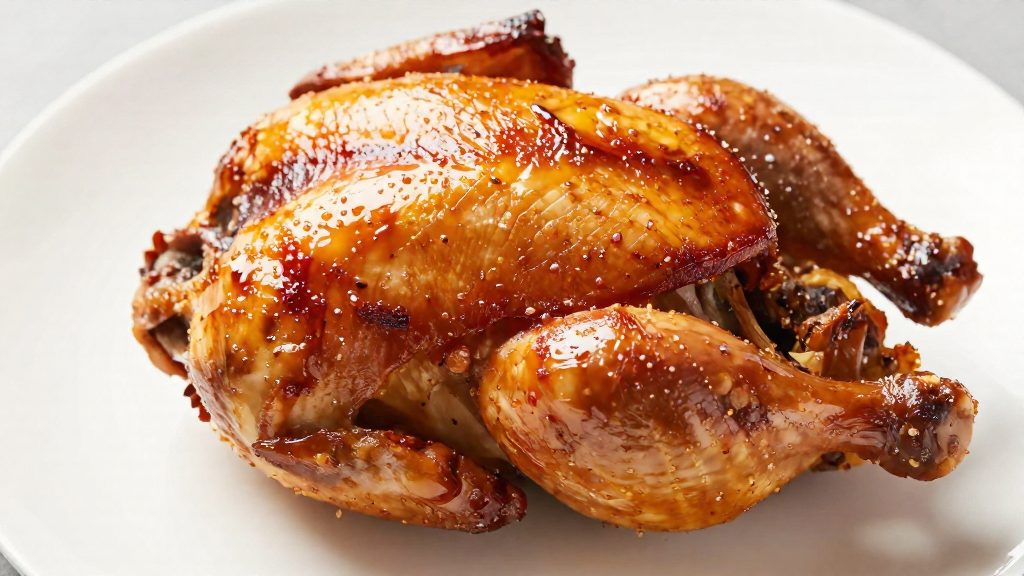
The consulted sources document one main drawback of mopping, and it concerns the surface bark rather than skin texture. According to Smoked BBQ Source (2025), some pitmasters avoid mopping because it can damage the bark, the dark crust that forms on smoked meat. A thin liquid spreads as a film rather than building a thick, sticky glaze, which affects how much liquid stays on the surface.
The main mop recipes differ in their liquid base, which determines how much moisture and sugar reach the skin:
| Mop type | Main liquid ingredients | Source |
|---|---|---|
| Eastern NC-style vinegar mop | 1 cup apple cider vinegar, 2 cups distilled white vinegar, 1½ tbsp canola oil | Sanderson Farms (2025) |
| Beer mop | 12 oz beer, ½ cup cider vinegar, ½ cup oil, ½ cup water | Smoked BBQ Source (2025) |
| Texas coffee mop | Coffee, sugar, ketchup, butter, Worcestershire | Smoked BBQ Source (2025) |
Sources only state that some pitmasters avoid mopping because it can damage the bark. They do not compare the risk between mop types.
For a cautious approach, apply the mop in light, even strokes rather than soaking one area, and keep the surface evenly covered without pooling liquid. Cooks who prioritise a firm bark can follow the pitmaster approach and skip mopping entirely.
Safe temperature for smoked chicken
The USDA poultry target is 165°F. According to CIDRAP (University of Minnesota), which reported a USDA announcement dated 2006-04-05, cooking poultry to this temperature ensures it is safe to eat. The same announcement states that 165°F kills three pathogens:
- Salmonella
- Campylobacter
- Avian influenza viruses
The USDA says 165°F ensures poultry is safe to eat. Cooks may go higher for taste or appearance.
How to check the temperature
Confirm the internal temperature with a probe thermometer rather than relying on time or colour alone. Follow these steps:
- Insert the probe into the thickest part of the meat, avoiding contact with the bone where possible.
- Read the temperature before removing the chicken from the grill or smoker.
- If the reading is below 165°F, return the chicken to the heat and check again.
- Repeat the check in the thickest section of each piece, since thicker cuts can read lower than thinner ones.
Why the target matters for smoked chicken
Smoking runs at low, steady temperatures for long periods, so the surface can look finished well before the centre reaches 165°F. Relying on appearance alone can therefore lead to undercooked meat. A probe reading gives a direct measurement against the USDA target.
Keep the probe reading as the deciding factor. If you plan to go above 165°F for a more tender texture or a deeper colour, note the final reading so you can repeat the result.
How to store and reuse mop sauce safely?
Safe reuse of mop sauce depends on one distinction: mop that has never touched raw chicken can be kept, while mop that has contacted it should not go back into storage. Because a single batch is larger than one brushing session needs, you can plan the split before any raw meat is handled.
Separate a reserve before brushing raw chicken
Before the first brush stroke on raw chicken, pour a portion of the mop into a clean, separate container and set it aside. Keep this reserve apart from the pot you dip your brush into during cooking. Once the brush has touched raw meat, it should not return to the reserve, so use a dedicated brush for the raw-contact pot and never dip the brush used on raw chicken into the reserve.
Discard mop that touched raw chicken
Mop that has contacted raw chicken, including any remainder left in the cooking pot after brushing, should be discarded rather than refrigerated for later use, to avoid cross-contamination. The USDA says cooking poultry to 165°F ensures it is safe to eat (CIDRAP, reporting a USDA announcement, 2006-04-05).
Cool and refrigerate leftover mop promptly
Once cooking is finished, transfer any unused, uncontaminated mop into a clean, covered container. Use a shallow container so the liquid cools more quickly, and move it into the refrigerator without leaving it at room temperature beside the grill. Check USDA food-safety guidance for how long refrigerated mop may be kept before it is discarded.
Frequently asked questions
How much vinegar mop does a whole chicken need?
The Sanderson Farms (2025) Eastern North Carolina-style recipe yields about 3 cups, which covers 5–6 lb of meat. For a single whole bird, you will use only part of the batch, so store the rest for later sessions.
How do I know when smoked chicken is safe to eat?
Use a thermometer rather than color or time. According to CIDRAP (2006), reporting a USDA announcement, poultry cooked to 165°F is safe, and cooks may go higher for taste or texture.
Can I prepare the vinegar mop in advance?
Yes. The same recipe takes about 5 minutes to mix and then needs to rest 12–24 hours in the refrigerator before use, so it is best made the day before the cook.