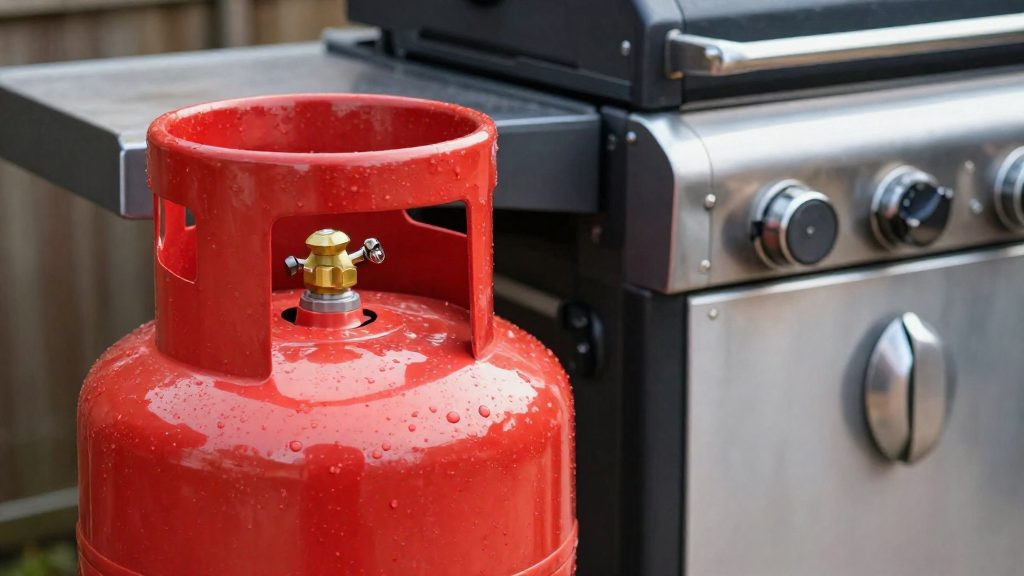
Propane cylinder exchange in Canada depends on the outlet’s category and on the cylinder itself.
Where can you exchange a propane tank in Canada?
Outlet categories to search on Google Maps
Search Google Maps for “propane exchange” or “propane cylinder exchange,” then filter results by business type. Outlets that stock or sell propane cylinders are the usual starting point. Call ahead, because exchange programs are set by each business, not by a single national rule, and an outlet that sells cylinders may not run an exchange.
Checks to run before visiting
Confirm these points by phone or on the outlet’s listing before you drive over:
| Check | Where to find it | Why it matters |
|---|---|---|
| Manufacture date | Stamped on the cylinder collar | Starts the 10-year count |
| Most recent retest date | Stamped on the cylinder collar | Shows the last requalification |
| Cylinder origin | Read the cylinder, then ask the outlet | Determines refill eligibility |
| Exchange acceptance | Ask the outlet directly | Categories and programs vary by business |
US-origin cylinders
A US-origin cylinder may be accepted at an exchange counter and still be refused for filling. Ask the outlet whether it can fill that specific cylinder before you hand it over. If it cannot, you will have to exchange a Canadian-compliant cylinder instead.
Confirming eligibility
Eligibility is decided by the cylinder’s status and the outlet’s policy together. A cylinder that looks usable can still be turned away if its dates or origin do not meet the outlet’s requirements.
Key terms: exchange outlet, collar stamp, US-origin cylinder.
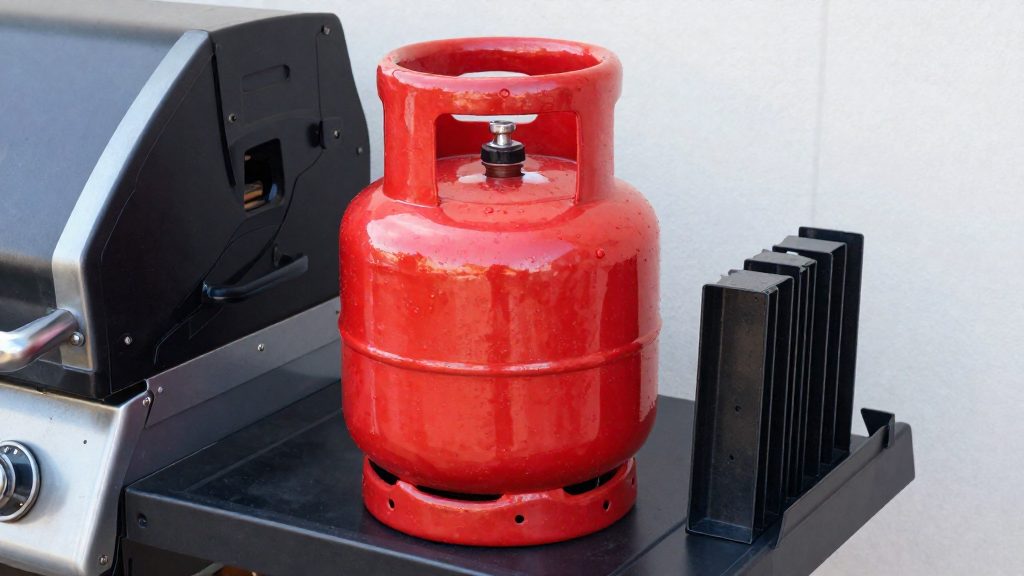
Exchange or refill: which is better?
The choice between refilling and exchanging depends mainly on the status of your cylinder and on whether you want to keep the same tank. Refilling keeps your own cylinder in service: you take the same tank to a filling point and have it filled. Exchanging means handing in a cylinder and taking away a pre-filled one, so you do not control which tank you receive.
| Factor | Refill | Exchange |
|---|---|---|
| Cylinder you keep | Yes, the same cylinder stays in service | No, you swap it for another |
| Control over the tank | You verify its collar dates yourself | You do not choose the cylinder, but you can still check its collar dates and condition before accepting it |
| Process | You bring the cylinder, wait while it is filled, and take it home | You hand over the empty tank and take a filled one |
| Best suited to | Owners who keep a tank for many seasons and want a known history | Owners who prefer no waiting and no handling of the filling process |
For a barbecue owner, refilling suits a grill that stays connected to one well-maintained cylinder. Exchanging suits a user who grills occasionally and values a quick swap over keeping a specific tank. Either way, the trip has to be planned around the time needed to deliver the cylinder and collect it, and the cylinder should be inspected for damage before it is connected to a regulator.
Confirming that a store or gas station runs a swap program
Exchange availability differs from one location to the next, so the practical step is to confirm that a specific store or gas station runs a swap program before you travel with a cylinder. The checks below apply to any outlet.
Confirming availability at a location
- Call the store or check its listing to confirm the swap program is active, since stock and hours vary by location.
- Ask which cylinder sizes the program accepts, and whether it exchanges a full cylinder for an empty one on the same visit.
- Ask whether the outlet inspects the cylinder’s dates at the counter, because the rules below apply regardless of where you exchange.
Checking the cylinder before you exchange
The requalification date determines whether a cylinder is eligible. The Canadian Propane Association (2026) states that cylinders must be inspected and requalified every 10 years.
| Date on collar | Starting point of the 10-year period | Source |
|---|---|---|
| Manufacture date | Used if no requalification has been recorded | Government of Canada, Justice Laws (2020-02-19) |
| Most recent requalification date | Replaces the manufacture date once a retest is marked | Government of Canada, Justice Laws (2020-02-19) |
How do you check your tank’s expiry date?
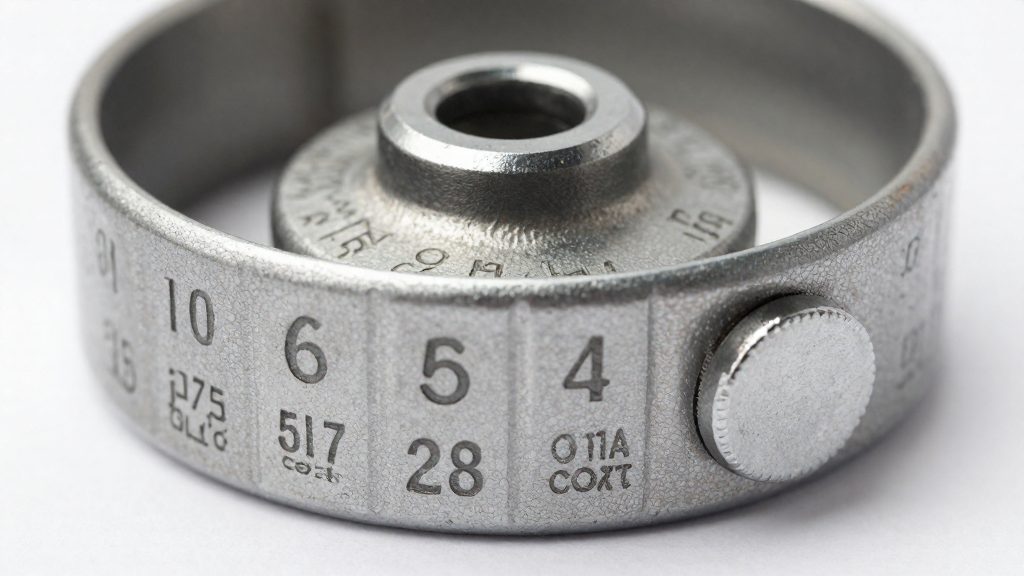
In Canada, a propane cylinder’s validity is set by two dates stamped on its collar, the protective ring around the valve at the top of the cylinder. The Canadian Propane Association (2026) states that the manufacture date and the retest date are both marked there. Read these stamps before you take a cylinder to a refill point, because they determine whether the cylinder is still within its validity period.
Reading the collar stamps
- Locate the collar at the top of the cylinder, around the valve.
- Find the manufacture date, which records when the cylinder was made.
- Look for a retest date. If the cylinder has been requalified, the most recent retest date is the one that counts.
Counting the ten years
The ten-year period runs from one of two reference points, depending on the cylinder’s history:
| Stamp used as starting point | When it applies |
|---|---|
| Date of manufacture | The cylinder has not been requalified |
| Most recent requalification date | The cylinder has been requalified |
According to section 1.50(3) of the Transportation of Dangerous Goods Regulations (archived version in force from 2020-02-19 to 2023-07-04), the ten years are counted from the date of manufacture or from the most recent requalification date marked on the cylinder. Confirm the current wording with Transport Canada. Add ten years to the chosen date. For example, a stamp reading 03/2016 gives a limit of 03/2026. Use the month as well as the year, because the cylinder is outside its validity period as soon as that month has passed.
What an outdated cylinder means for refilling
Once the ten-year period has ended, the cylinder cannot be filled. Canadian rules make it illegal to fill an outdated cylinder, so a refill point should not accept it. Check the dates before you leave home, since the count depends only on the stamps, not on when you bought the cylinder or last used it.
What happens to expired or damaged cylinders?
An out-of-date or damaged propane cylinder has two possible outcomes: requalification by a qualified organization, or proper disposal. Which one applies depends on the cylinder’s condition and the guidance in your province. Only organizations with the right equipment, training and Transport Canada certification can requalify a cylinder, so the first step is to confirm that any shop or service you approach meets all three conditions before you hand over the cylinder.
| Outcome | Who handles it | Key requirement |
|---|---|---|
| Requalification | Certified organization with the right equipment and training | Transport Canada certification |
| Disposal | Local collection channel set by your province | Follow provincial disposal guidance |
Requalification is the only route for a cylinder that is still usable. Retesting must be done by a qualified organization, not by a grill owner, a retailer that lacks the equipment, or a general waste service.
Disposal applies when a cylinder cannot or should not be requalified. A used propane cylinder must never go in household garbage or recycling bins, whatever its condition. Instead, follow the disposal guidance published by your province. Because provincial rules differ, check the guidance for your own province rather than assuming the rules used elsewhere in Canada apply to you.
Practical steps:
- Separate the cylinder from your household waste and keep it upright and stored safely outdoors while you arrange its disposal.
- Ask the organization whether it holds the equipment, training and Transport Canada certification needed for requalification.
- Consult your province’s disposal guidance before choosing a drop-off point.
- Do not place a cylinder in a bin, even temporarily, if you are unsure of its status.
Damaged cylinders should not be handled as if they were routine. Any visible damage means the cylinder should be taken to a qualified organization or disposed of through the channel your province specifies, and not returned to regular use on a grill.
Transporting a propane cylinder safely
Transporting propane in Canada is regulated at the federal level. According to the Canadian Propane Association (2026), moving propane is governed by the Transportation of Dangerous Goods Act and Regulations. Because this is federal legislation, its requirements apply to a cylinder that leaves your property, whether it travels by car, pickup truck or trailer, and they do not depend on the province where the trip begins or ends.
Transport Canada administers these federal transport requirements. It is the authority to consult for the current text of the regulations and for guidance on how they apply to a specific transport. Relying on habits passed down from other grillers, or on what a store clerk says, is not a substitute for the regulations themselves.
A safe transport approach starts from that legal baseline:
- Identify the governing rules before loading. The Act and Regulations set the obligations for anyone transporting dangerous goods, so check them before the trip rather than after an incident.
- Keep the cylinder secured upright in a ventilated part of the vehicle so it cannot shift, tip or roll during driving or braking. Make sure the valve is closed, and do not leave the cylinder in a hot parked vehicle.
- Plan the route around the rules, not around convenience. A trip that is routine for a personal vehicle may still fall under federal dangerous goods requirements.
Tips for the barbecue season
Peak grilling weekends are the time when a propane grill is most likely to run dry, so the aim is to have a full spare cylinder ready before you need it.
Scheduling the exchange
- Do the swap ahead of the busy weekend, not on the morning of the cook. A weekday exchange leaves time to correct any problem before guests arrive.
- Swap the cylinder when it is low, before a long cook. Switching in the middle of a session interrupts the heat and can leave a large roast or several skewers unfinished.
- Map your grilling calendar. If you host regularly, note the dates when you expect heavy use and count how many full cylinders you need for those weekends.
Keeping a spare ready
- Keep one full spare on hand so that an empty cylinder can be replaced at once. Store it upright and outdoors, away from heat and ignition sources, and never indoors.
- Check the spare’s connection before each season. Look at the valve and the regulator fitting for damage or debris, and make sure the regulator matches the grill’s connection type.
Frequently asked questions
How can I tell if my propane cylinder is too old to fill?
Count 10 years from the manufacture date or from the most recent requalification date stamped on the collar, whichever applies. Under the TDG Regulations, s. 1.50(3), as archived for 2020 to 2023, the cylinder must be requalified within that window, and filling an outdated cylinder is illegal (Canadian Propane Association, 2026; Government of Canada, Justice Laws, 2020).
Can I dispose of an old propane cylinder with my regular garbage?
No. Used propane cylinders must never go in household garbage or recycling, so follow your province’s disposal guidance for hazardous household waste (Canadian Propane Association, 2026).
Who is allowed to requalify a propane cylinder?
Only organizations that have the right equipment, trained staff and Transport Canada certification can requalify a cylinder. Transporting propane falls under the federal Transportation of Dangerous Goods Act and Regulations, administered by Transport Canada (Canadian Propane Association, 2026).