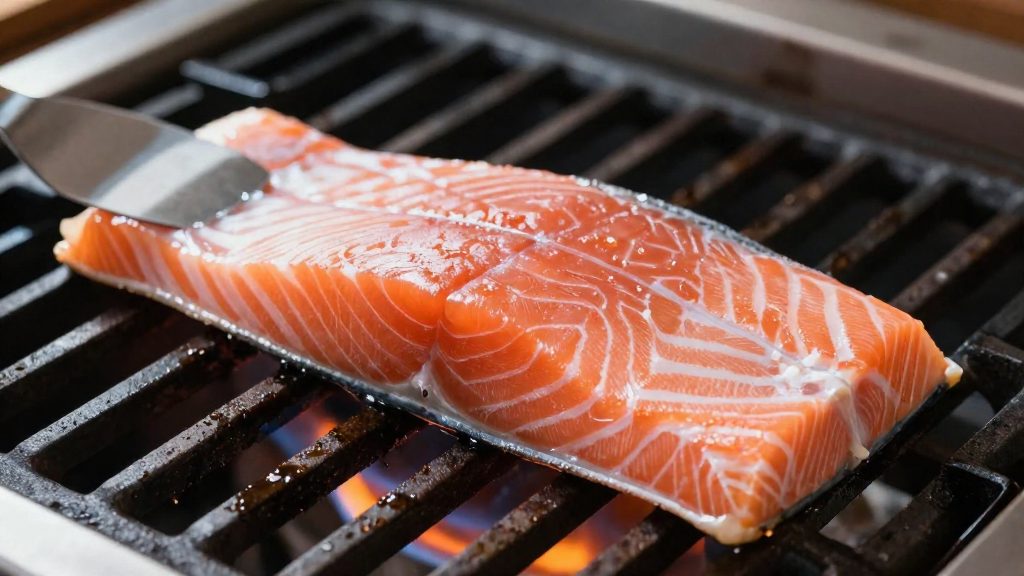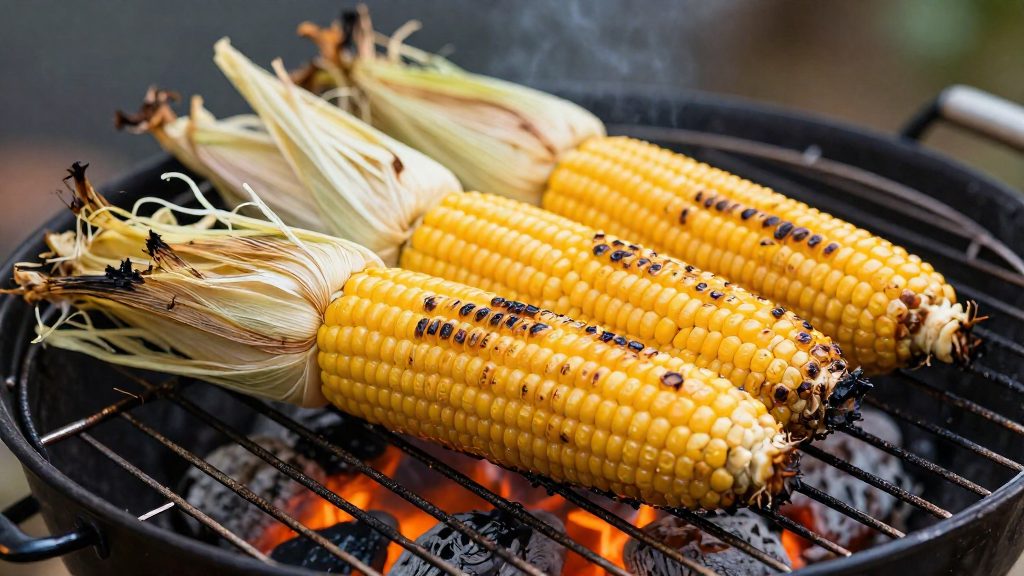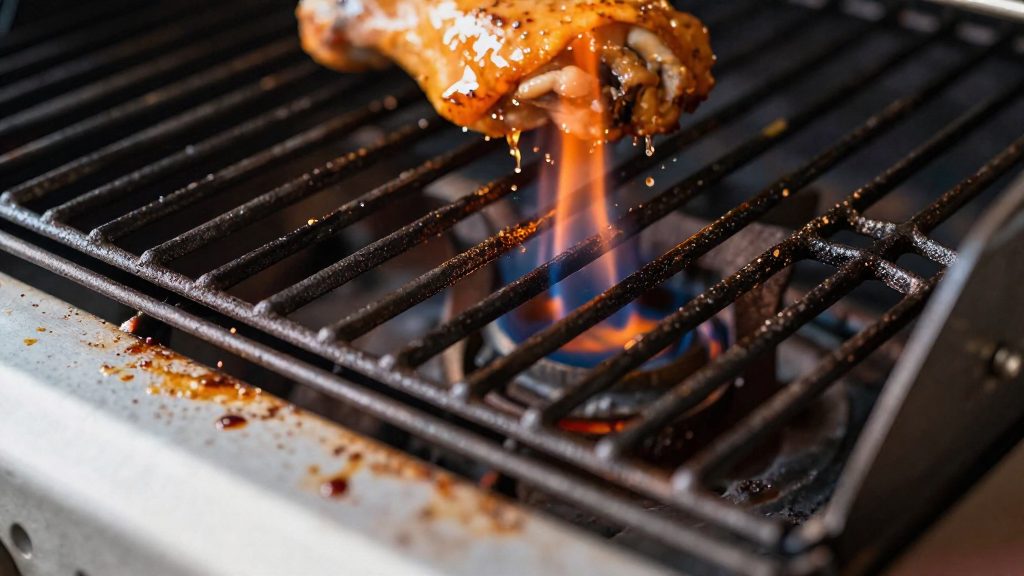
Flare-ups occur when fat or oil drips through the grates onto hot coals, wood or other fuel and ignites. According to Nexgrill (2026), marinades and oil-coated foods can also cause quick bursts of flame. These flames often appear soon after food is placed on the grate or flipped, so the timing of those moves matters as much as how fatty the food is.
What causes grill flare-ups?
How dripping fat ignites
Rendered fat falls through the gaps in the grate and lands on the heat source underneath. When that fuel is hot, the fat ignites and the resulting flames can rise back toward the food. Flare-ups therefore depend on two conditions meeting: fat that drips, and fuel that is already hot enough to catch it. Fattier cuts produce more drips, which raises the risk.
Oil follows the same path. Any oil that runs off the food during cooking can reach the fuel and ignite, which is why oil-coated foods are a common source of sudden flames.
Marinades and oil-coated foods
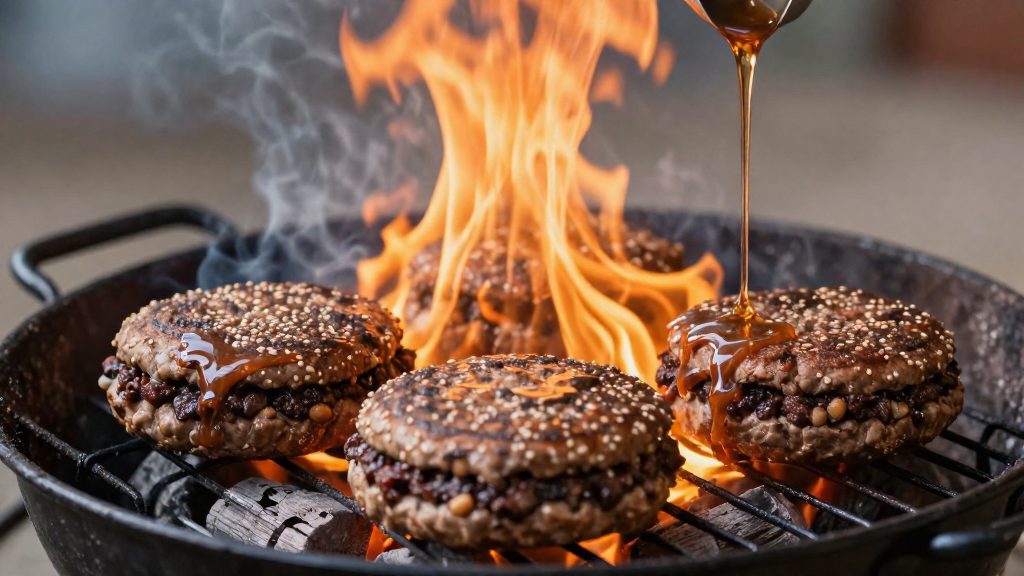
Marinades add liquid and sugar to the surface of the food. As the marinade runs off, it can hit the fuel and burn in quick bursts. According to The Meatwave (2014), sugary sauces and delicate rubs burn quickly, so a sauce applied late in the cook is a frequent trigger.
The table below groups the main triggers by how they ignite and when they are most likely to occur.
| Trigger | How it ignites | When it occurs |
|---|---|---|
| Rendered fat dripping through the grate | Lands on hot coals, wood or other fuel | Throughout the cook, as fat renders |
| Marinade running off the food | Drips onto the fuel and causes quick bursts of flame | Soon after food is placed or flipped |
| Oil-coated food | Oil drips and ignites | Soon after food is placed or flipped |
Why flare-ups peak after placing or flipping
Sources report that flare-ups often happen soon after food goes on the grill or is flipped. A likely reason is that the oiled or marinated surface meets direct heat at those moments, but the sources do not state the mechanism. Watching the grill closely in the first minutes after each move gives you the earliest warning of a burst.
Fatty meats and released juices
Avoid poking or prodding the meat during cooking, because the juices it releases feed the flames.
Clean the grill before and after each cook
The Online Grill (2021-02-10) identifies dried grease in the drip pan and rust on flame tamers or grates as factors that make flare-ups more likely. Residue from earlier cooks adds fuel to every new one.
What buildup changes
| Component | Condition | Effect on flare-ups |
|---|---|---|
| Drip pan or grease tray | Dried grease | More likely flare-ups |
| Flame tamers | Rust | More likely flare-ups |
| Grates | Rust | More likely flare-ups |
| Whole grill | Grease and carbon residue | Can turn a flare-up into a grease fire (Nexgrill, 2026) |
The last row matters most. A flare-up that is quickly controlled is a nuisance, but accumulated grease and carbon can let it grow into a fire.
Cleaning routine
Before cooking, scrape the grates with a grill brush and check the drip pan for grease left from the previous session. Look at the flame tamers and grates for rust, and remove it before you light the grill, so that fresh drippings do not land on a rusty, greasy surface.
After cooking, brush the grates while they are still warm and empty the drip pan. Wipe out any remaining grease before it dries.
How often to deep clean
Clean the grill regularly, ideally at least every third cook. Grills used for fatty cuts, marinated foods or sugary sauces accumulate residue faster and need more frequent attention. Check the drip pan and grates after every session, because a short routine done each time prevents the buildup that a deep clean would otherwise have to remove.
Trim fat and go easy on oil and marinade
Most flare-ups start with grease. Controlling what reaches the grate is the most direct way to limit them.
Start before the food touches the grill. Cut away excess fat from steaks, chops and sausages, leaving only a thin layer. Trimming excess fat reduces the drippings that land on the fire and the grease that builds up on the grill. Dab off surface oil and moisture with paper towel so that less runs off into the flames.
Apply oil sparingly. A light coat is usually enough to stop food sticking, while a heavy coat simply drips. Brush oil onto the grates or lightly onto vegetables instead of pouring it over the food, and wipe away any pooled oil before placing items on the grill. Apply the same discipline to marinades: shake off the excess and avoid thick puddles that run down the sides of the food.
Take extra care with sugary sauces. Brush them on near the end of cooking rather than at the start. Once they char, they can ignite a flare-up even when the meat itself is fine.
Avoid poking. Turn food with tongs, flip it once, and leave it undisturbed so that a crust forms and the juices stay inside the meat rather than dripping onto the fire.
Set up two-zone heat
Two-zone heat keeps fat drippings away from the fire. According to Nexgrill (2026), it means placing coals or lighting burners on one side of the grill only, which leaves a cool area where food can sit away from direct flame. The cool side is where high-fat cuts belong from the start.
Building the cool zone
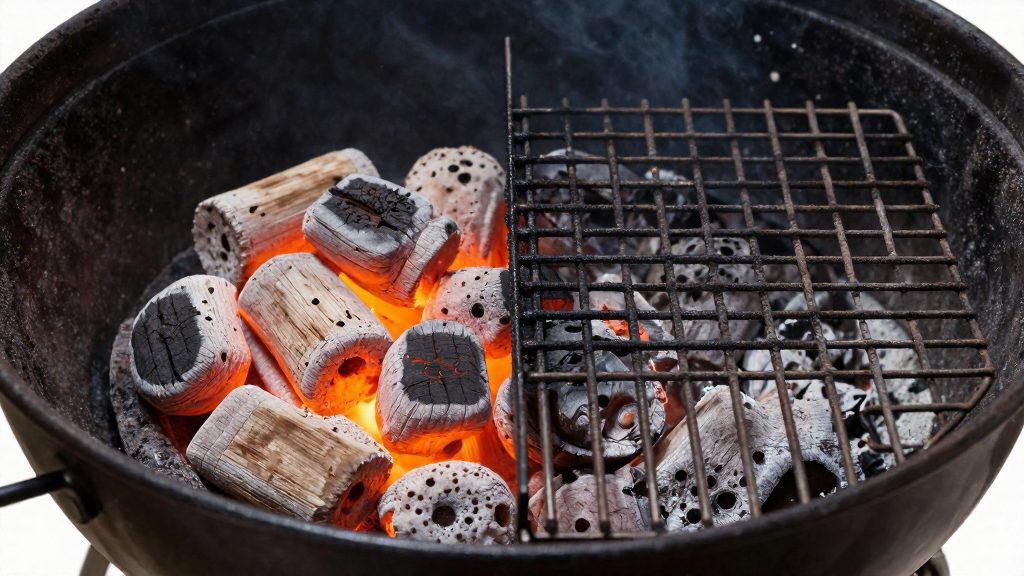
Set the heat source on one half of the cooking grate and leave the other half empty. The method depends on the fuel:
| Grill type | Setup | Resulting zones |
|---|---|---|
| Charcoal | Coals banked on one side only | Direct heat over the coals, indirect heat over the empty side |
| Gas | Burners on one side lit, the others off | Direct heat over the lit burners, cool area over the unlit ones |
Cooking high-fat meats over indirect heat is the core technique. The Online Grill (2021-02-10) recommends it for these cuts, because drippings fall onto the empty side instead of onto hot fuel.
Controlling wind exposure
Wind feeds oxygen to the fire, which makes the fire burn hotter and less predictably. Nexgrill (2026) advises avoiding windy conditions for this reason. Choose a sheltered spot before lighting rather than adjusting once the fire is established, and position the grill so the breeze does not blow directly across the firebox or through the vents.
Keep the zones consistent during the cook. A cool side that is well separated from the fire gives you a reliable place for food, while wind that shifts during a cook can change how much heat reaches each zone.
How do you put out a flare-up safely?
A flare-up is controlled by moving the food to the indirect zone, covering the grill to cut off oxygen, or both for a large flare-up, not by spraying it with liquid. According to The Meatwave (2014), the two main responses are moving the food to the indirect zone and covering the grill. Covering the grill works because a fire needs air to keep burning. Moving the food keeps it away from the flames. The response depends on how large the flames are.
Move the food to the indirect zone
Slide the food off the burning area onto the cooler side of the grill. This keeps the meat away from the flames while the fire settles.
Cover the grill to cut oxygen
Close the lid to limit the air reaching the fire. Check the flames through the vents, or lift the lid only slightly if needed, rather than opening it fully, so you can see whether the flare-up has died down.
Use both methods for large flare-ups
Small flare-ups usually need only one response, while a large flare-up calls for both steps at once.
| Flare-up size | Response |
|---|---|
| Small | Move food to the indirect zone, or cover the grill |
| Large | Move food to the indirect zone and cover the grill |
Once the flames subside, keep the food on the indirect side until the fire is under control. Return it to the direct heat only when the flames are gone, so the drippings do not restart the fire.
Why you should never use water on a grease fire
Water is the wrong response to a grease fire because it spreads the burning grease instead of putting it out. The Online Grill (2021-02-10) identifies the correct approach as cutting off the fire’s supply and smothering it. Burning fat should not be cooled with liquid.
| Response | Use when | Effect described in the source |
|---|---|---|
| Close the lid and turn off the grill | During a grease fire | Cuts off oxygen to the fire |
| Smother with baking soda or salt | Small flames | Starves the small flames |
| Chemical extinguisher | The fire grows | Recommended if the fire keeps growing |
| Water or squirt bottle | Not recommended | Spreads burning grease or ash |
Squirt bottles are a common alternative, but they are not a safe substitute. The Meatwave (2014-08-21) advises against them, noting that the stream can spread ash across the grill and often fails to stop the flames. A liquid spray onto burning fat can scatter the fire rather than contain it.
The sequence matters. Closing the lid and turning off the burners or vents removes the oxygen and stops new fuel reaching the flames. For small flames, sprinkle baking soda or salt onto the fire while the lid stays closed. If the fire continues to grow, use a chemical extinguisher rather than any water-based method.
Gas vs charcoal flare-up tips
Gas and charcoal differ mainly in how fast you can cut the heat and in how the fuel bed reacts to the drip.
Gas burner shut-off
On a gas grill, the flame comes from burners you control directly. When a grease flare-up starts, turn off the grill, as The Online Grill (2021) recommends. Shutting the burners stops new heat at its source, so the drip is no longer feeding a fire that keeps growing under the grate. On a gas grill you can shut off the burners directly.
Charcoal fuel and coal adjustment
On charcoal, the coals are the fuel, so a drip that lands on them keeps burning until the fire is managed. When a flare-up develops on charcoal, move the food to the indirect zone and cover the grill to cut off oxygen, as described above. For a grease fire, close the lid, and use baking soda or salt on small flames or a chemical extinguisher if the fire grows.
Fuel-specific drip and grease management
Both fuels benefit from the same grease control. Trim and dab off surface oil before grilling.
The practical difference is where the grease goes. On charcoal, it falls onto the fuel bed you must rake and watch. On gas, during a grease fire, turn off the grill and close the lid.
Frequently asked questions
Can I spray a flare-up with a squirt bottle?
No. The Meatwave (2014) advises against squirt bottles, which can spread ash across the food and often fail to stop the flames. Moving the food to the cooler side and covering the grill works better.
What should I do if a grease fire grows?
Close the lid and turn off the burners or air supply. Small flames can be smothered with baking soda or salt. If the fire keeps growing, use a chemical extinguisher, and never use water on burning grease (The Online Grill, 2021).
How often should I clean the drip pan?
The Online Grill (2021) recommends cleaning the grill at least every third cook. Pay particular attention to the drip pan, because dried grease in it makes flare-ups more likely.